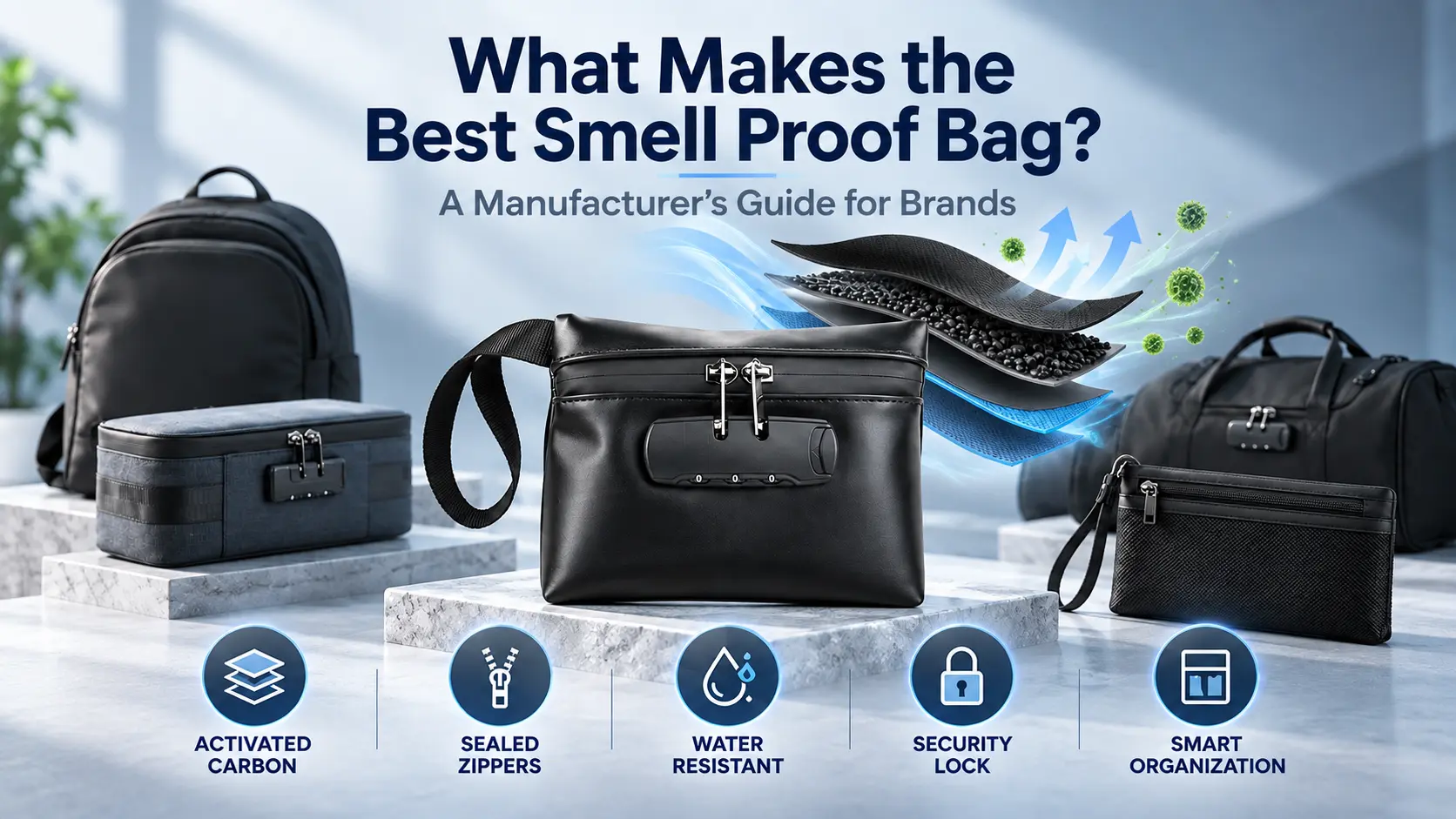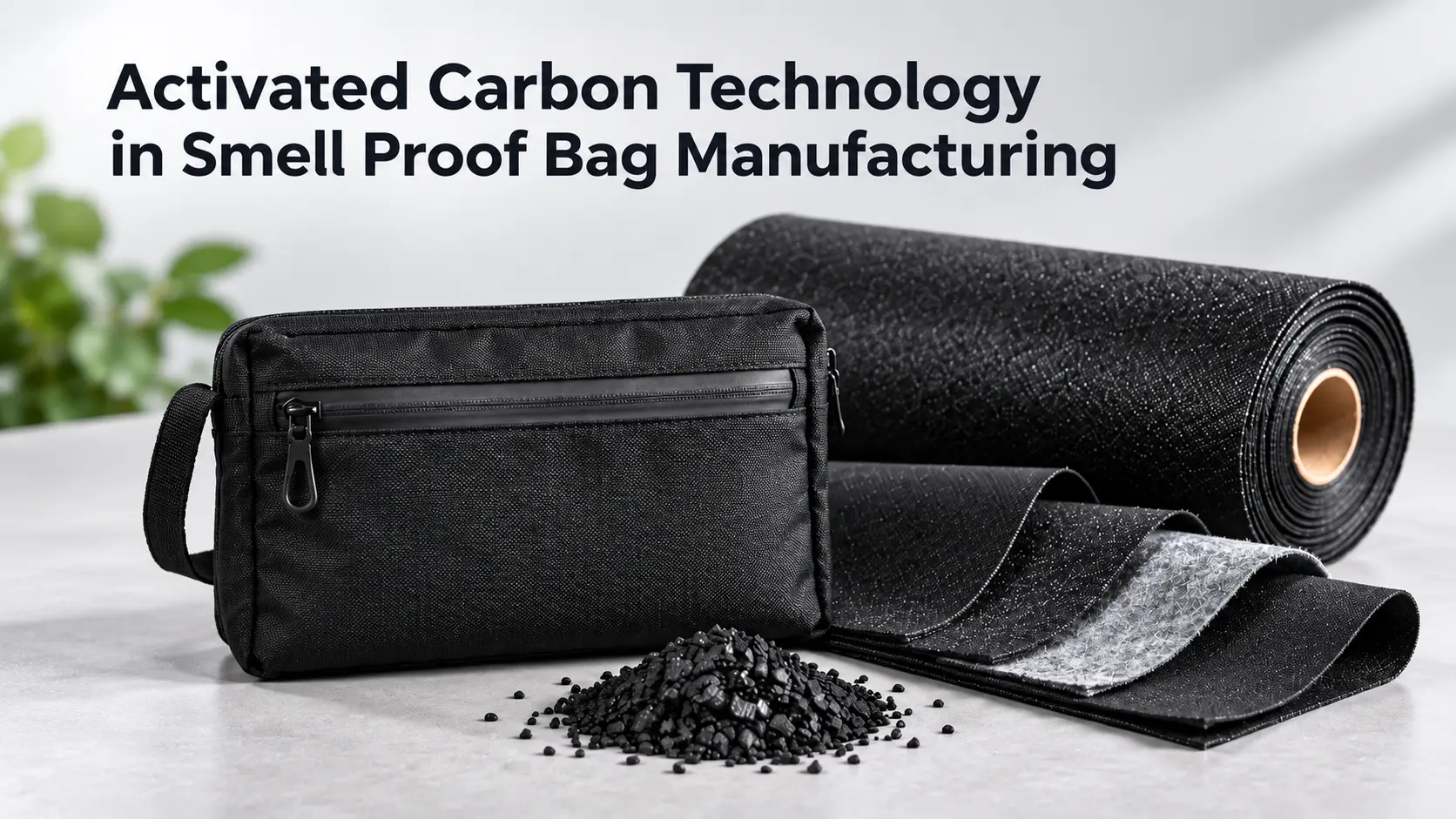
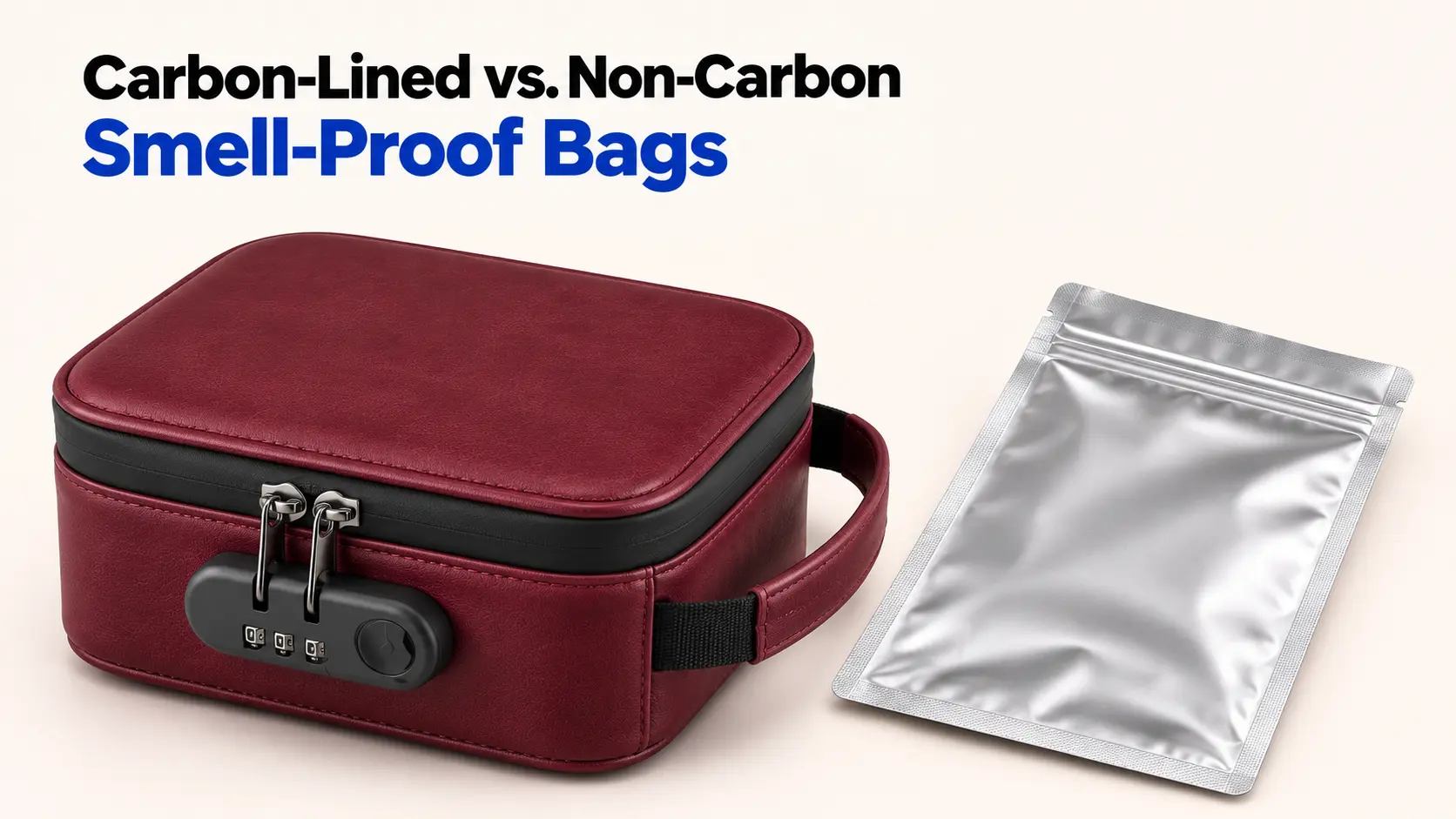
Choosing a carbon lined smell proof bag starts with two questions: what will customers store inside, and how often will they open it? A reusable zippered pouch and a lightweight barrier-film pouch solve different problems. For brands and wholesalers developing a private-label product, the right choice depends on how the finished bag controls odor, how it feels in use, and what it costs to make.
1. Carbon-Lined vs. Non-Carbon Bags at a Glance
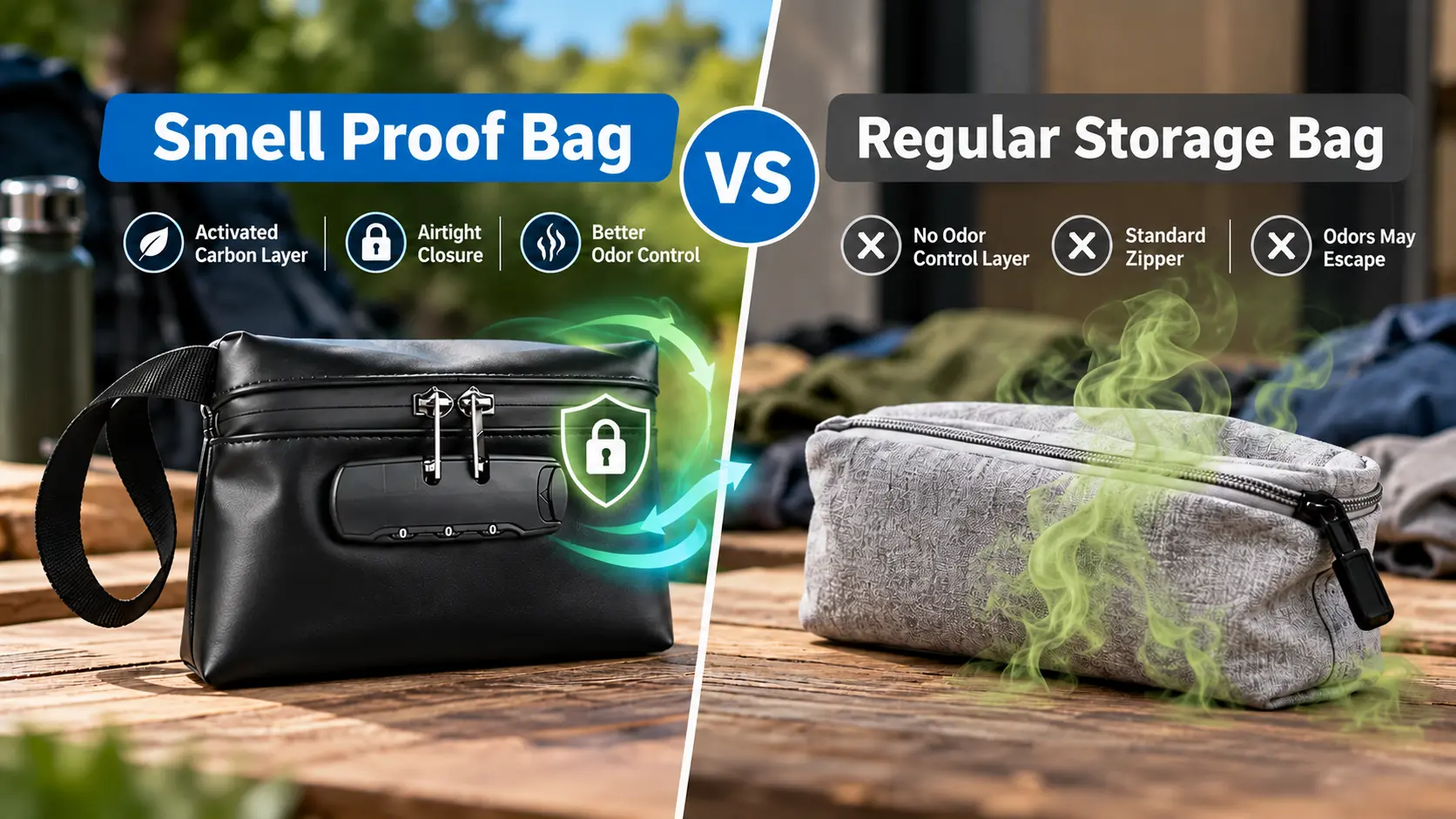
Carbon-lined bags use an adsorbent layer. Non-carbon barrier bags use a film that slows the passage of odor through the bag body. Both designs depend on how well the closure and seams contain air when the bag is shut.
| What to compare | Carbon-lined bag | Non-carbon barrier-film bag |
|---|---|---|
| Odor control | The carbon layer adsorbs some airborne odor compounds | Barrier film slows odor transmission through the bag body |
| Typical construction | Outer fabric, carbon layer, protective lining, and a zipper or other closure | Barrier film, sealed edges, and a resealable or heat-sealed opening |
| Good starting point for | Reusable textile pouches, organizers, and cases with compartments or branding | Thin inserts, refill pouches, and compact storage formats |
| What to check on samples | Carbon layer specification, zipper ends, seams, and performance after repeated opening | Film specification, seal continuity, closure alignment, and performance after folding |
| Main cost drivers | Carbon material, layer assembly, zipper, and sewing | Film specification, sealing process, and closure |
2. How Does a Carbon-Lined Bag Control Odor?
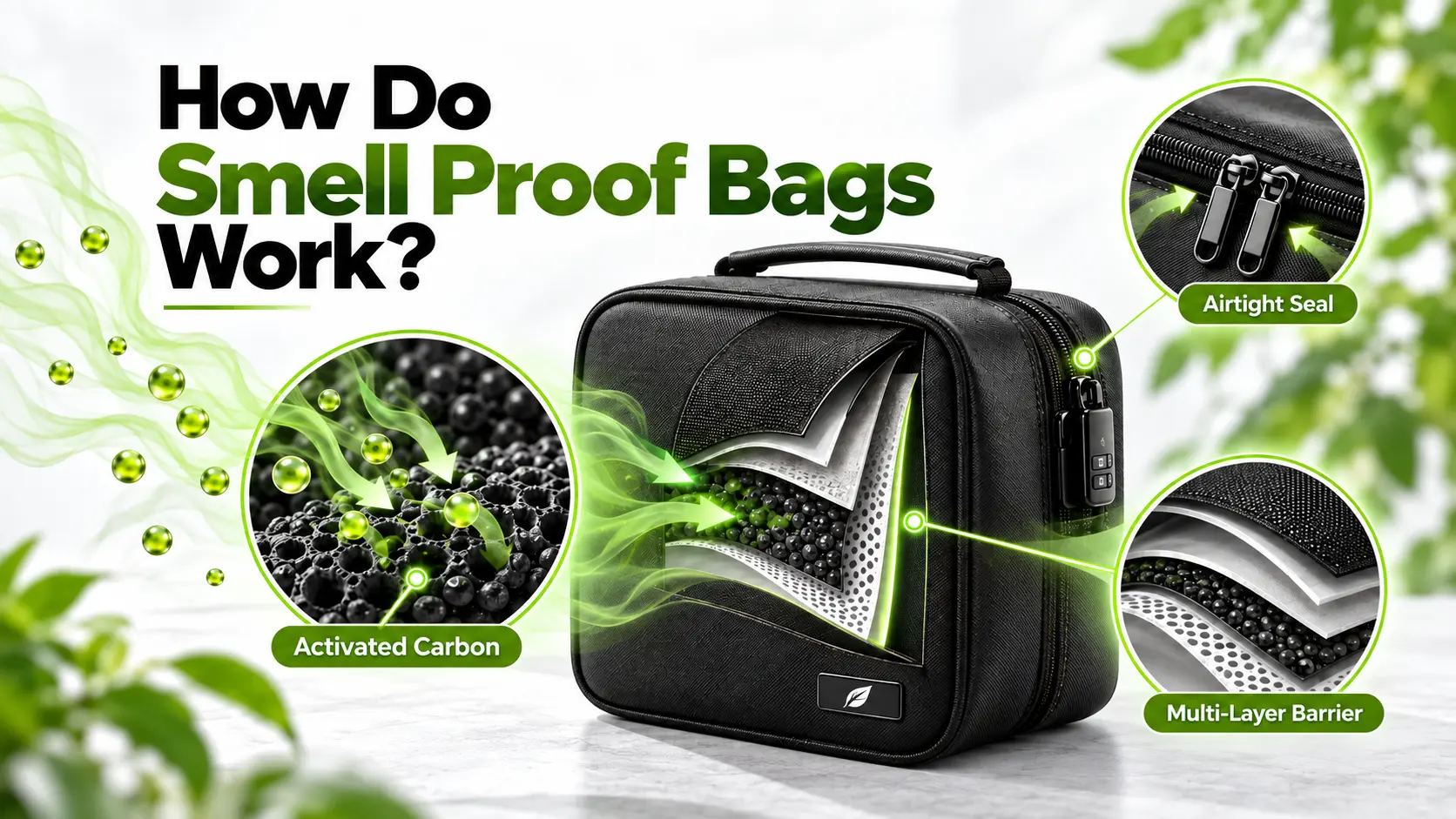
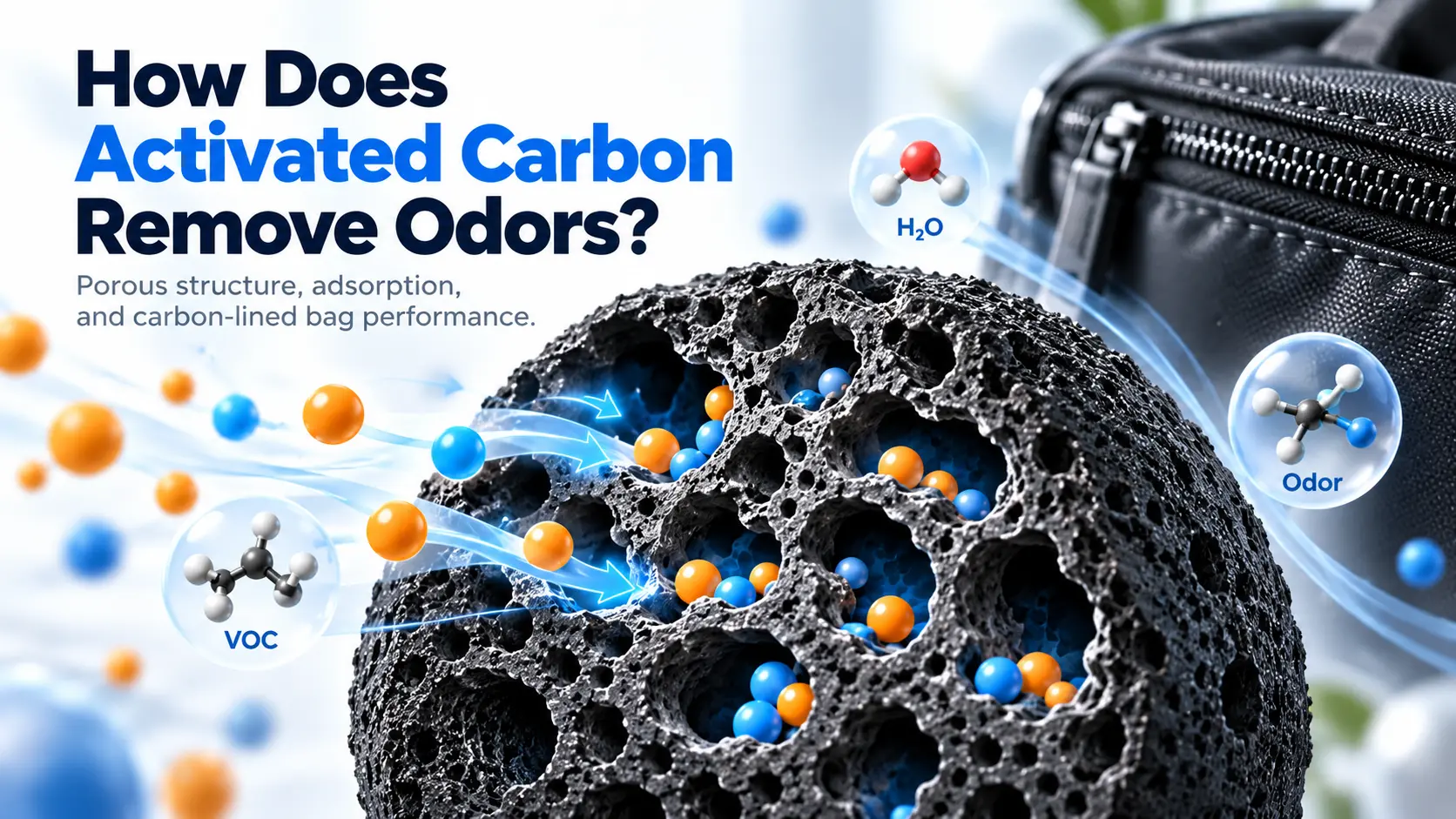
An activated carbon lining has a porous surface that can adsorb some of the compounds released by the contents of a bag. Adsorption capacity is finite, and performance varies with the compounds present and conditions such as humidity. How much odor escapes from the finished bag also depends on the closure, seams, and any other openings.
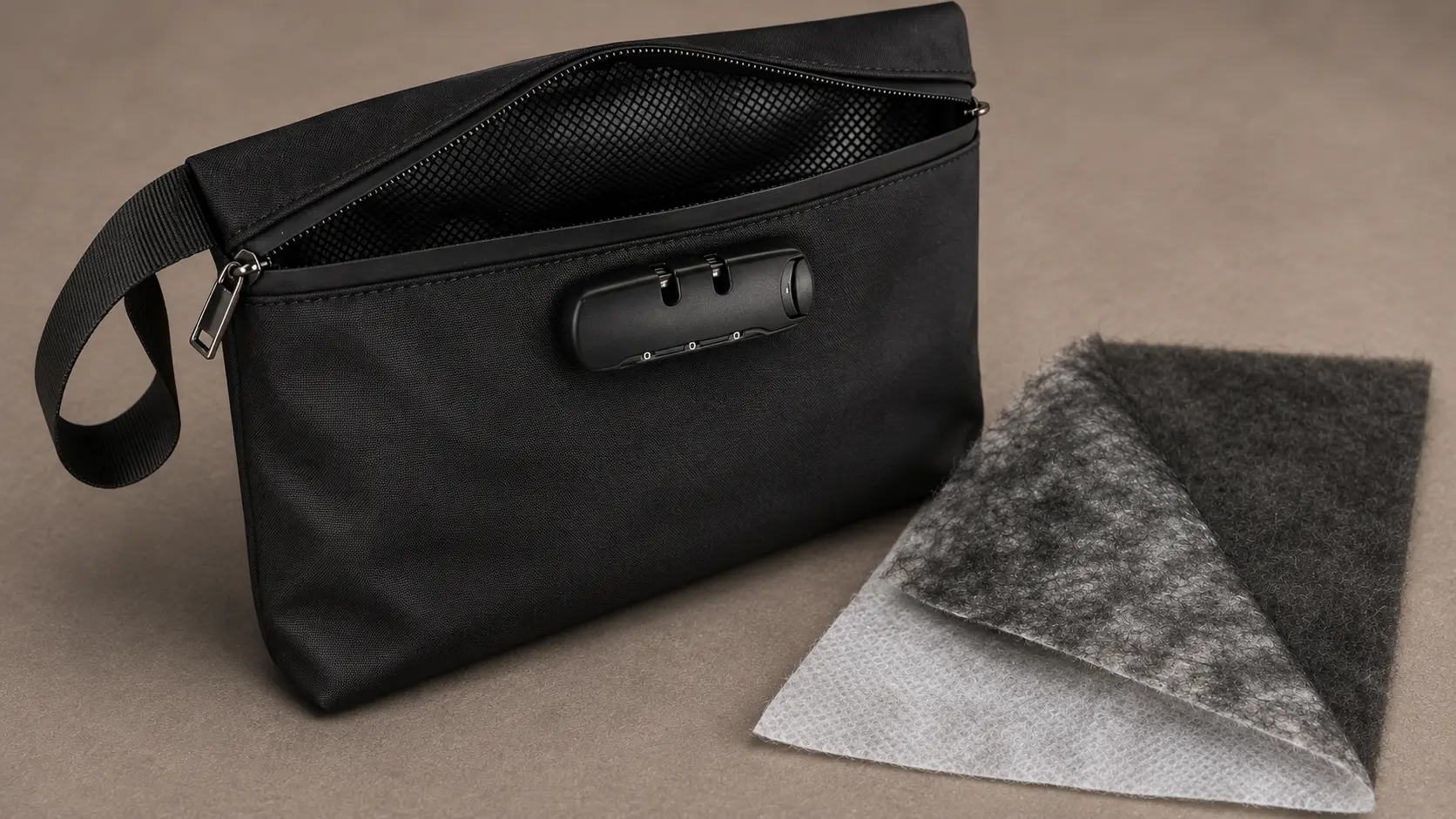
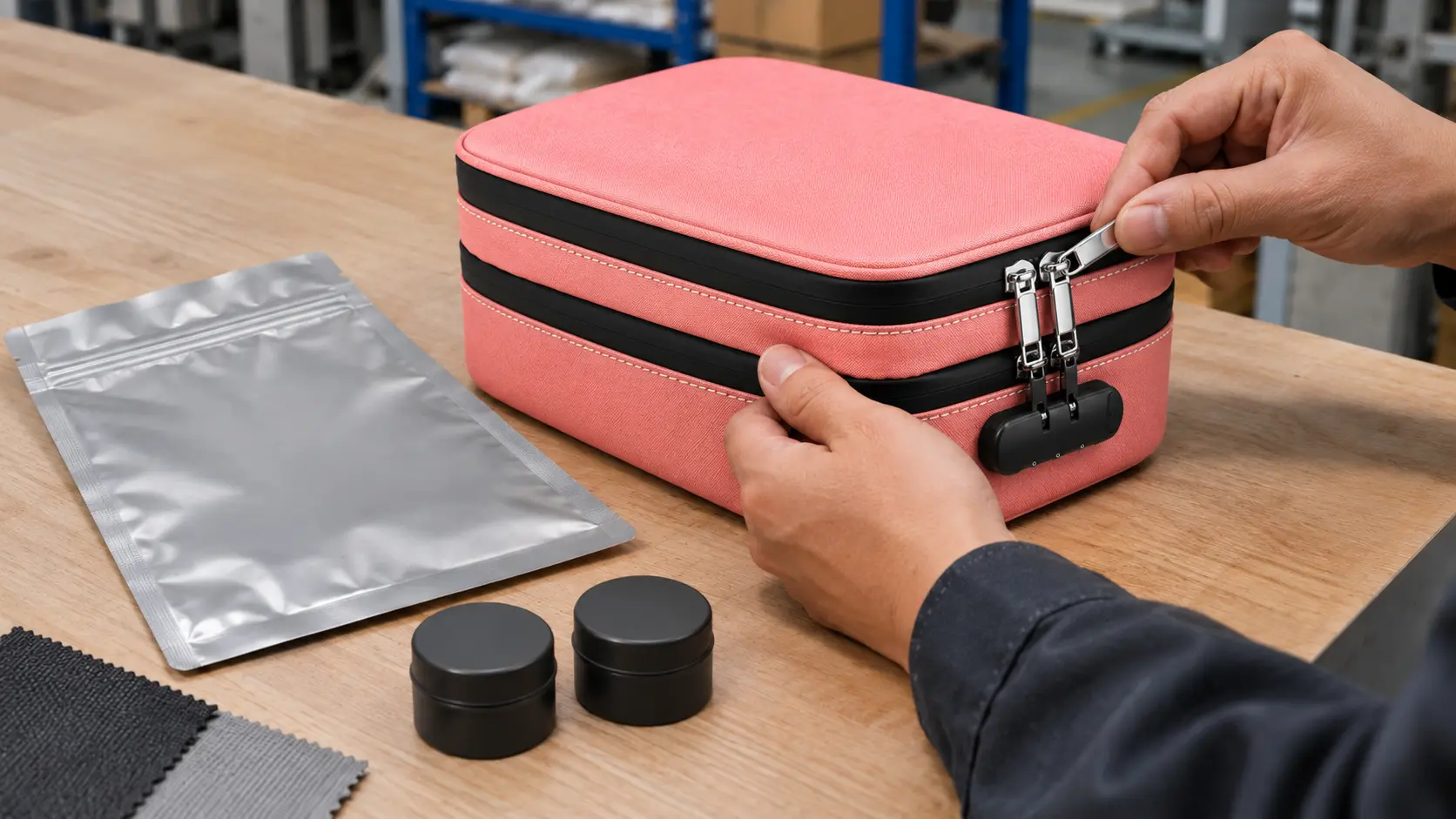
When reviewing a carbon lined smell proof bag sample, look closely at the zipper ends and corners. Ask how the carbon layer is held in place, whether it extends across the intended panels, and what happens when the pouch is filled to its intended capacity. A flat material swatch can help you evaluate hand feel. An assembled sample lets you check how the bag closes when loaded.
3. When Does a Non-Carbon Barrier Bag Make Sense?
A non carbon smell proof bag can be a practical choice when low weight and a slim profile matter. A barrier-film pouch can also serve as a removable inner bag inside a larger textile organizer. For a commercial example, LOKSAK’s OPSAK uses a barrier film and a resealable closure. The example illustrates the construction method, while performance claims for your own product should come from your finished samples.
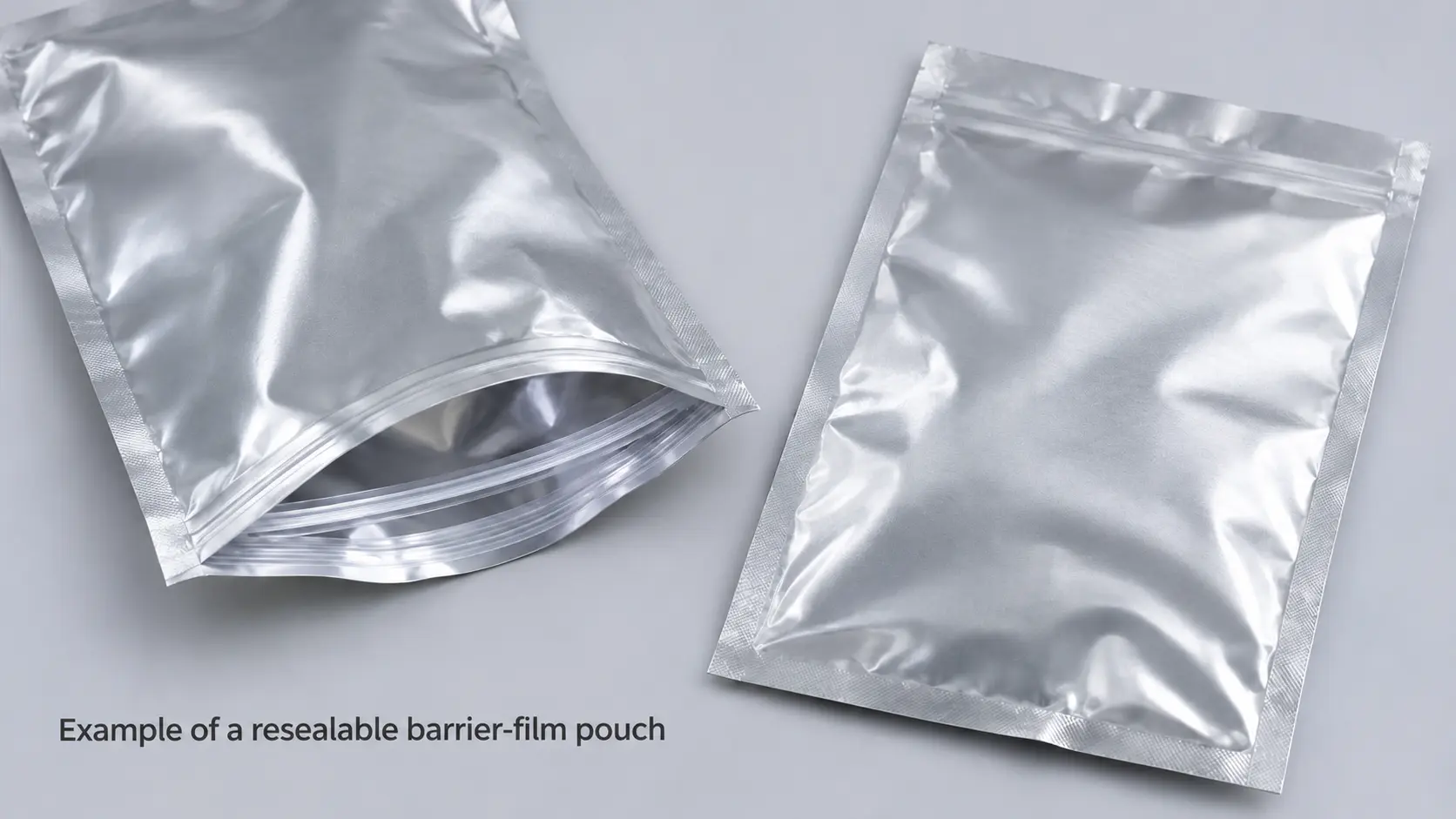
Keep ordinary woven storage bags separate in the comparison. They may look similar to textile odor-control bags on the outside, while a purpose-built barrier pouch uses a different bag body and sealing method. When sourcing a film pouch, ask for the film specification and check how the seal performs after normal folding and repeated use.
4. Does a Thicker Carbon Layer Improve Odor Control?
If you are comparing samples with an activated carbon lining, ask suppliers to separate three specifications:
- Thickness in mm measures how much space the specified layer takes up.
- Composite weight in g/m² measures the weight of the full lining assembly per unit area.
- Carbon loading in g/m² measures the amount of activated carbon per unit area, where the supplier can provide it.
Two linings with the same thickness can have different carbon loadings. A thicker composite can also change how a small pouch folds or how smoothly the zipper runs around corners. Compare the finished samples for odor control, flexibility, and usable interior space before approving a lining.
5. What Affects OEM Cost?
For a carbon lined smell proof bag, the quote typically depends on the outer fabric, carbon layer, assembly method, zipper, and sewing operations. A multi-compartment case with a custom zipper pull and a lock has a different cost structure from a simple flat pouch. For a film pouch, ask how the film specification, edge sealing, and resealable opening affect pricing.
To compare quotes fairly, give each supplier the same dimensions, order quantity, closure requirements, branding, and packaging specifications. Ask for separate pricing on optional features such as extra compartments, custom hardware, or a lock. That makes it easier to see which features affect your unit cost before you change the bag design.
6. How to Compare Finished Samples Before Bulk Production
Start with the intended use. A compact pouch opened several times a day should be checked after repeated opening and closing. A bag intended for longer storage should also be compared after it has stayed closed for the agreed period.
- Use the same contents. Keep the odor source and load comparable across samples.
- Keep the conditions consistent. Use the same storage time, temperature, humidity, and evaluation method.
- Check the closure at normal fill. Look at zipper ends, corners, and seams for gaps or distortion.
- Repeat after handling. Recheck the samples after an agreed number of opening, closing, or folding cycles.
- Record the approved construction. Keep the material specifications, closure details, and evaluation conditions with the approved sample.
If you plan to publish a numerical odor-reduction claim, define the test method and acceptance criteria before testing. Report the result with the relevant conditions and the exact construction tested.
7. Develop a Custom Odor-Control Bag With TrimLife
If your brand needs a carbon lined smell proof bag with a textile exterior, start with what the customer will carry and how they will access it. TrimLife can use those details to discuss the carbon layer, bag dimensions, zipper design, compartments, and branding. If you want a lockable model, specify the lock and the closure separately so each can be evaluated for its intended function.
Request an OEM sample or quote. Share what will go inside the bag, your target dimensions, expected opening frequency, order quantity, and target unit cost. A sketch or reference photo can help TrimLife narrow down the construction for your first sample.
Frequently Asked Questions
Can a bag control odor without activated carbon?
Yes. A purpose-built barrier-film bag can reduce odor transmission through the bag body. The film, sealed edges, and closure work together, so compare the complete pouch under the conditions you expect customers to use it in.
Can the carbon layer lose effectiveness over time?
Yes. Activated carbon has limited adsorption capacity. The compounds present and the humidity can affect how much it adsorbs. For a reusable product, evaluate performance over an agreed period and after representative use.
Does a lock improve odor control?
A lock helps secure the zipper pulls or restrict access. Odor containment depends on the bag body, closure fit, zipper ends, and seams. If your design includes a lock, check that the zipper closes fully at the intended fill level before engaging it.