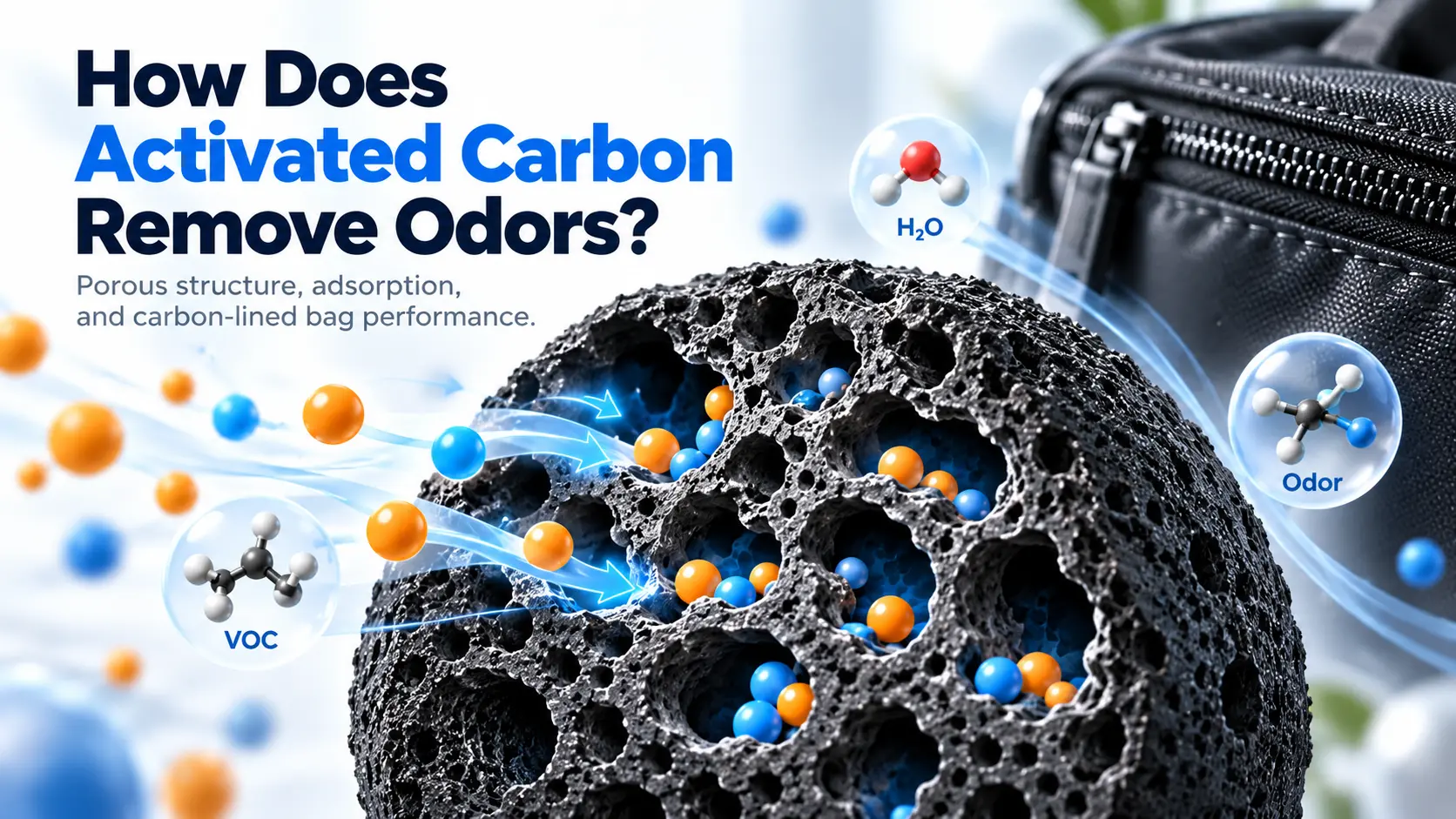
Activated carbon is widely used in odor-control products, from air purifiers to smell proof bags. But how does it actually work, and what makes one carbon-lined bag more effective than another? The answer lies in the material’s porous structure and its ability to capture certain odor-causing molecules. However, activated carbon odor removal depends on more than the carbon itself. Material quality, humidity, lining construction, and zipper sealing all influence the performance of a finished bag.
In this guide, we’ll explain how activated carbon works, what affects its effectiveness, and what brands should consider when developing carbon-lined storage bags.
1. What Causes Unwanted Odors?
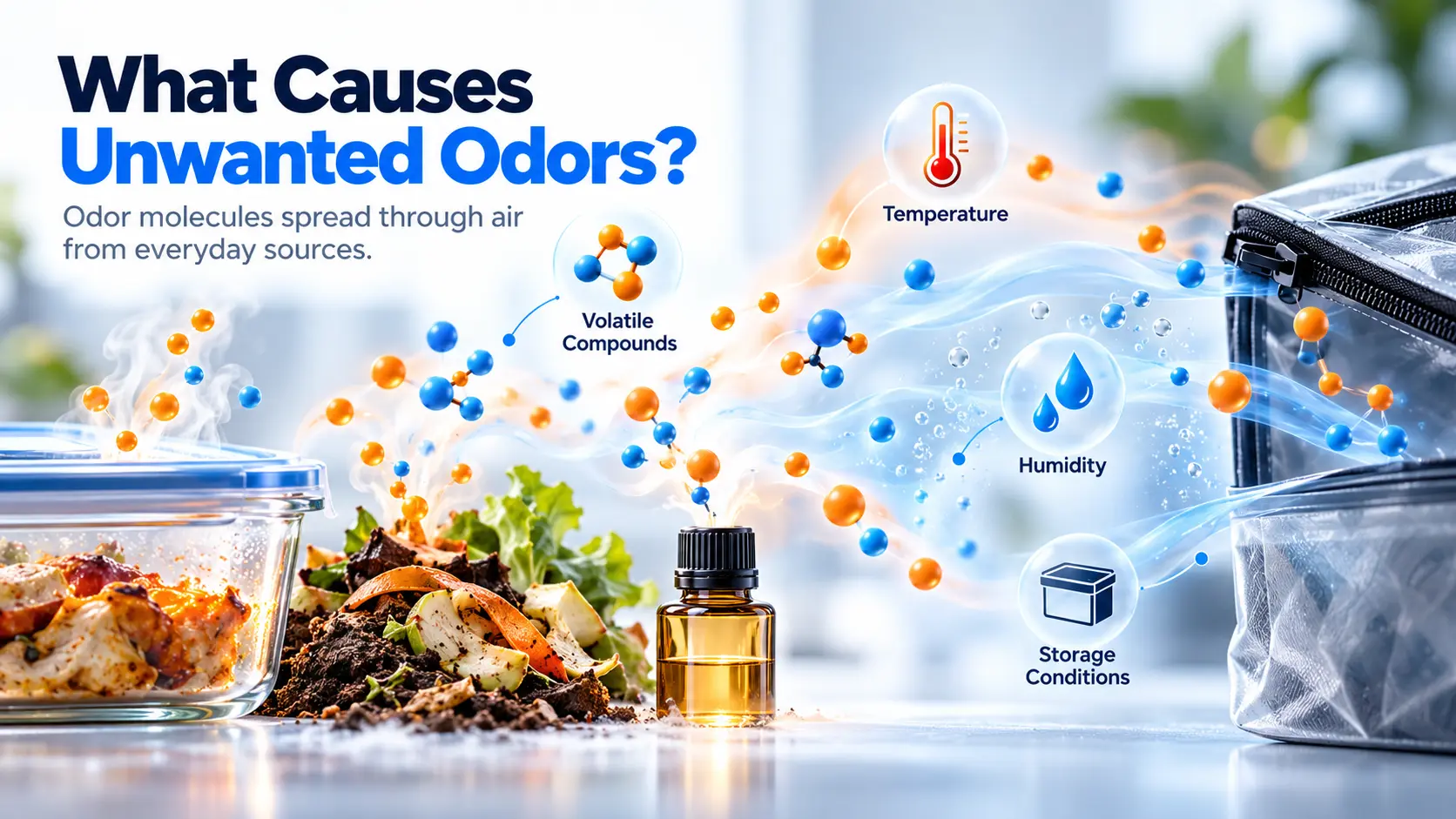
Most everyday odors come from volatile compounds released by food, organic materials, chemicals, and other sources. These molecules travel through the air and become noticeable when they reach our noses.
Several factors influence how odors spread:
- Volatile compounds: Different chemicals evaporate at different rates, affecting odor intensity.
- Temperature: Warmer conditions can increase the release of certain odor molecules.
- Humidity: Moisture can influence both odor release and filtration performance.
- Storage conditions: Poorly sealed containers allow odor molecules to escape into the surrounding air.
Understanding these factors helps manufacturers choose suitable odor-control materials and bag constructions.
2. How Does Activated Carbon Adsorb Odor Molecules?
The science behind activated carbon odor removal is based primarily on adsorption, not absorption.
Absorption occurs when a substance enters another material, much like water soaking into a sponge. Adsorption happens when molecules attach to a material’s surface.
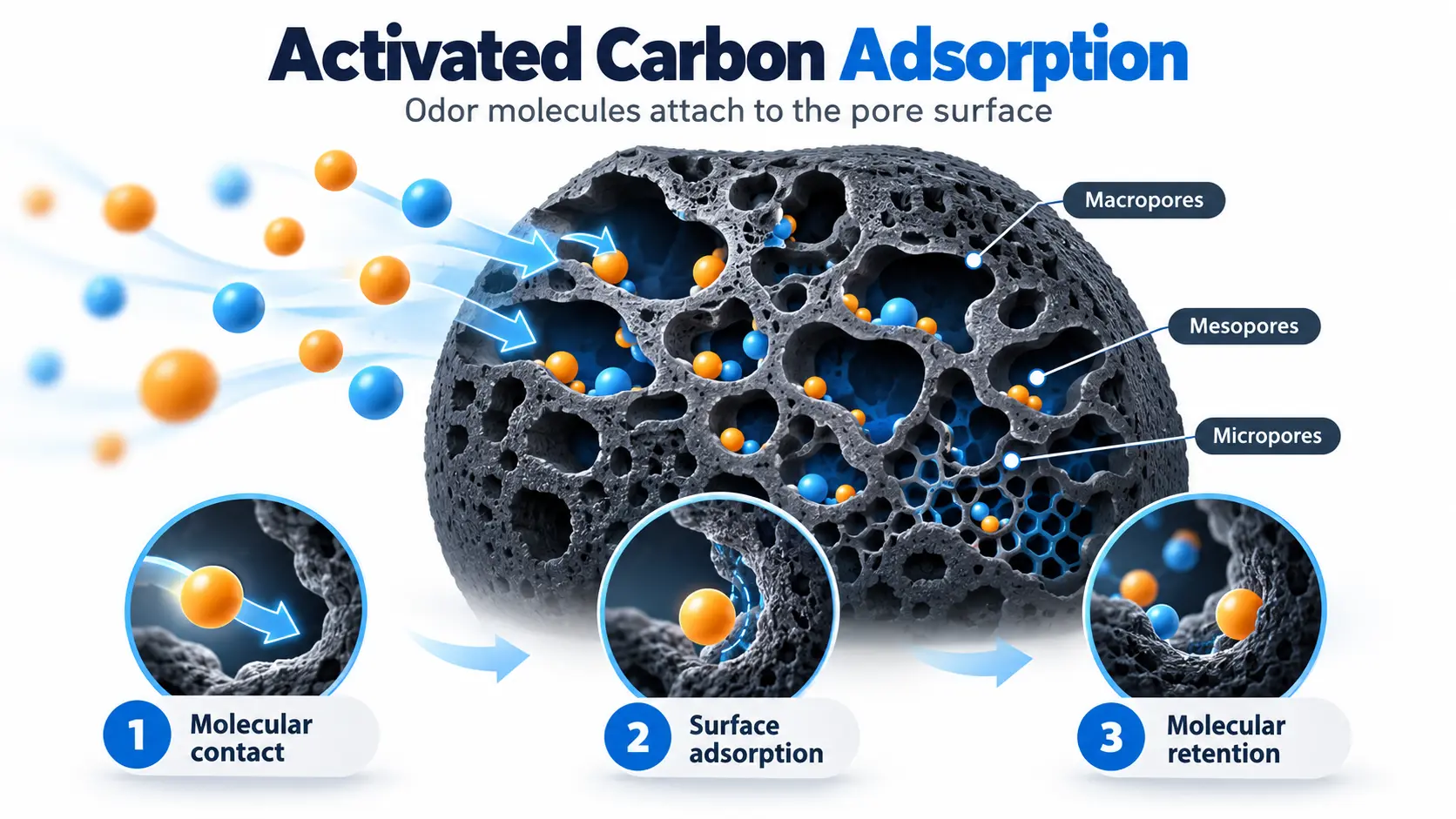
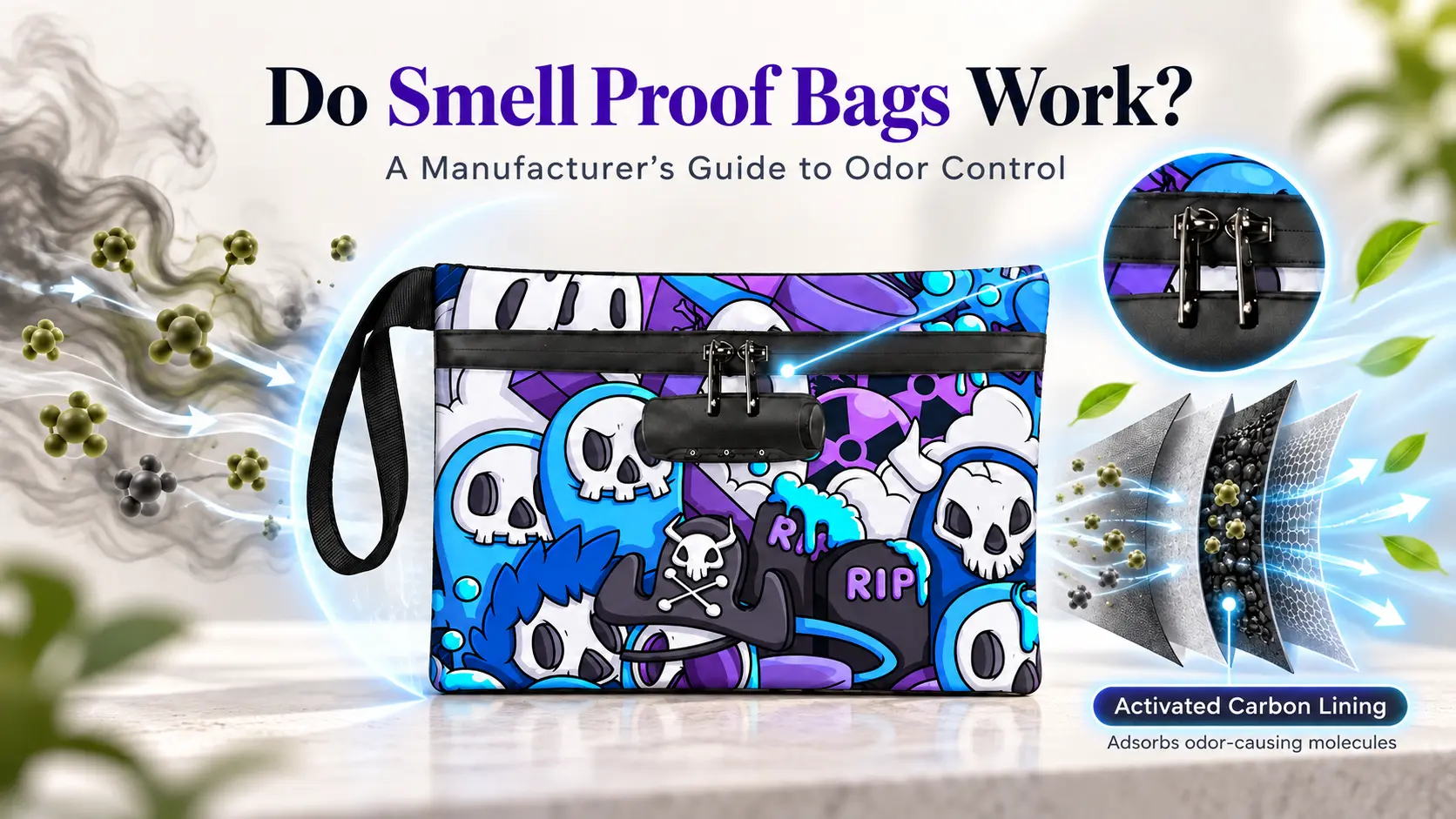
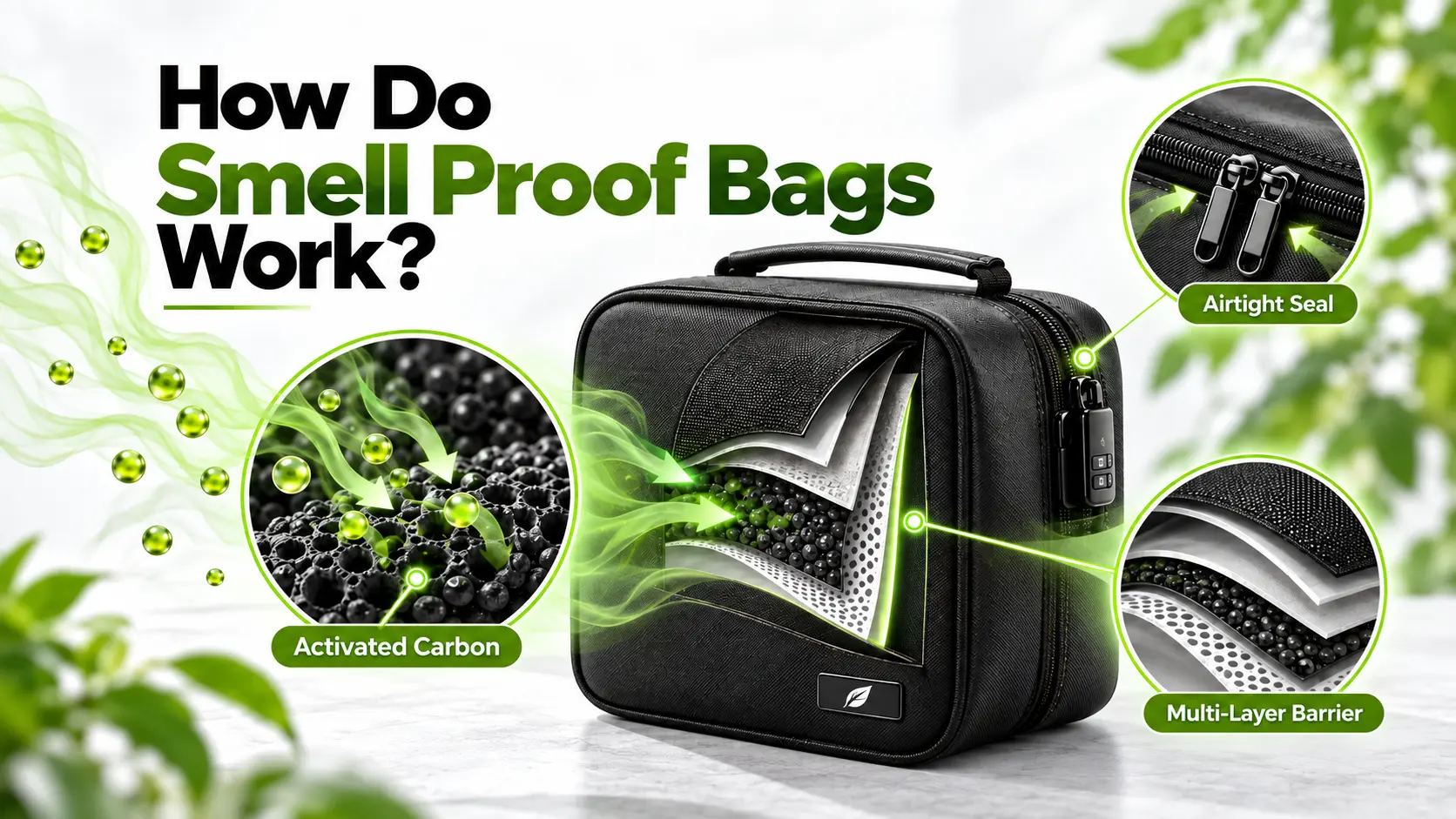
Activated carbon contains an extensive network of microscopic pores. These pores create a large internal surface where certain odor-causing molecules can attach through physical interactions.
The process involves three key steps:
- Molecular contact: Odor molecules reach the activated carbon surface.
- Surface adsorption: Suitable molecules attach to the internal pore walls.
- Molecular retention: The carbon holds these compounds until conditions change or available adsorption capacity becomes limited.
Unlike scented products that mask unwanted smells, activated carbon captures certain airborne compounds without adding fragrance.
However, not every odor molecule is adsorbed equally well. Performance depends on the compound’s chemical properties, carbon structure, and surrounding conditions.
3. Why Is Activated Carbon Effective at Odor Removal?
The main advantage of activated carbon is its highly porous structure.
Depending on the grade and manufacturing process, activated carbon can provide hundreds or thousands of square meters of internal surface area per gram.
Three characteristics are particularly important:
- Surface area: Provides adsorption sites for odor molecules.
- Pore size distribution: Determines which molecules can enter and interact with the carbon.
- Carbon quality: Influences adsorption capacity, consistency, and material durability.
Activated carbon may be produced from coconut shells, coal, wood, and other carbon-rich sources. Each material can have different pore characteristics.
For bag manufacturers, choosing activated carbon should involve more than comparing surface-area figures. The carbon loading, fabric construction, and intended application also matter.
4. How Activated Carbon Lining Works Inside Smell Proof Bags
A carbon-lined bag is more than a piece of activated carbon fabric sewn into an outer shell.
At TrimLife, we consider how the carbon layer works with the surrounding materials, stitching, and closure system during product development.
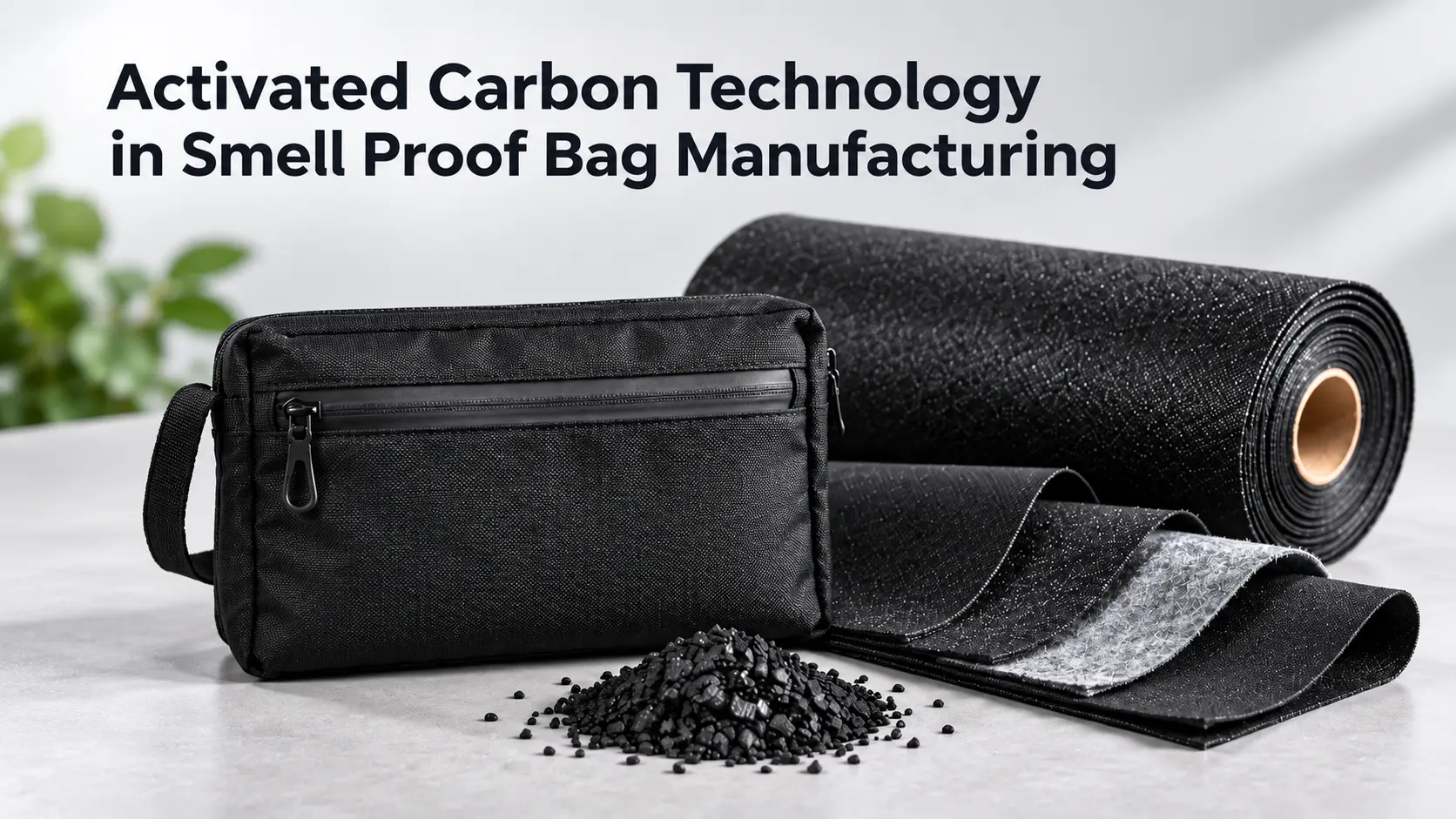
Our smell proof bag designs can incorporate 2mm activated carbon lining, supported by protective fabric layers to improve handling and durability.
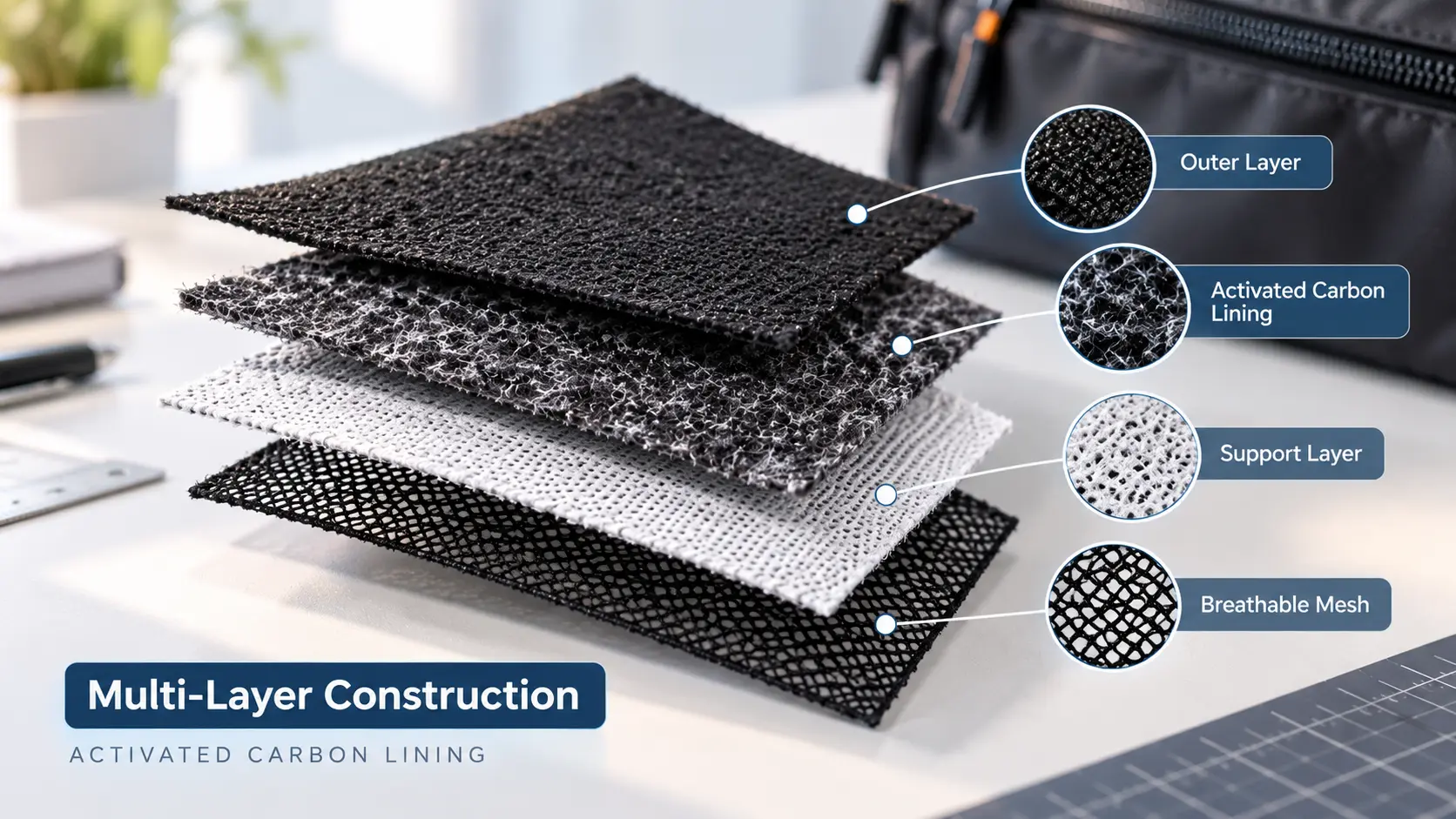
A typical construction may include:
- Outer shell: Durable polyester, nylon, or other selected fabrics.
- Activated carbon layer: Provides adsorption sites for certain odor molecules.
- Protective lining: Helps reduce abrasion and direct wear on the carbon material.
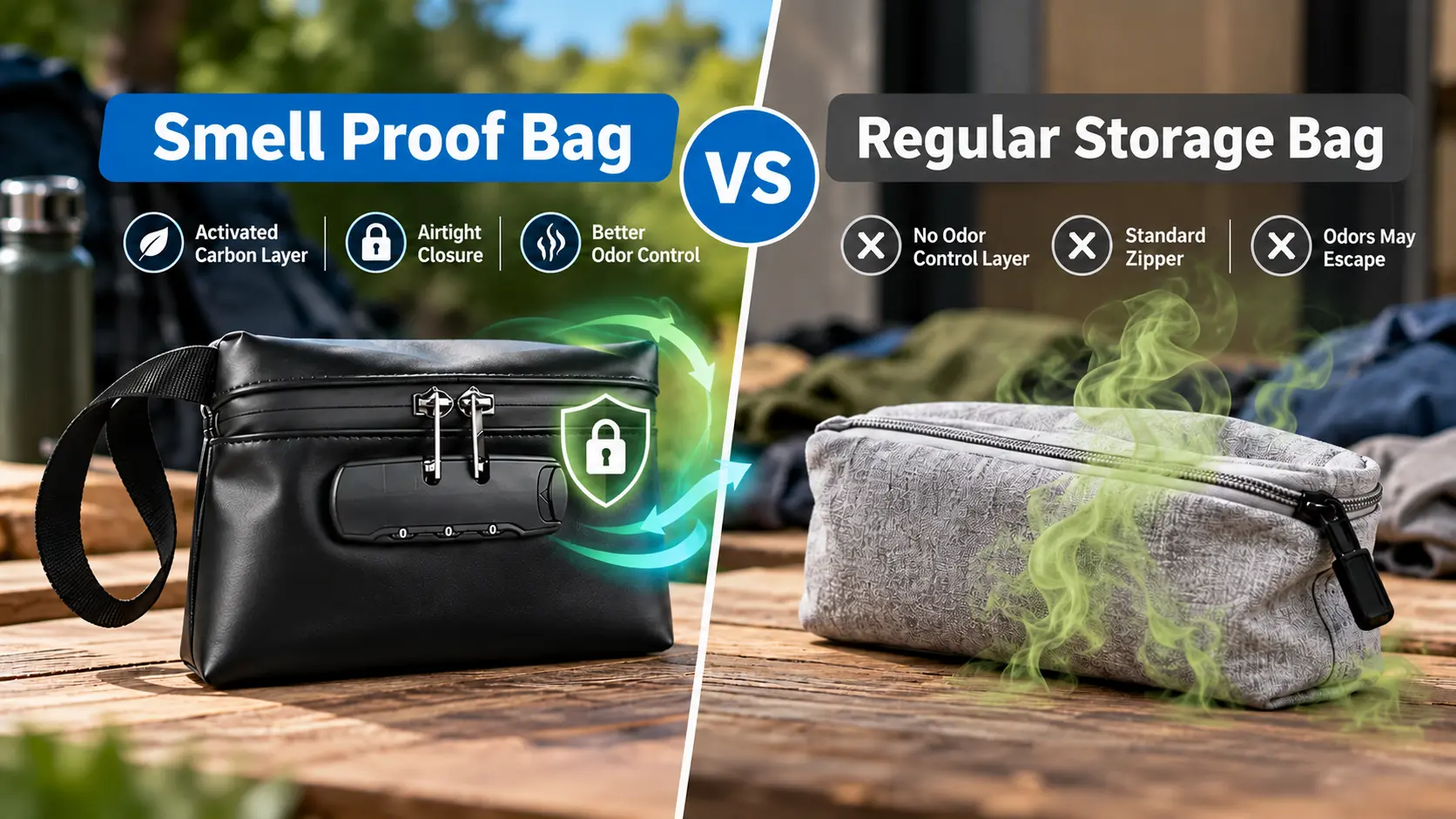
- Closure system: Airtight-style zippers and carefully designed openings help limit odor leakage.
The zipper is especially important. Even an effective carbon layer cannot compensate for a poorly sealed opening that allows odor-laden air to escape without contacting the carbon.
This is why we evaluate the complete bag structure rather than relying on carbon thickness alone.
5. What Affects Activated Carbon Odor Removal Performance?
Activated carbon does not remove every odor equally, and its performance changes with operating conditions.
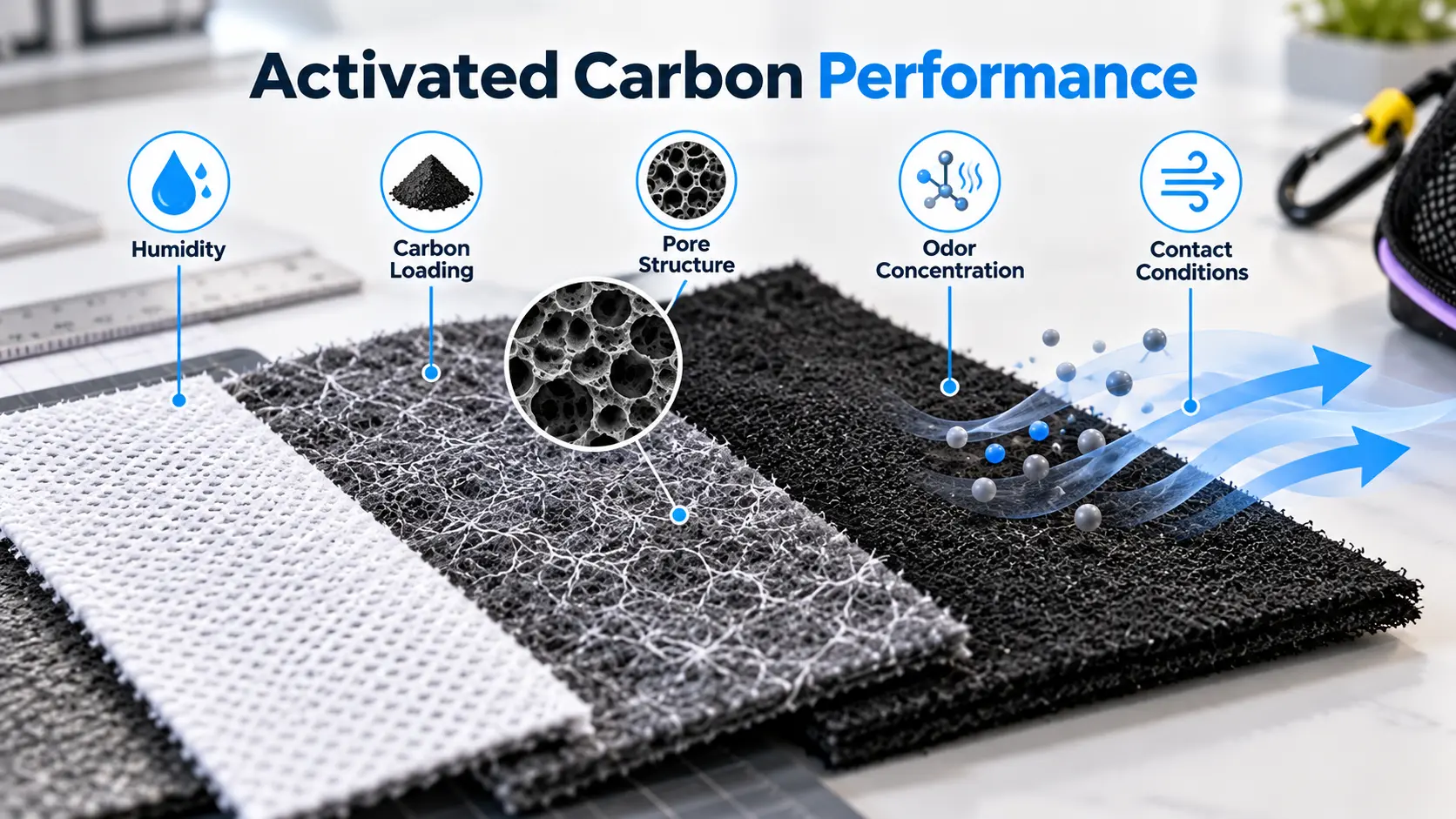
The most important factors include:
- Humidity: Water vapor can compete with certain odor molecules for adsorption sites.
- Carbon loading: The amount of activated carbon influences available adsorption capacity.
- Pore structure: Different pore sizes interact with different compounds.
- Odor concentration: Higher contaminant levels may use up available capacity more quickly.
- Contact conditions: Molecules need sufficient access to the carbon surface for effective adsorption.
A thicker carbon lining may contain more active material, but thickness alone does not guarantee better results.
When developing custom smell proof bags, manufacturers should assess how these variables work together in the intended application.
6. Activated Carbon vs. Other Odor Control Methods
Different odor-control technologies work in different ways. Understanding those differences can help brands select suitable materials.
| Method | How It Works | Main Limitation |
|---|---|---|
| Activated Carbon | Adsorbs certain odor molecules onto porous surfaces | Limited capacity and variable effectiveness |
| Fragrance Masking | Adds scents to reduce the perception of unwanted odors | Does not necessarily remove odor molecules |
| Airtight Containers | Restricts the movement of odor-laden air | Does not remove odors inside the container |
| Chemical Neutralizers | Reacts with certain odor-causing compounds | Effectiveness depends on the formulation and compounds |
For smell proof bags, activated carbon and well-designed closures can complement each other.
The carbon lining provides odor adsorption, while the closure helps limit uncontrolled air exchange. Neither component should be evaluated in isolation.
7. What Should Brands Check When Sourcing Carbon-Lined Bags?
For brands and wholesalers developing smell proof bags for effective activated carbon odor removal, material specifications are only the starting point.
A reliable smell proof bag manufacturer should help evaluate how the materials perform within the finished product.
At TrimLife, our development considerations include:
- Material selection: Choosing appropriate carbon lining thickness, fabric backing, and outer materials.
- Closure design: Comparing zipper constructions and possible air-leakage points.
- Construction durability: Reviewing stitching, lining attachment, and repeated-use requirements.
- Quality consistency: Checking incoming materials, production workmanship, and finished bag construction.
Where measurable odor-control performance is required, testing should use defined compounds, conditions, and appropriate methods. Routine visual inspections or AQL checks alone cannot establish adsorption efficiency.
Our OEM/ODM approach focuses on helping customers balance product function, construction, appearance, and production requirements.
8. Can Activated Carbon Linings Be Reactivated?
Activated carbon has a limited adsorption capacity. Over time, accumulated compounds can reduce the number of available adsorption sites.
Some activated carbon materials can be regenerated through controlled processes. However, industrial regeneration is different from simply placing a finished bag in sunlight.
Drying or suitable low-temperature treatment may help remove moisture and some loosely retained compounds, depending on the material.
For reactivatable activated carbon lining, any care instructions should be verified against the actual carbon fabric, adhesives, and finished bag construction.
Brands should avoid promising complete adsorption recovery unless supported by appropriate testing.
Frequently Asked Questions
Does activated carbon permanently remove odors?
Activated carbon captures certain odor molecules through adsorption, but its capacity is limited. Adsorbed compounds may also be released under changing conditions.
How long does activated carbon lining last?
There is no universal lifespan. Performance depends on carbon loading, odor concentration, humidity, usage frequency, and storage conditions.
Does activated carbon work in humid environments?
It can, but high humidity may reduce adsorption performance for some compounds because water vapor competes for available adsorption sites.
Are all smell proof bags made with activated carbon?
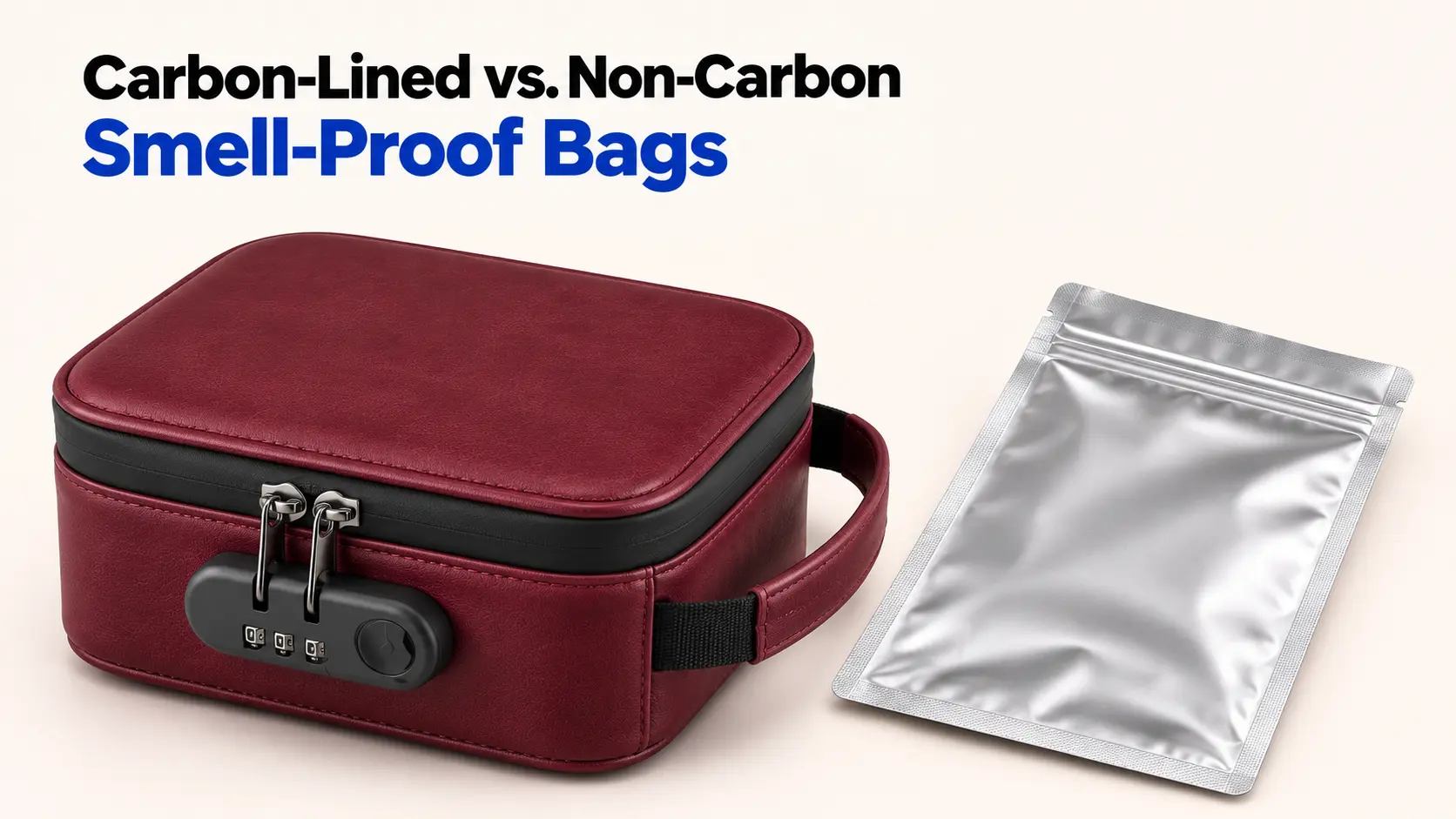
No. Some rely primarily on barrier materials or sealed closures. Carbon-lined designs combine adsorption with physical containment.
Can activated carbon completely eliminate every smell?
No. Different odor molecules have different adsorption characteristics, and carbon performance varies with material quality and environmental conditions.
Conclusion: Choosing the Right Carbon Lining for Your Bag Project
Understanding how activated carbon works is useful, but effective odor-control bag design requires more than selecting a porous material.
Carbon lining quality, protective layers, stitching, and zipper construction all influence the finished product.
At TrimLife, we work with brands, wholesalers, and distributors to develop custom smell proof bags that balance material selection, practical performance, and manufacturing requirements.
Whether you’re improving an existing design or developing a new product, our team can help explore the right construction for your project.
Custom OEM/ODM | MOQ from 100 pcs | Sampling in 3–5 Days
Have a carbon-lined bag project in mind? Let’s talk.

One Response