
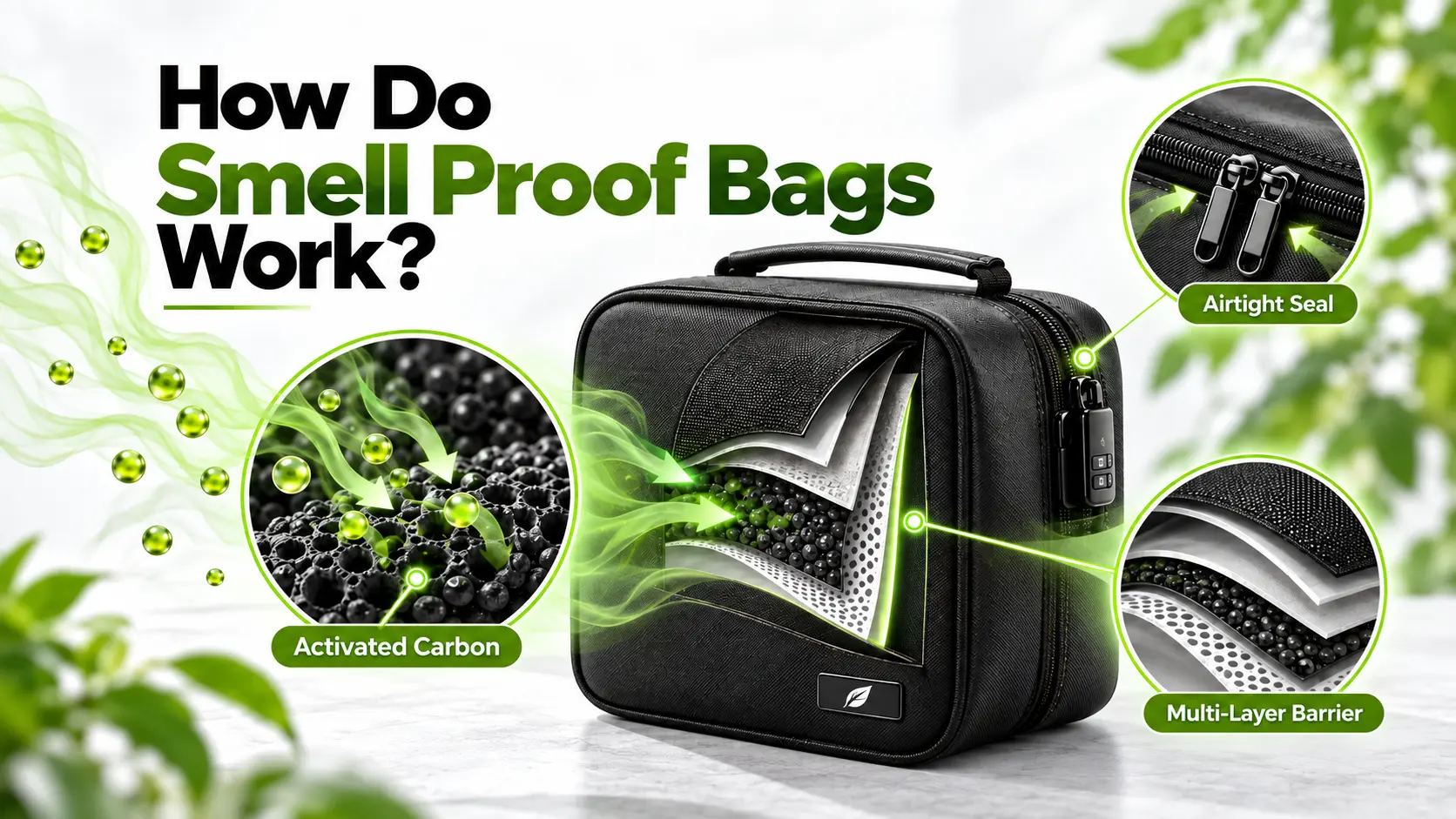
How do smell proof bags work, and what actually separates a reliable odor-control bag from an ordinary storage pouch? The answer is not simply thicker fabric or a tighter zipper. Effective smell proof bags depend on a complete system of activated carbon filtration, airtight closures, multi-layer barrier materials, and carefully controlled construction. When these elements work together, odor molecules are adsorbed and their escape paths are reduced. For brands developing custom smell proof bags, understanding this structure is essential when comparing materials, evaluating samples, and choosing the right manufacturing partner.
1. What Makes a Bag Smell Proof?
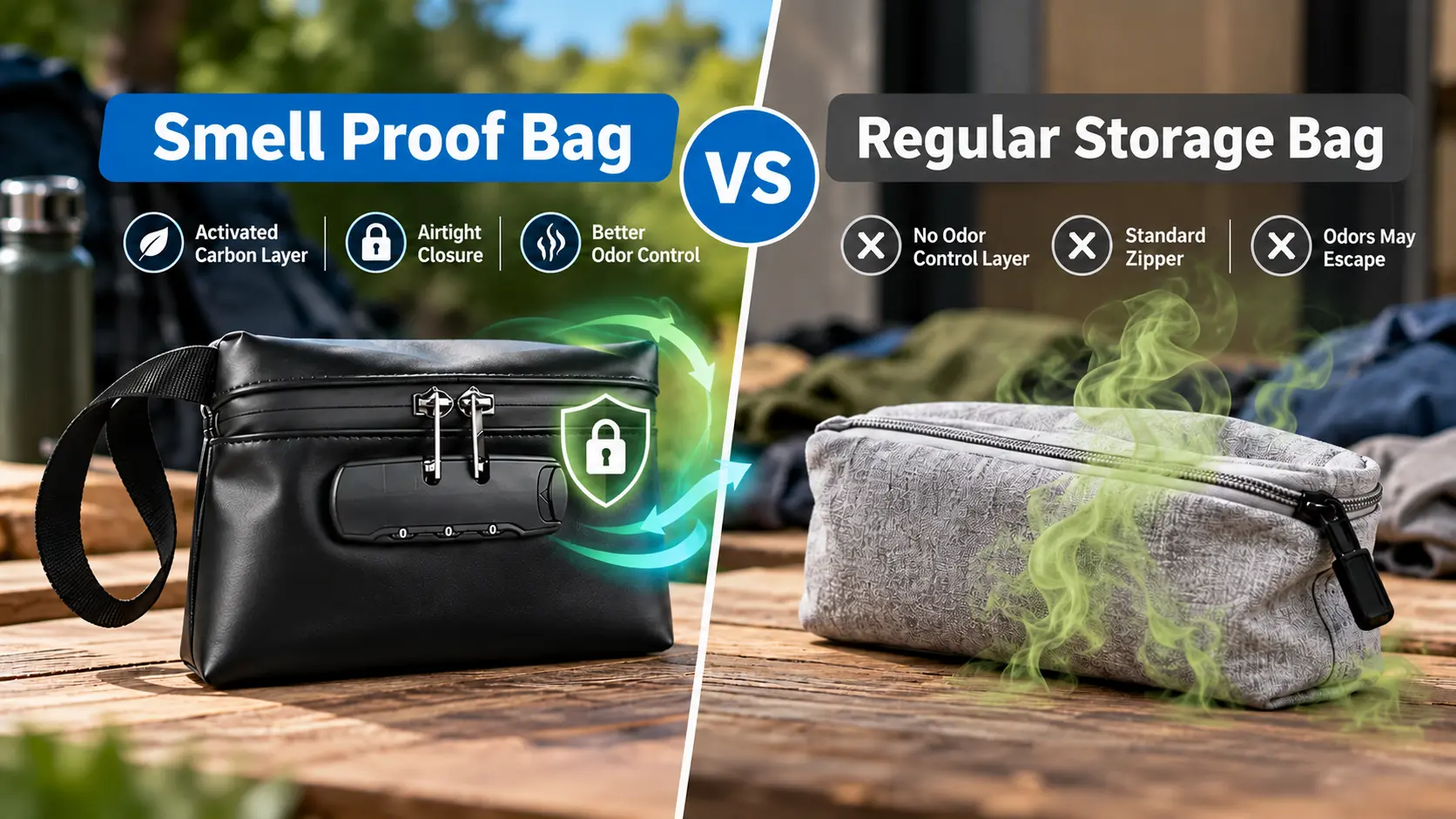
A reliable mechanism relies entirely on sophisticated engineering that integrates multi-layer activated carbon filtration matrices and airtight sealing zippers to trap volatile organic compounds inside the main storage chamber, while commercial procurement managers also source a specialized odor proof bag. Standard fabric storage pouches fail completely because woven textile pores allow gas molecules to diffuse freely through the container walls within hours of initial exposure. Engineering an industrial-grade odor barrier requires laminating high-density odor-adsorbing carbon layers between rugged outer ballistic shells and puncture-resistant inner protective linings.
- Molecular Adsorption Mechanics: Millions of microscopic pores within activated carbon sheets trap and neutralize organic odor molecules permanently.
- Standard Storage Vulnerability: Ordinary polyester or nylon pouches lack gas-tight barriers, letting volatile scents escape through fabric weaves.
- Hermetic Air Sealing: Specialized extrusion zippers compress dual-channel rubber tracks to block air exchange entirely.
2. The Science Behind Odor Blocking Technology
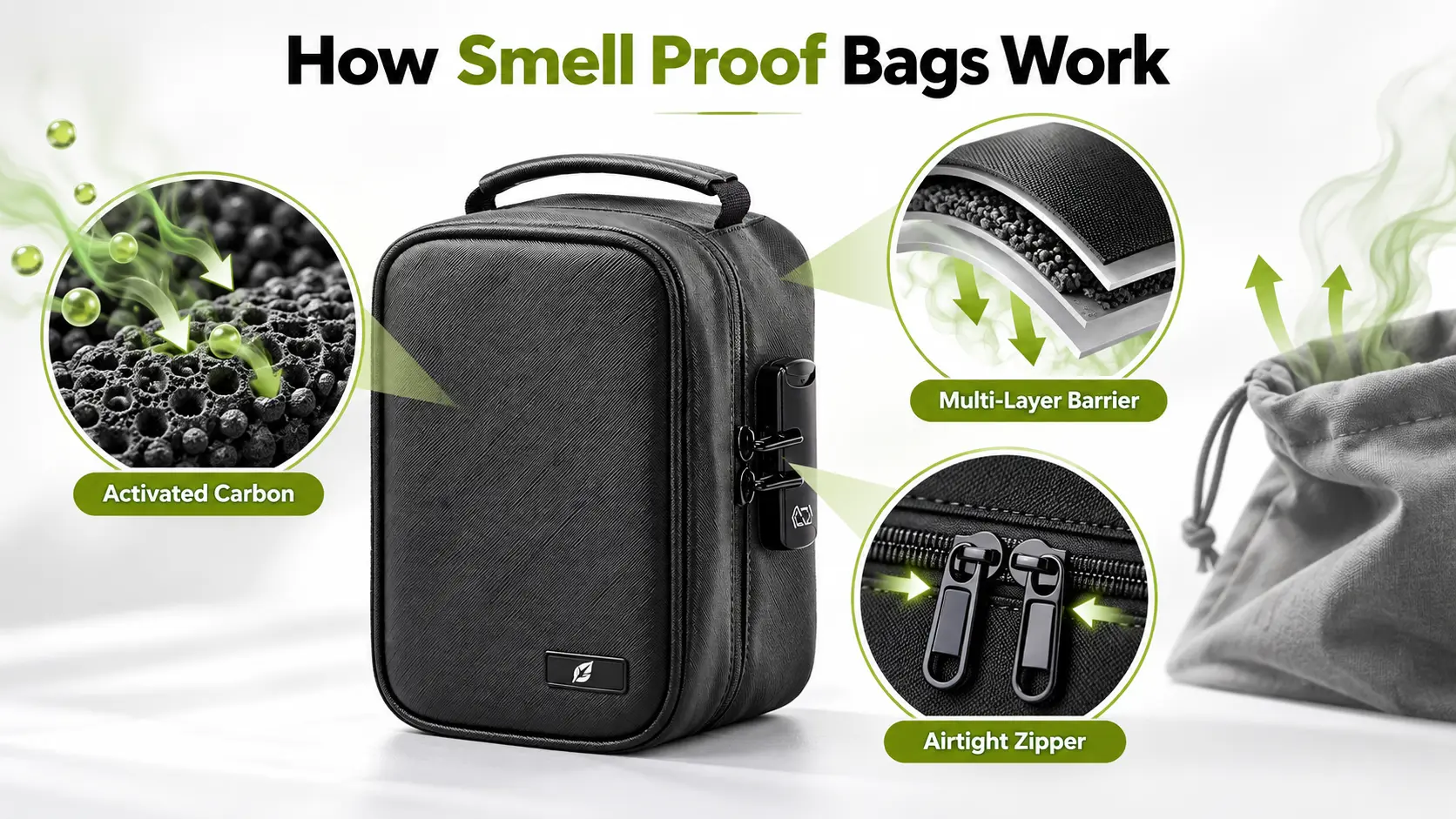
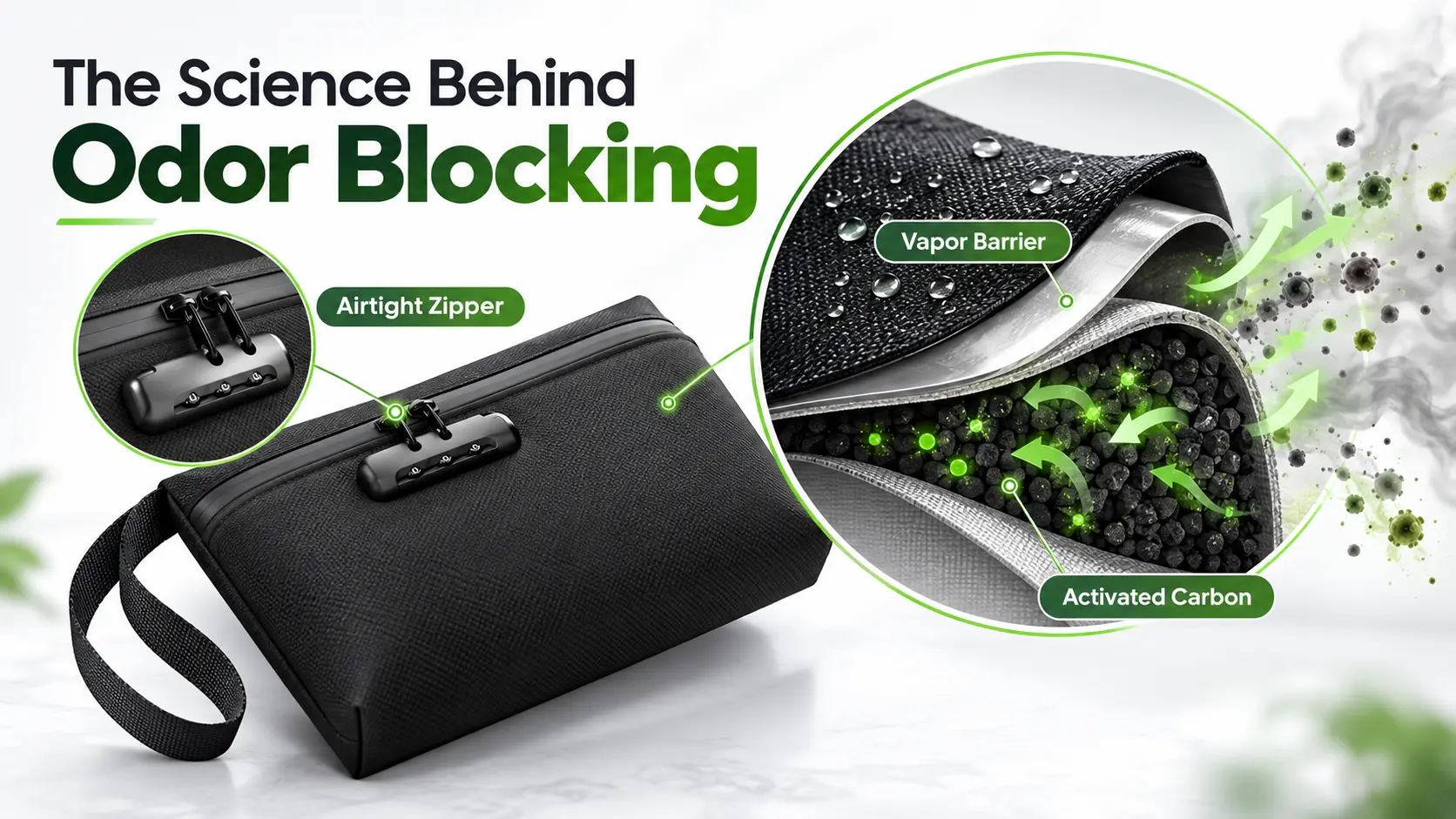
Locking volatile organic compounds dead in their tracks takes a masterclass in physics backed by heavy-duty odor proof technology, where advanced material testing proves a standard smell proof bag actually holds the line. Since stinky scent molecules are basically miniature escape artists that love to bounce around via thermal Brownian motion until they leak out into the open air, heavy-hitting soft-goods engineers cut them off at the knees by stacking impermeable metallic vapor barriers and activated carbon fabrics right into the textile core to lock every single whiff inside for good.
- Molecular Diffusion Suppression: Impermeable barrier films interrupt the random thermal motion of volatile organic gas molecules.
- Active Surface Adsorption: Microscopic carbon pores pull aromatic compounds inward using powerful intermolecular van der Waals forces.
- Hermetic Sealing Mechanics: High-pressure extrusion zipper tracks eliminate microscopic gaps where gas exchange occurs.
3. How Activated Carbon Absorbs Odors
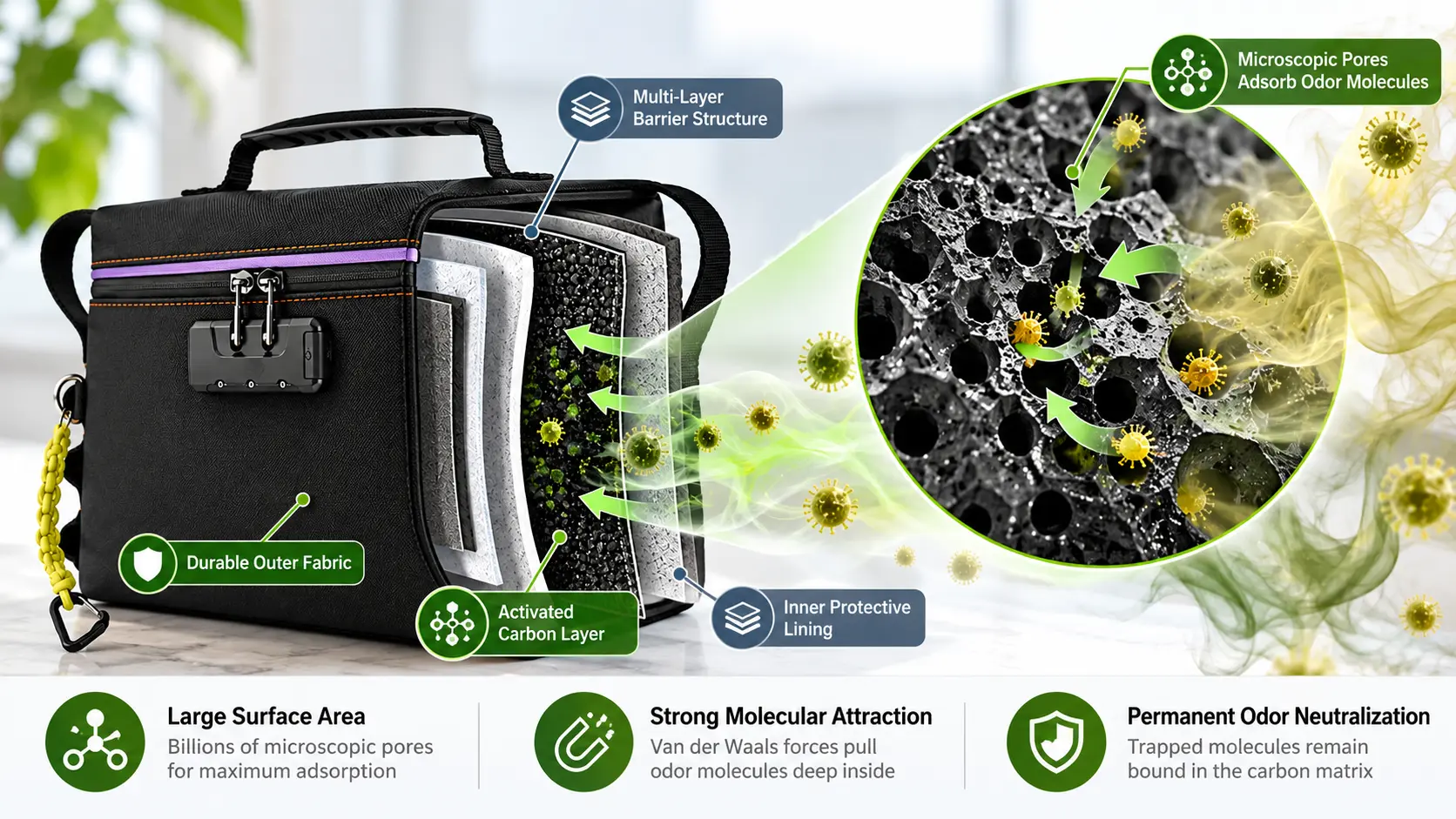
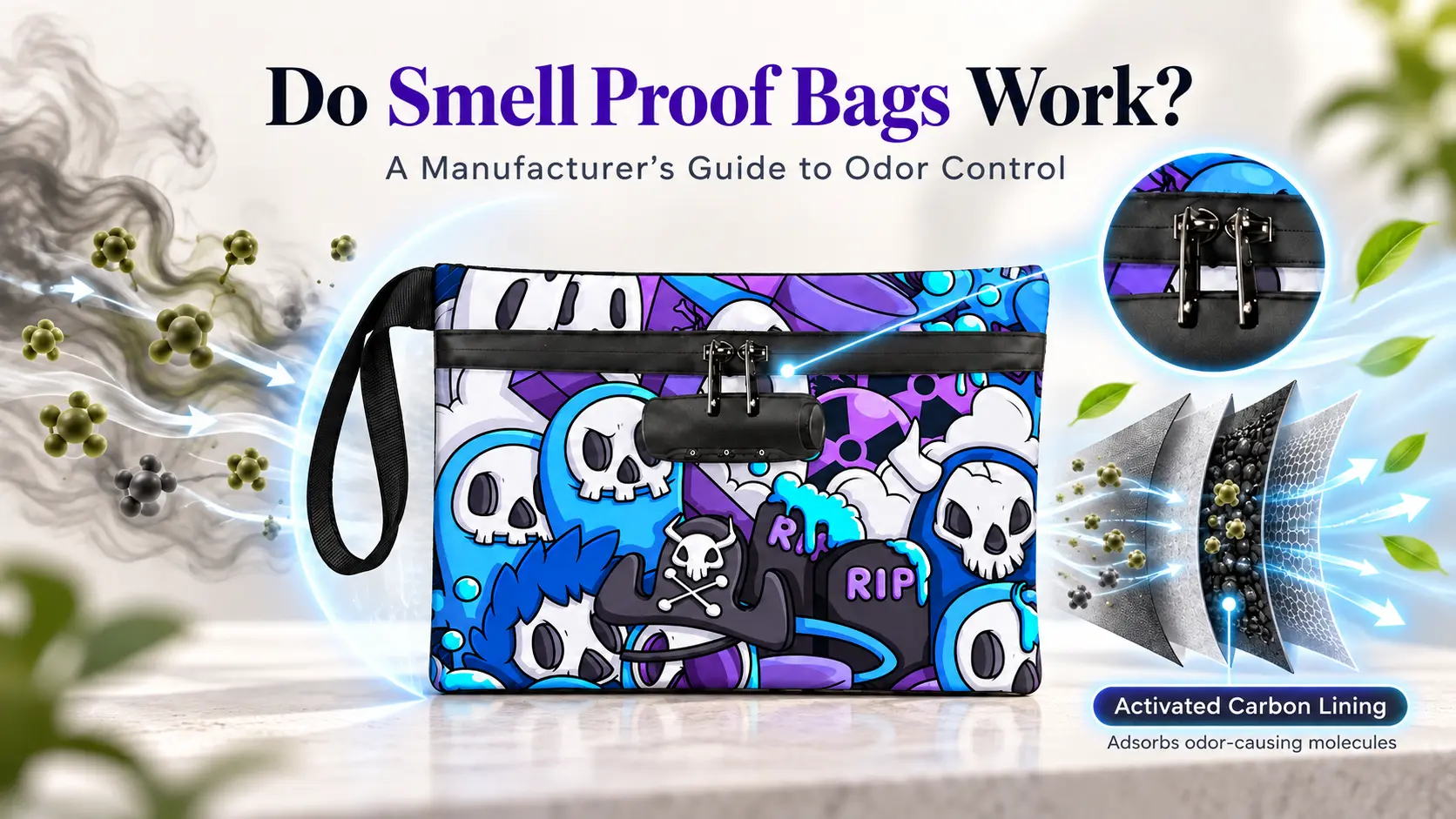
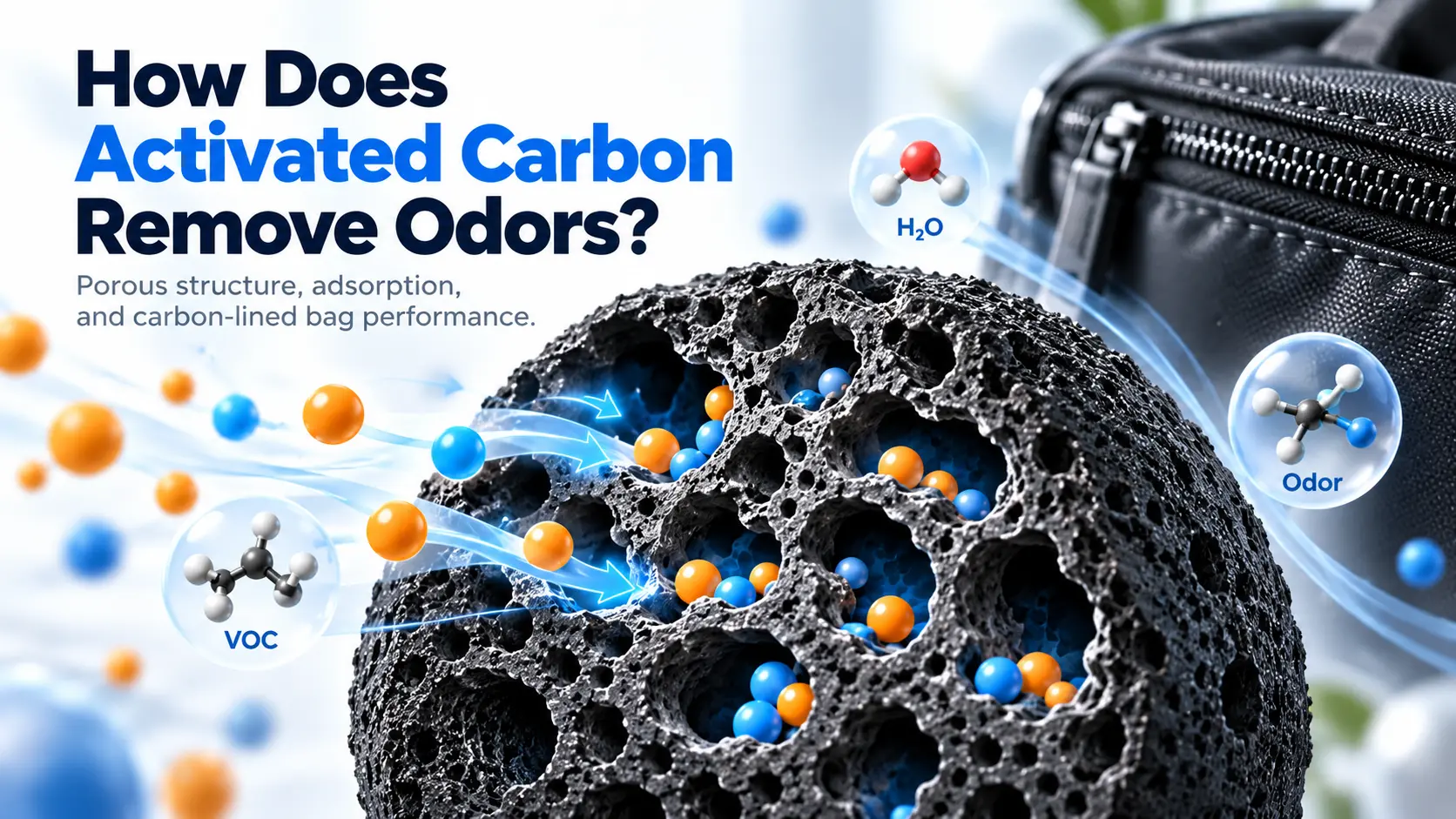
Thermal activation treats raw carbon materials by exposing them to high temperatures and oxidizing gases to create an intricate network of billions of microscopic surface pores inside every specialized carbon lined bag, paired with an active activated carbon chassis. When organic odor molecules drift past these treated carbon fibers, powerful van der Waals forces pull the molecules deep into the porous network and lock them permanently in place. An advanced how do smell proof bags work system utilizes this high-capacity adsorption process to neutralize complex organic scents continuously.
- Surface Area Maximization: Thermal activation creates thousands of square meters of internal adsorption surface area per single gram.
- Van Der Waals Forces: Molecular attraction pulls airborne scent particles deep into microscopic carbon pore channels.
- Permanent Odor Neutralization: Trapped organic compounds remain bound inside the carbon matrix without releasing back outward.
4. Why Airtight Closures Matter
Airtight zipper tracks prevent pressurized gas escape by compressing dual-channel rubber sealing profiles under high mechanical tension during every closing cycle for any advanced odor barrier bag, supported by precise engineering for an airtight zipper. Even the thickest activated carbon cloth will fail if the primary opening allows ambient air to exchange freely with the internal storage chamber. Professional soft-goods manufacturers integrate specialized extrusion zippers that lock mating rubber teeth together tightly to establish a complete hermetic seal.
- Dual-Channel Rubber Tracks: Interlocking rubber profiles compress tightly to block all potential gas escape routes.
- Mechanical Tension Sealing: Slider pulls apply calibrated pressure across zipper teeth to ensure uniform closure integrity.
- Environmental Elasticity Retention: High-grade elastomeric compounds resist hardening and cracking under extreme temperature shifts.
5. Multi Layer Construction of Professional Smell Proof Bags
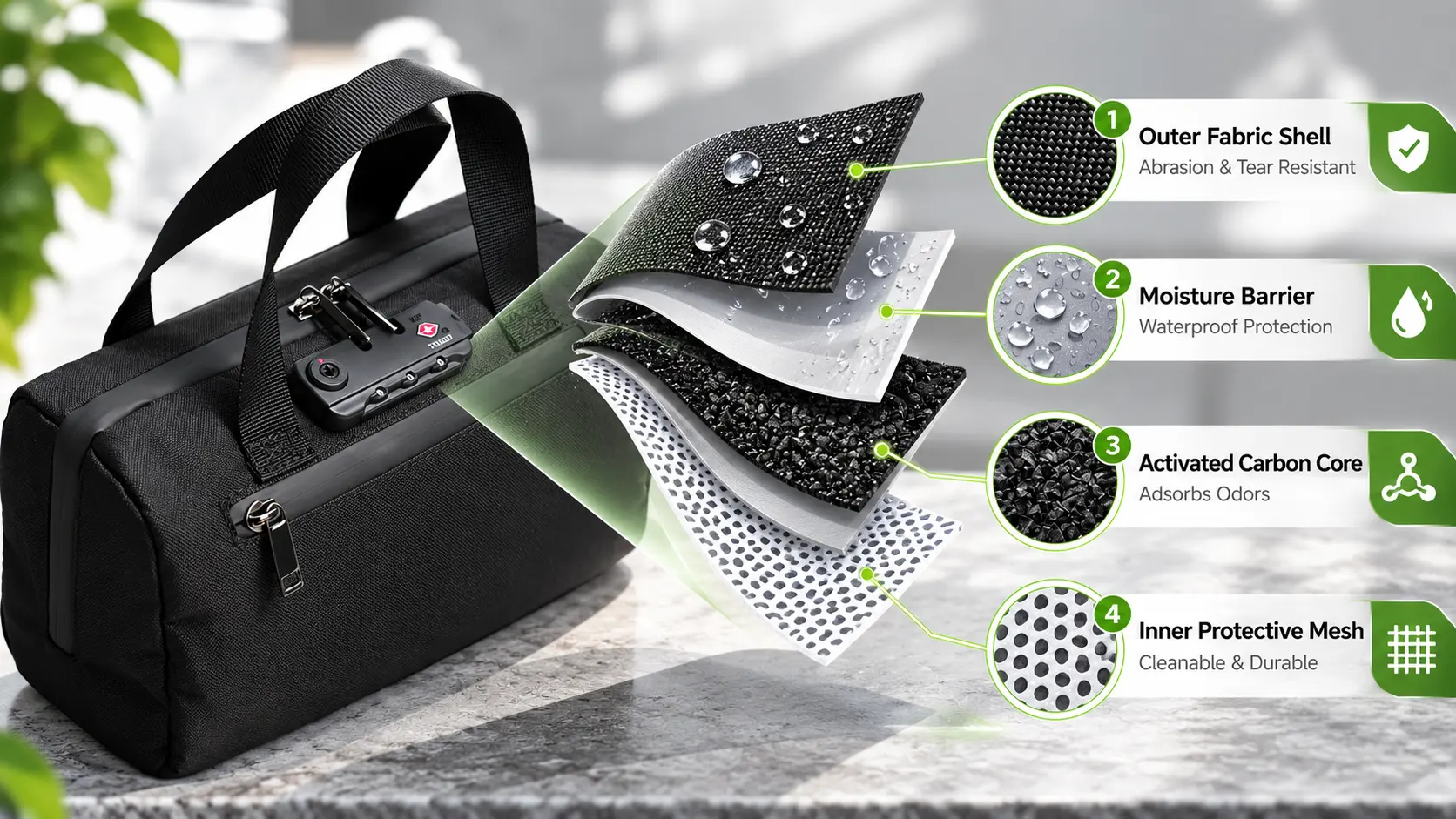
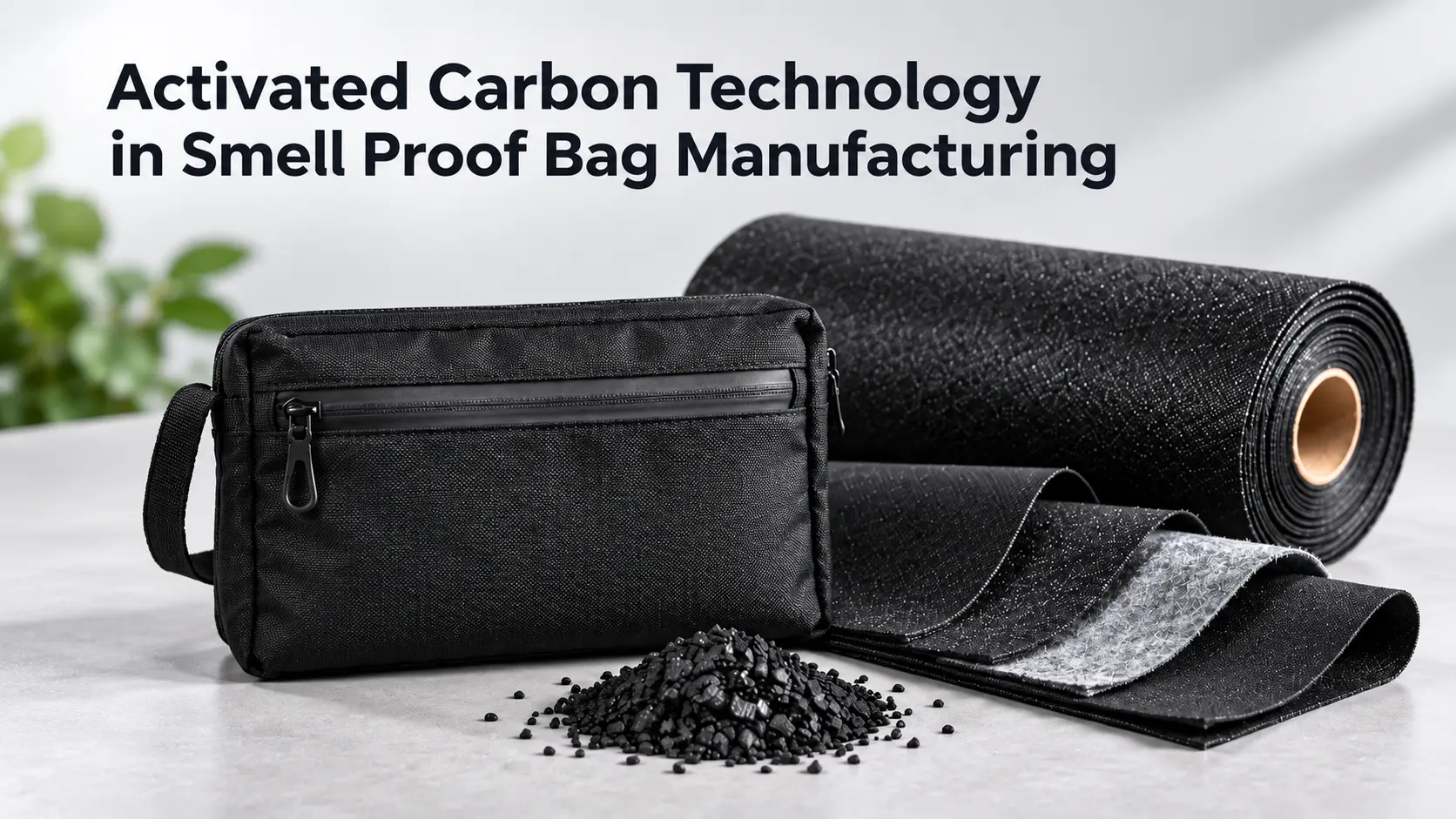
Professional odor containment relies on a precise four-tier structural matrix consisting of an abrasion-resistant outer fabric, a puncture-resistant moisture barrier, an activated carbon filtration core, and a cleanable protective inner mesh lining within every commercial multi layer odor barrier bag, verified by data from a carbon lined bag. This layered configuration protects the delicate carbon layer from physical friction while ensuring maximum airflow exposure for odor adsorption across every application.
| Structural Layer | Material Specification | Primary Odor Control Function |
| Outer Fabric Shell | 600D to 1680D Ballistic Nylon | Provides heavy-duty exterior tear and abrasion resistance |
| Moisture Barrier | Waterproof TPU or PEVA Film | Prevents ambient humidity from deactivating carbon pores |
| Filtration Core | Activated Carbon Woven Cloth | Adsorbs and neutralizes volatile organic compound gases |
| Inner Protective Mesh | Woven Polyester Mesh Lining | Shields brittle carbon fibers from internal sharp objects |
6. Can Any Bag Become Smell Proof?
Standard everyday backpacks and ordinary fashion luggage cannot become smell proof simply by adding a basic fabric lining because true odor containment requires a holistic engineering approach when utilizing an advanced odor barrier bag, alongside strict testing for a standard smell proof bag. Ordinary retail bags feature numerous unsealed stitch holes, permeable woven fabrics, and standard coil zippers that let volatile gas molecules escape effortlessly. Transforming a standard carry bag into a certified odor-retention product requires replacing entire sub-assemblies with specialized multi-layer carbon composites.
- Permeable Fabric Limitations: Standard retail textiles feature porous weaves that allow gas diffusion within hours.
- Unsealed Stitch Hole Leaks: Traditional sewing needle penetrations create microscopic pathways for aromatic vapor escape.
- Holistic Engineering Necessity: True odor retention requires simultaneous material impermeability and mechanical airtight sealing.
7. How Manufacturers Test Smell Proof Performance
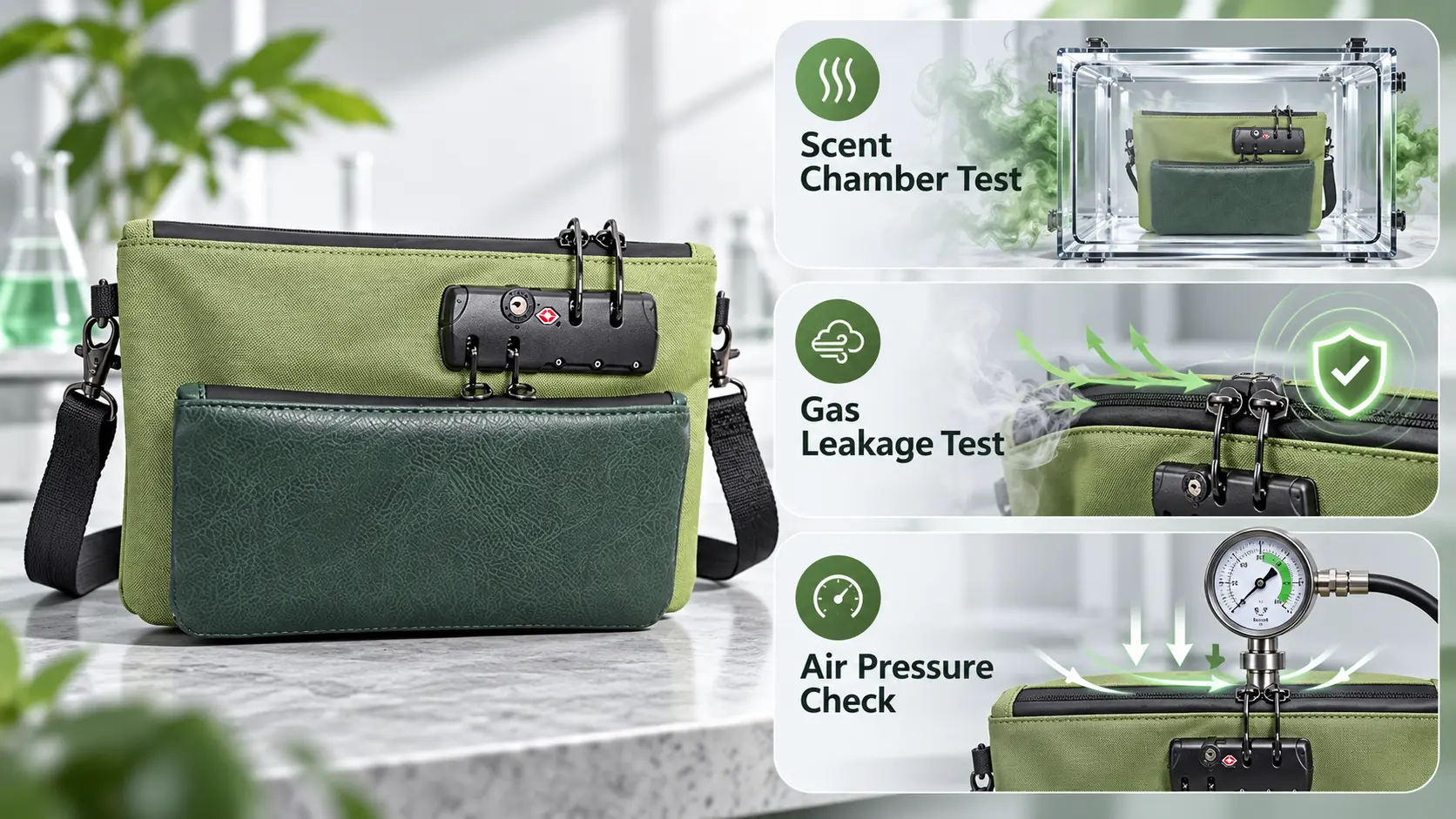
To lock down zero-failure performance before shipping containers overseas, top-tier OEM smell proof bag manufacturers put every custom line through brutal gas chromatography scans, closed-room sensory sniff tests, and airtight pressure audits, while leaning on TrimLife Bag to anchor the supply chain for every high-grade activated carbon deployment. Sourcing heads should never gamble on mystery factories; you want to lock arms exclusively with production partners who keep fully loaded QA testing labs right on-site to guarantee every single batch stays airtight, smell-proof, and bulletproof from the first run to the last.
- Olfactory Chamber Audits: Enclosed testing rooms evaluate real-world scent containment under controlled humidity and heat.
- Gas Transmission Testing: Laboratory equipment measures precise volatile organic compound leakage rates across sealed seams.
- Pneumatic Pressure Checks: Automated inflation rigs verify that extrusion zippers hold internal air pressure without dropping.
8. Choosing the Right Smell Proof Bag Supplier
Locking down a seasoned manufacturing floor is the absolute ultimate make-or-break call when you are trying to scale an outdoor gear lineup through an elite OEM supplier, especially when you spec out ultra-tight, airtight zippers. Smart procurement leads don’t leave things to chance; you need to rip open the hood on a factory’s technical muscle, raw material tracking, rapid sample turnaround, and strict QA protocols to ensure your production run goes from a napkin sketch to final port delivery without a single hiccup.
- Factory Capability Audits: Verify in-house automated cutting tables, heavy-duty bar-tacking machines, and RF-welding equipment.
- Material Sourcing Integrity: Ensure direct mill partnerships for certified activated carbon cloths and waterproof TPU zippers.
- Prototyping Speed: Assess digital tech pack translation speed and physical sample turnaround times.
9. Frequently Asked Questions
What material blocks smell best?
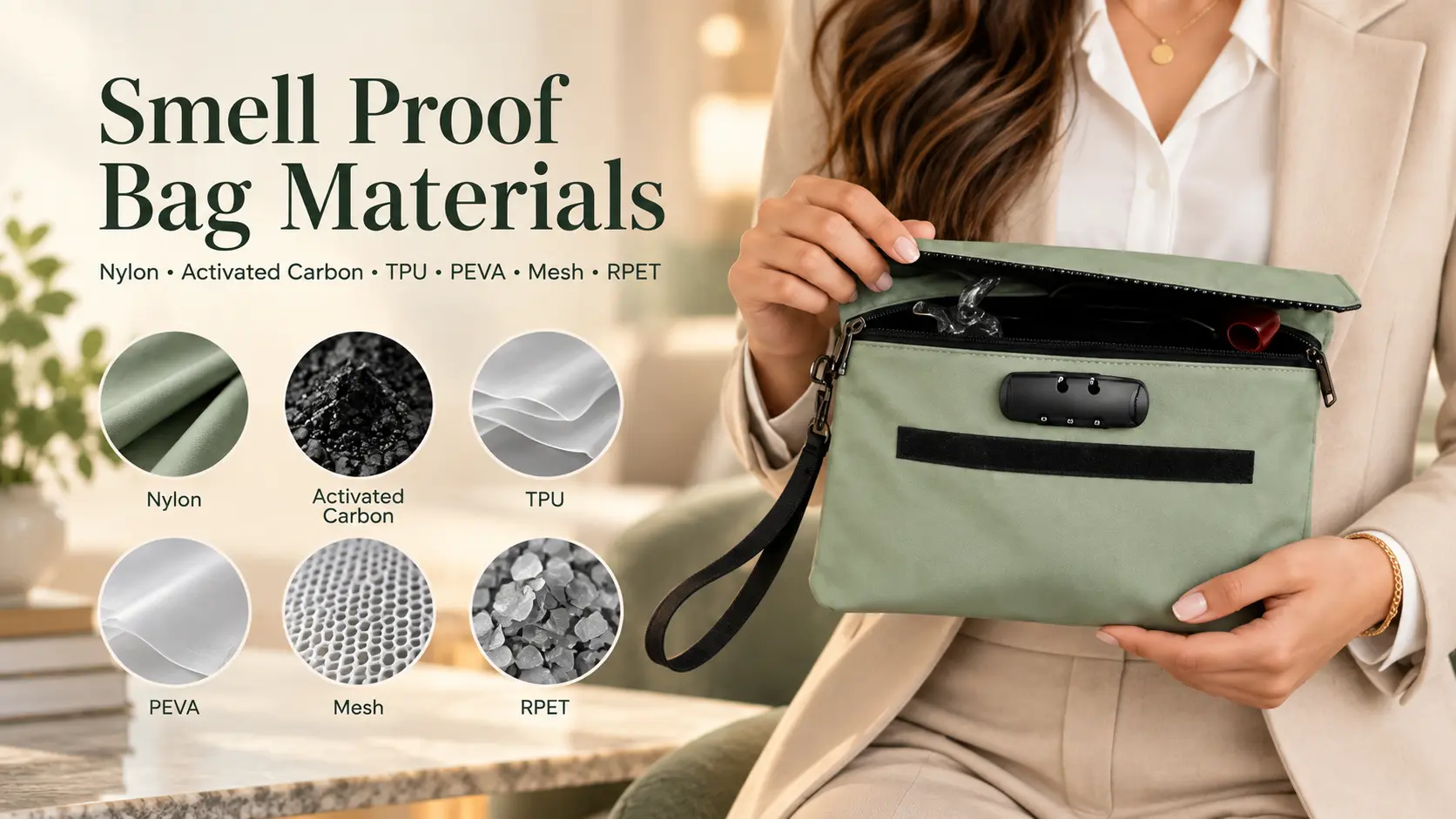
When you want zero odor leakage, the gold-standard stack is a high-performance woven activated carbon cloth sandwiched right between a waterproof TPU vapor barrier and a heavy-duty ballistic nylon outer shell. That multi-layer composite acts like an absolute fortress, neutralizing volatile organic compounds on contact while blocking ambient humidity from wrecking the carbon’s microscopic adsorption pores over the long haul.
Does activated carbon remove odors?
Yes, active carbon doesn’t just mask funk with heavy perfumes—it traps and permanently locks away the actual gas molecules inside a massive web of microscopic pores through physical adsorption. While cheap air fresheners just cover up bad smells temporarily, activated carbon grabs onto volatile organic compounds on contact and holds onto them for good so they never escape.
How long does carbon last?
A top-tier carbon lining easily pushes two to five years of heavy daily abuse, though its lifespan ultimately depends on how intense your stinks are and whether you keep it away from brutal, damp conditions. If you want to squeeze every last drop of life out of those adsorption fibers, keep the bag dry and ditch the harsh chemical cleaners when it’s time for a wash.
What is the OEM production process for odor barrier gear?
OEM production involves digital pattern grading, computerized laser cutting of multi-ply carbon composites, specialized automated bar-tacking of structural strap anchors, high-frequency radio-frequency welding of internal waterproof seams, and rigorous pneumatic pressure testing prior to export packaging.
How do factories ensure airtight zipper performance?
Factories ensure airtight zipper performance by utilizing extrusion-molded rubber teeth and dual-channel sealing tracks that compress uniformly under calibrated slider tension. Every production batch undergoes strict pressure testing in dedicated quality control laboratories to verify zero gas leakage.
Why do cheap storage pouches fail smell tests?
Cheap storage pouches fail smell tests because manufacturers substitute expensive activated carbon cloth with ineffective carbon powder sprays or thin printed carbon dots. These low-cost alternatives lack the massive surface area required to trap heavy aromatic molecules and wash off easily during regular use.


2 Responses