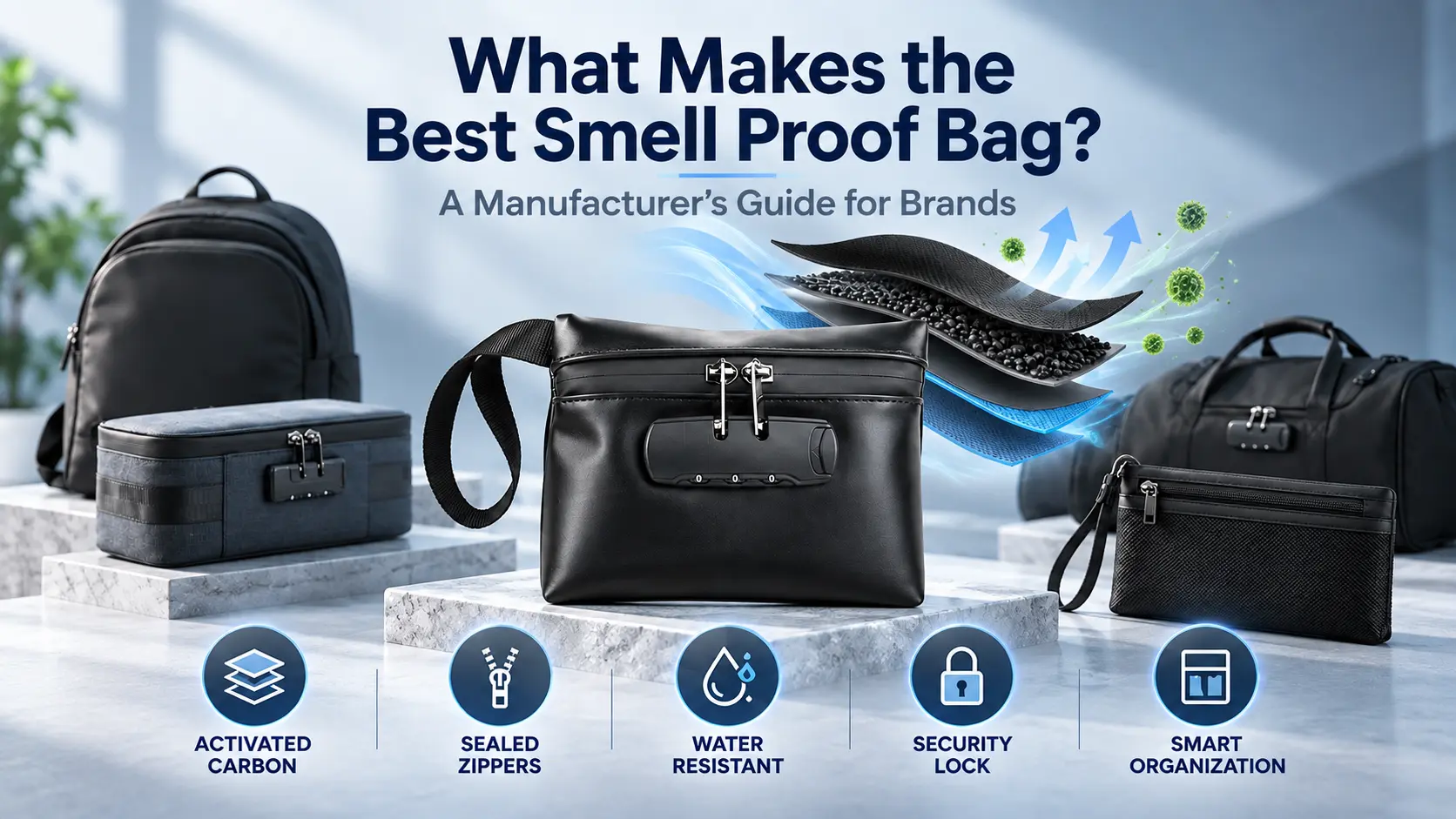
Buyers often ask what makes the best smell proof bag. From a manufacturing perspective, there is no single material or feature that determines whether a bag performs well.
A reliable smell proof bag is the result of several components working together: the activated carbon layer, closure system, outer fabric, seams, internal structure and the intended use of the finished product.
At TrimLife, we work with brands on different smell proof bag formats, from compact pouches and cases to sling bags, backpacks and duffel bags. One thing we have learned through product development is that adding more layers or more features does not automatically create a better product.
The right construction depends on your target market, retail positioning, expected use and budget.
In this guide, we explain the main features we normally evaluate with buyers before moving from concept and material selection to sampling and bulk production.
1. What Actually Makes a Smell Proof Bag Effective?
A good smell proof bag should be evaluated as a complete system rather than by one material specification.
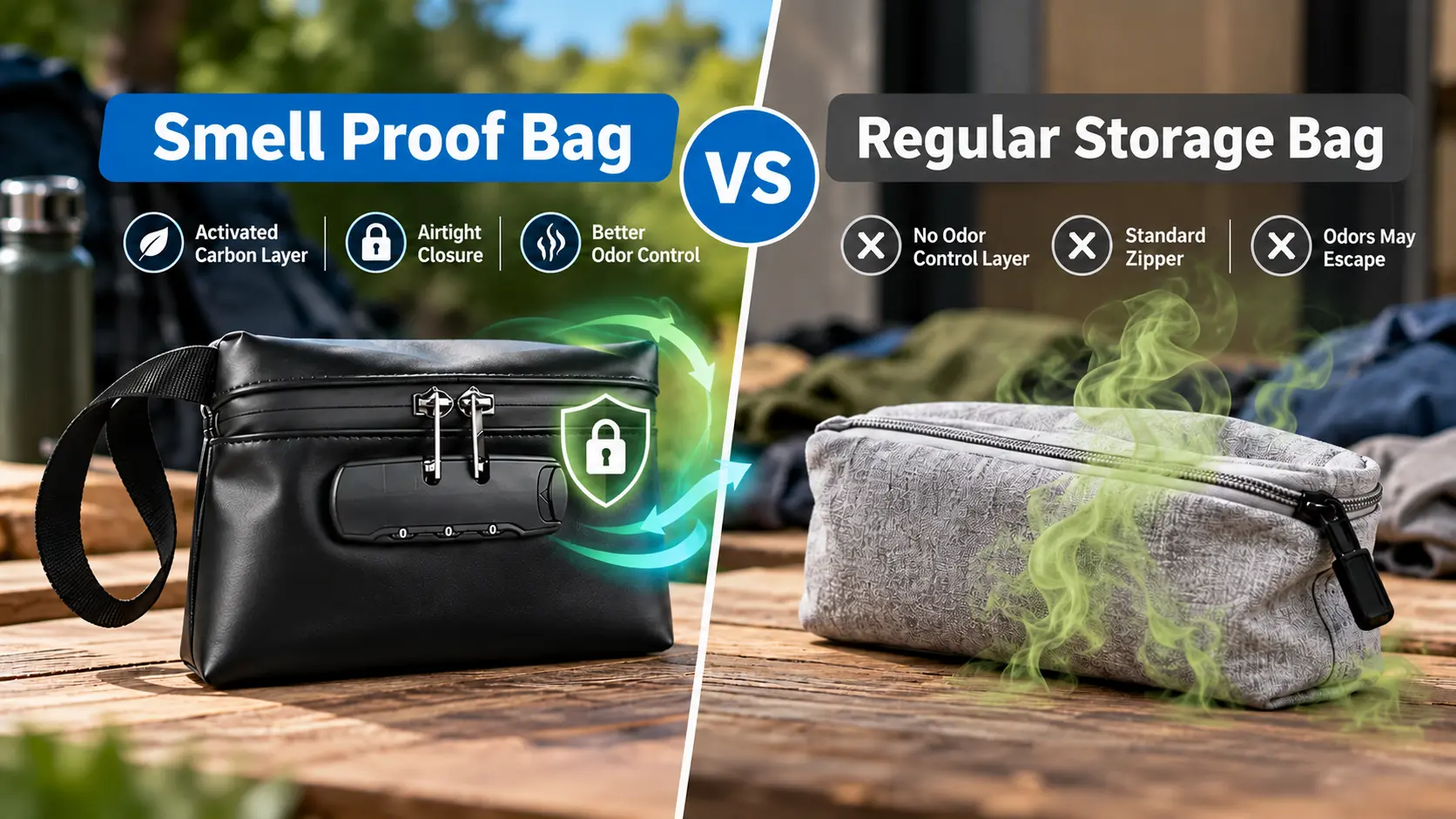
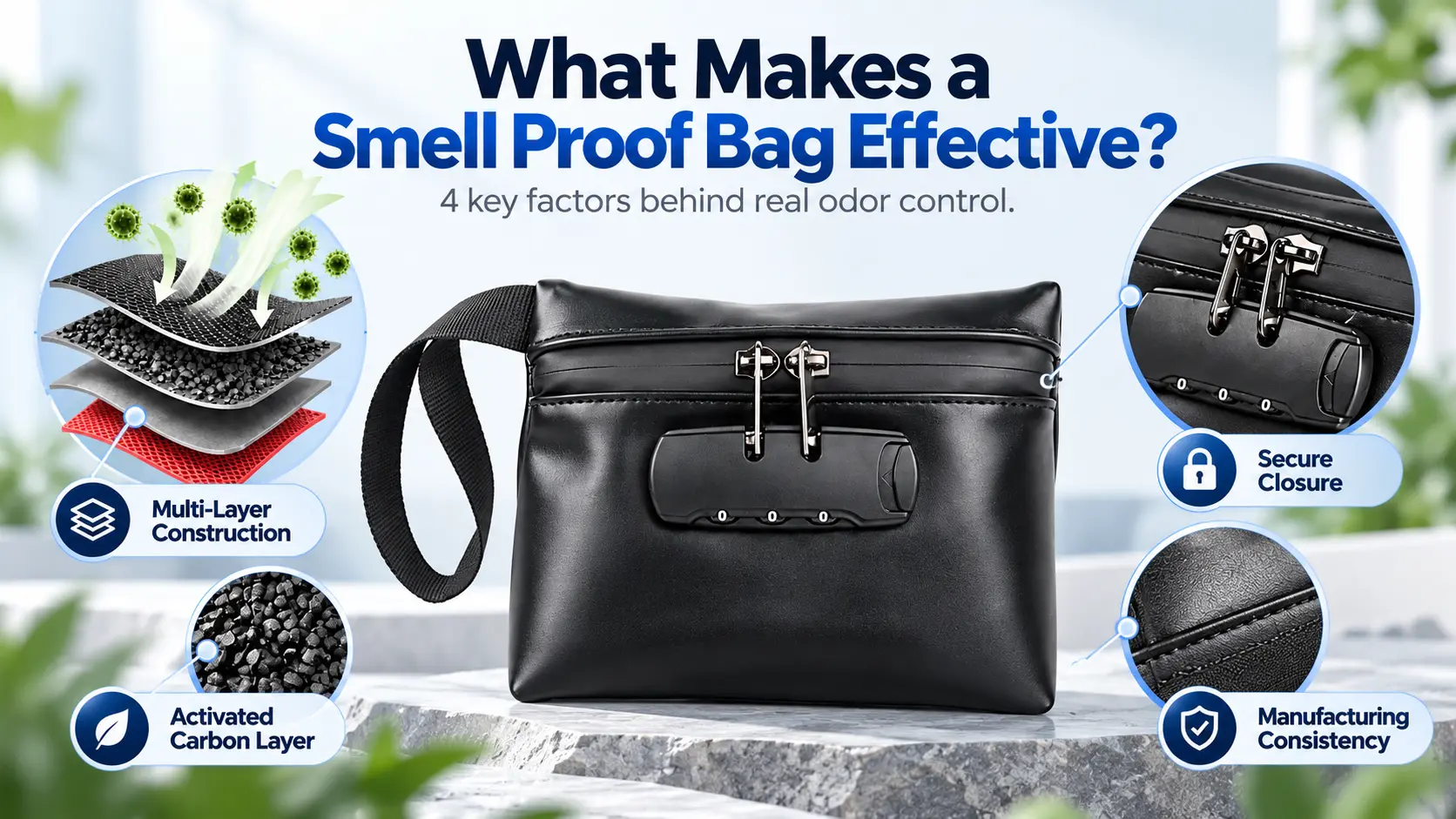
In our experience, odor-control performance usually depends on four areas: the adsorption layer, the closure, the outer structure and the way these materials are combined during production.
A tough outer shell won’t save a weak zipper. Same goes for high-grade carbon lining—if air leaks right through the seams or closure, performance drops fast.
For brands developing an odor proof bag, we normally look at:
- Multi-Layer Construction: Outer fabrics, support layers, and odor-control linings need to work as a team. No stiff, bulky armor plating. Just smooth, flexible performance.
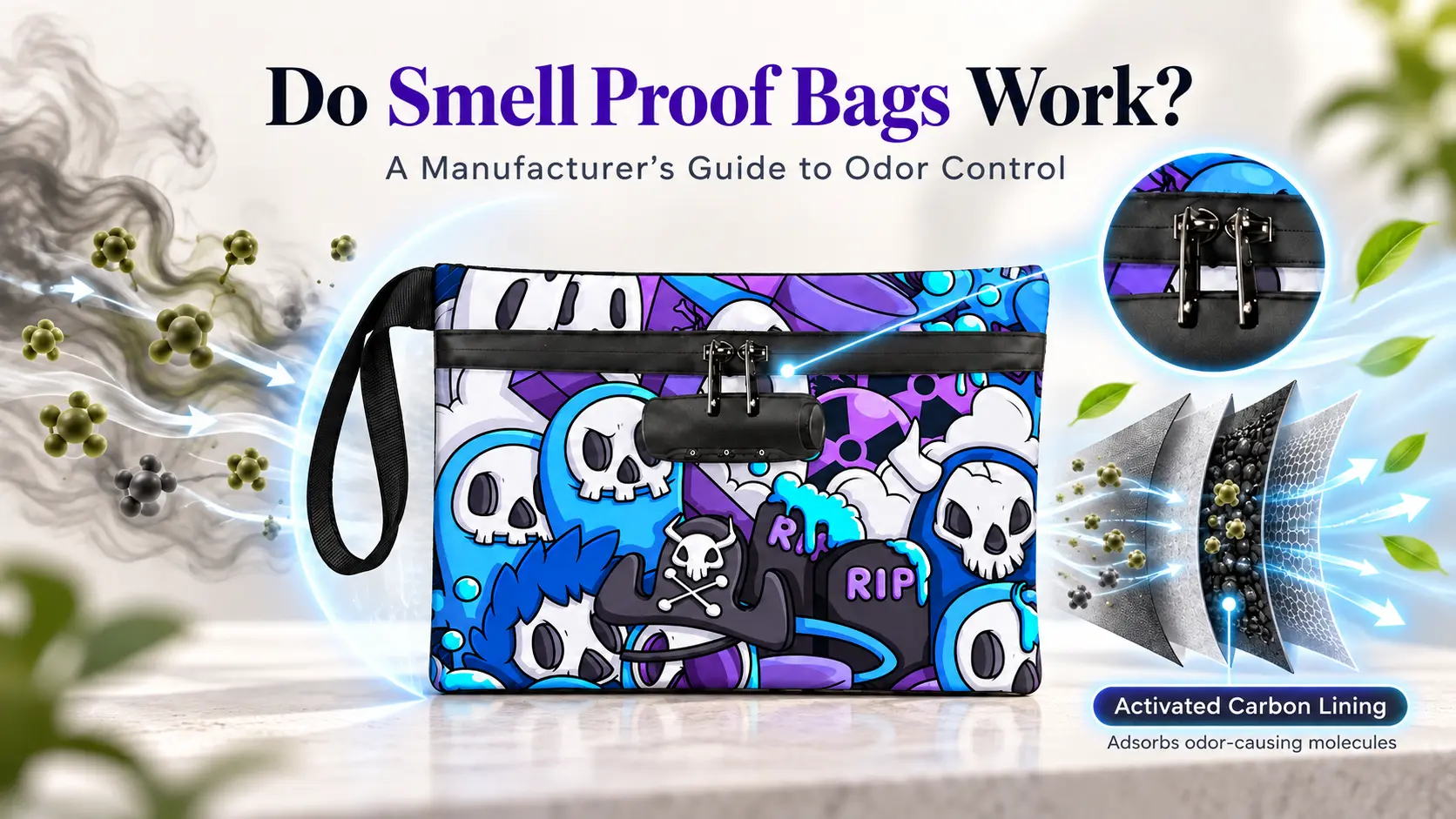
- Activated Carbon Layer: Carbon materials help adsorb odor molecules before they escape from the storage compartment.
- Closure Performance: The zipper or sealing system should reduce unnecessary air exchange around the main opening.
- Manufacturing Consistency: Lamination, sewing and material positioning should remain stable from sample approval through bulk production.
The important point is balance. The best construction is not always the thickest or most complex one. It is the structure that fits the product’s actual application.
2. Activated Carbon: What Brands Should Evaluate
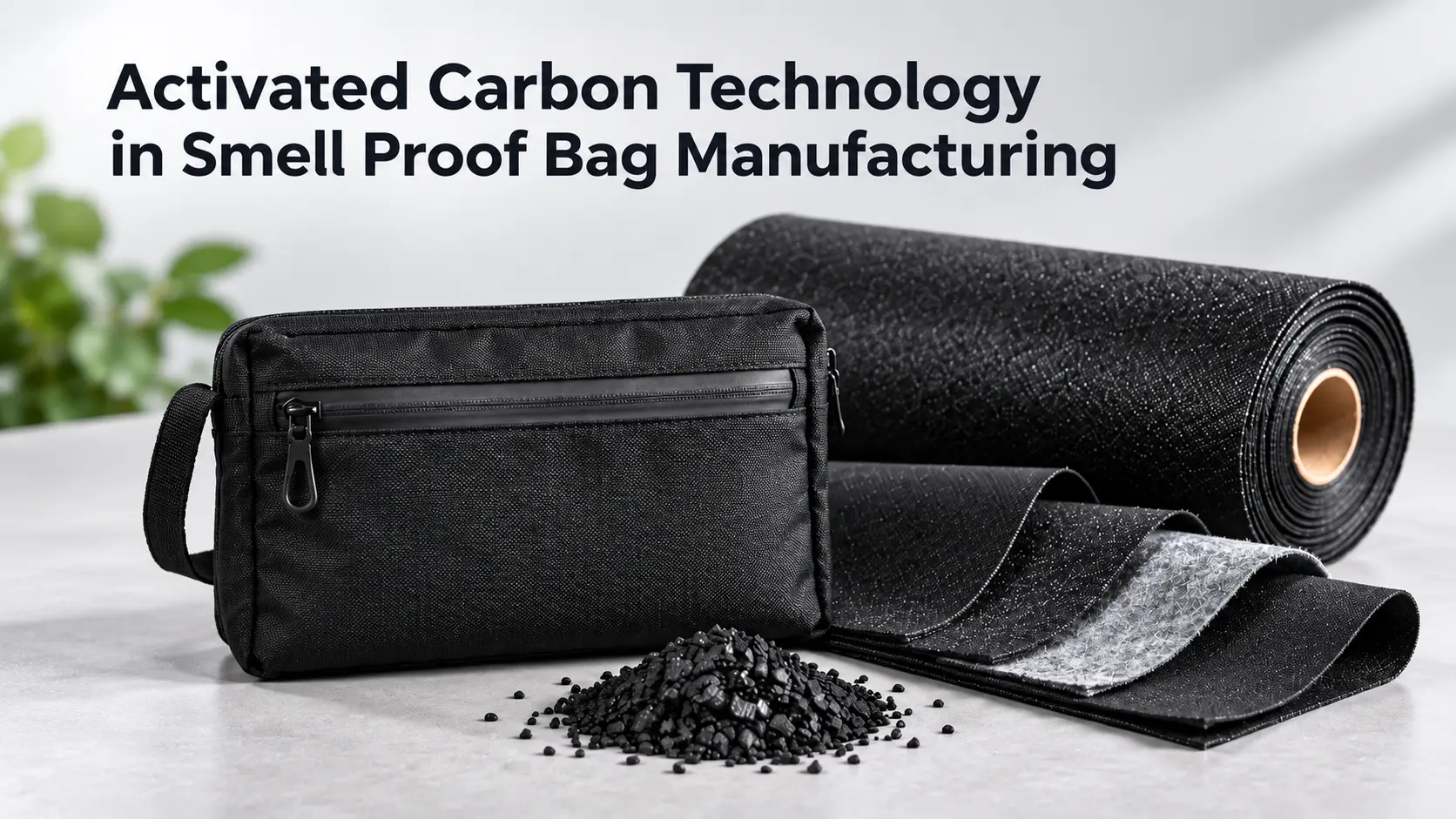
Activated carbon is one of the most important materials used in a carbon lined smell proof bag, but simply saying that a product contains activated carbon does not tell a buyer enough.
From a manufacturing perspective, we look at the carbon layer as part of the complete material system.
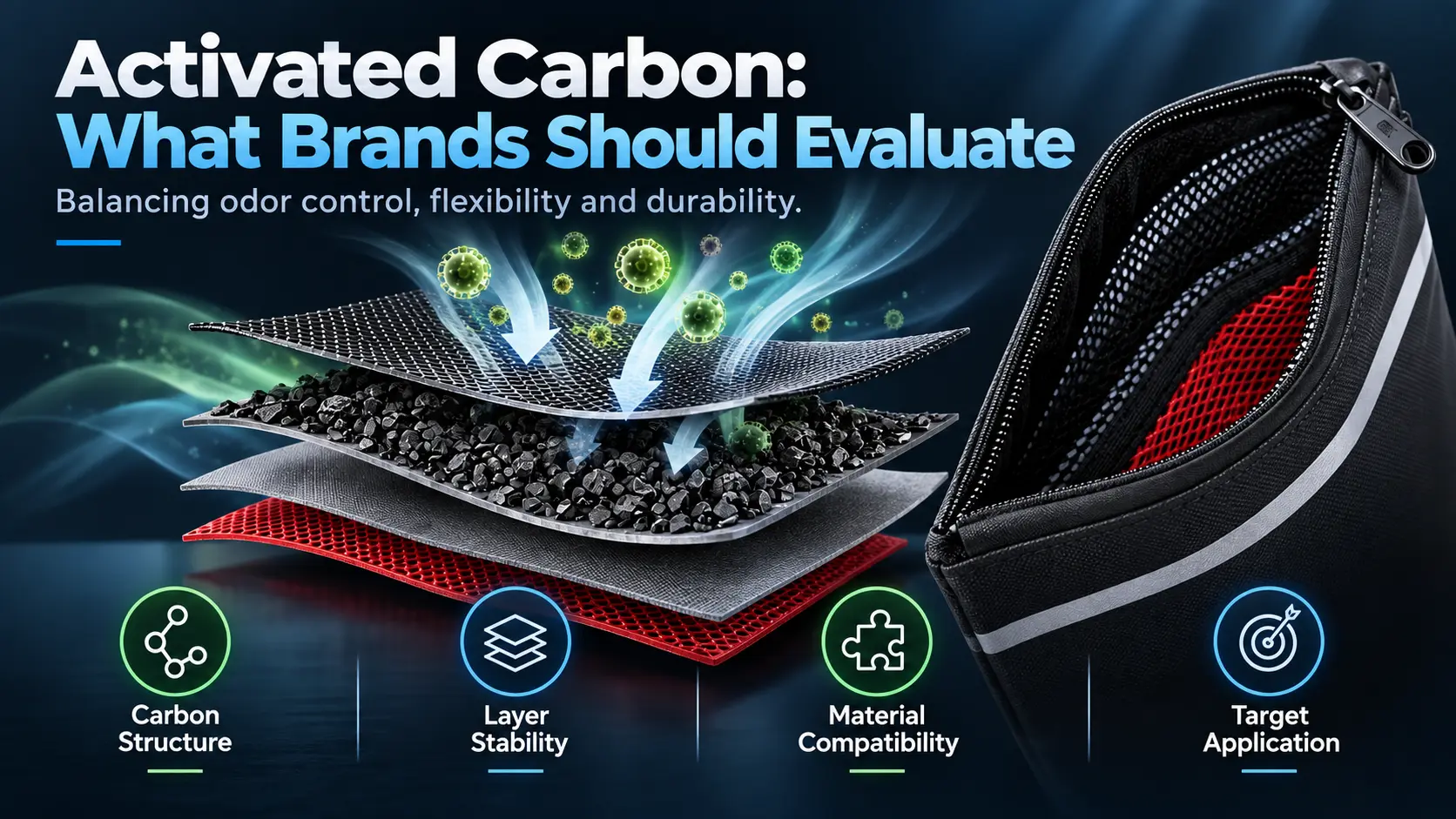
When developing an activated carbon smell proof bag, brands should consider carbon thickness, adsorption performance, fabric stability, flexibility and how the carbon material is laminated or combined with surrounding layers.
A heavier carbon layer may provide advantages for some applications, but it can also increase material cost, thickness and stiffness.
For this reason, we usually evaluate several factors:
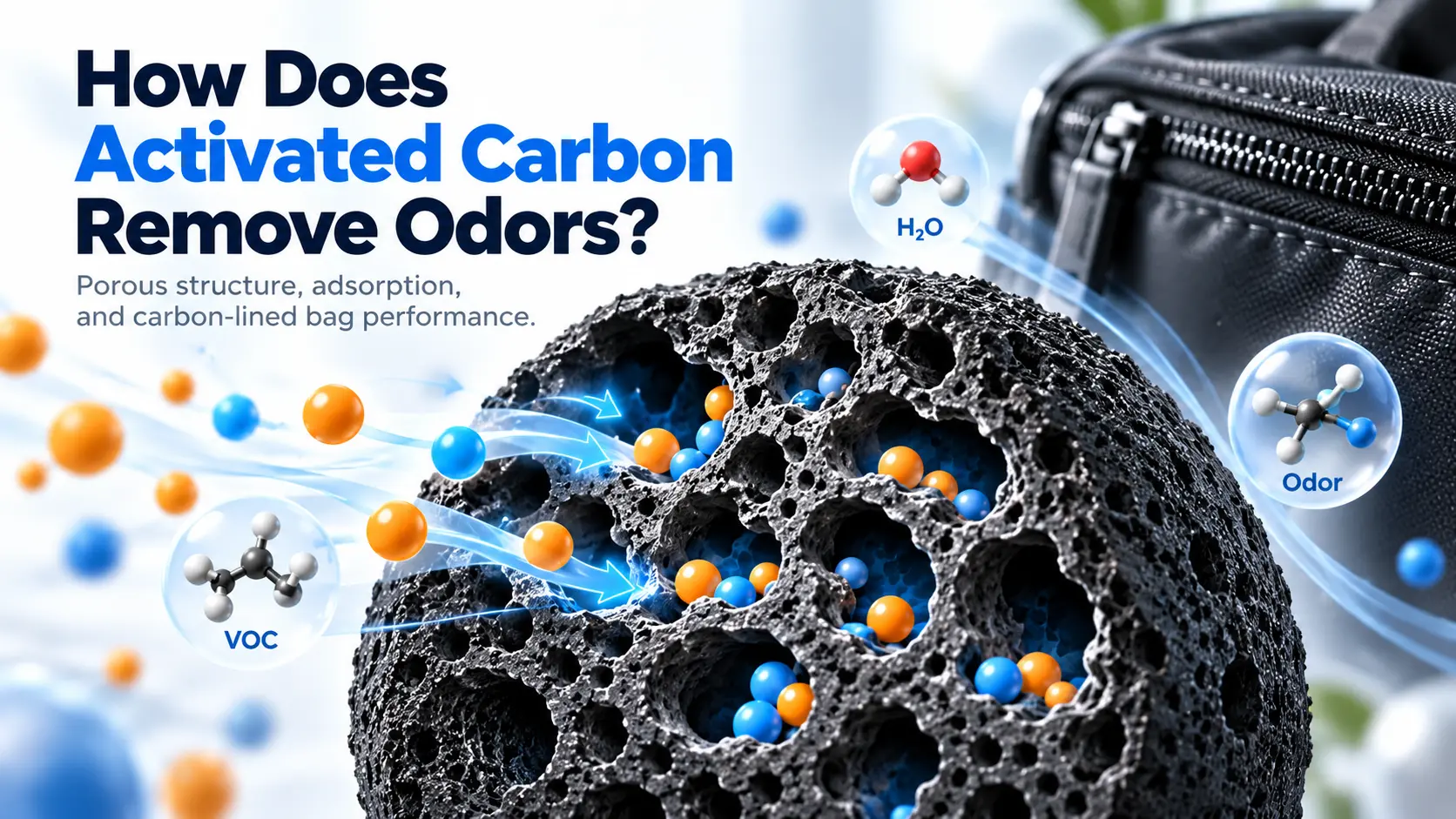
- Carbon Structure: The material should provide enough active surface area for odor adsorption.
- Layer Stability: The carbon material should remain properly positioned during repeated opening, carrying and storage.
- Material Compatibility: The carbon layer needs to work with the outer shell and lining without creating excessive bulk.
- Target Application: A small pouch may require a different carbon construction from a large backpack or duffel bag.
For OEM development, the goal is not simply to specify the maximum amount of carbon. It is to find the right balance between odor control, flexibility, durability and target cost.
3. Why Zipper Design Matters for Odor Control
One of the most common weak points we see in smell proof bag development is the zipper.
Even when the carbon structure is well designed, excessive air exchange around the opening can reduce the overall containment performance of the bag.
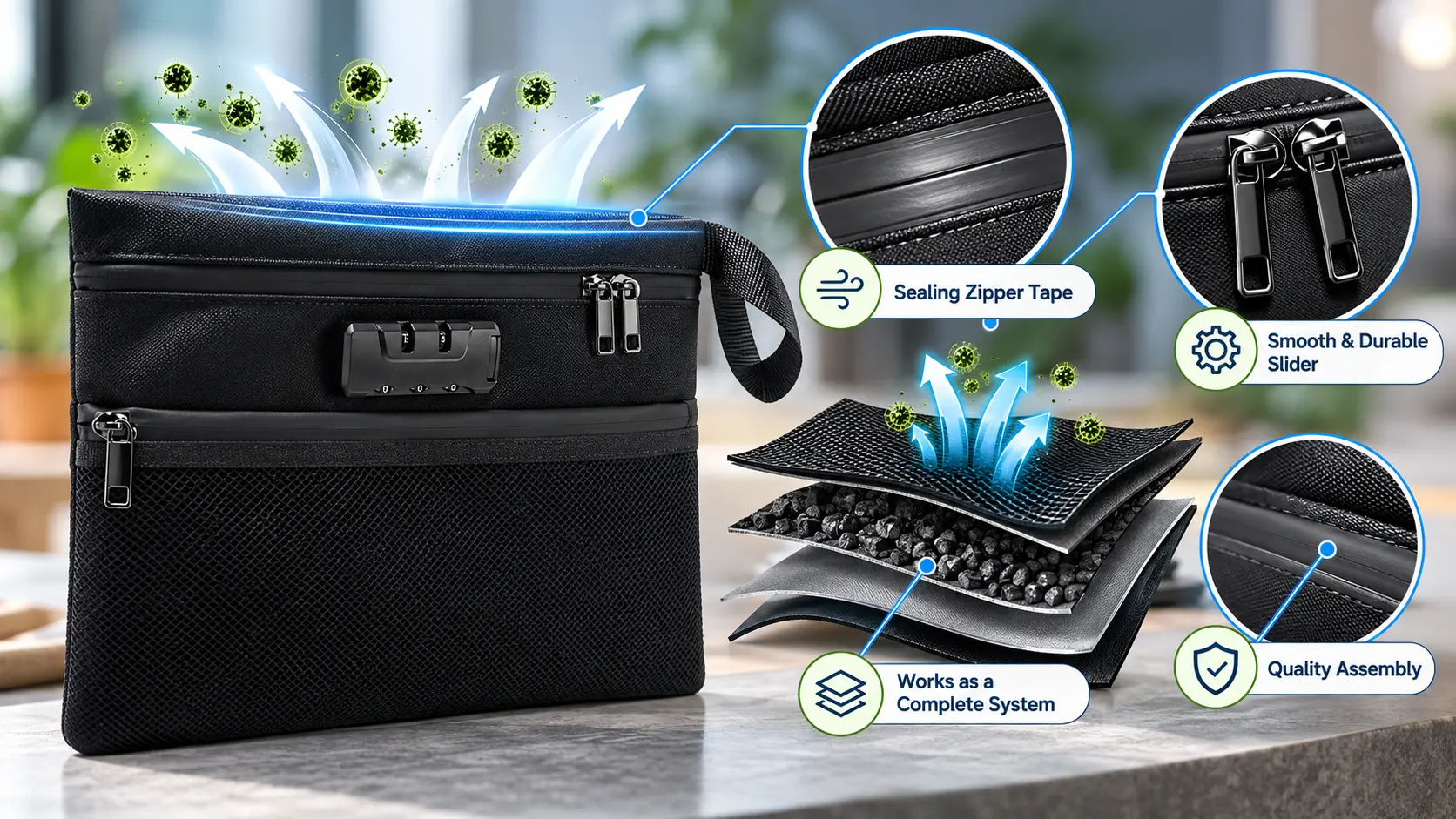
Brands developing higher-performance products should therefore evaluate not only the zipper type, but also the zipper tape, slider, coating and how the zipper is integrated into the bag body.
Depending on the product positioning, an airtight zipper or higher-sealing zipper construction may be considered.
Important factors include:
- Sealing Structure: Coated or rubberized zipper systems can help reduce gaps around the closure.
- Slider Quality: The slider should move smoothly without damaging the zipper track during repeated use.
- Zipper Tape: Coated tapes can improve water resistance and reduce unwanted air exchange.
- Assembly Quality: Even a high-quality zipper can perform poorly if it is incorrectly sewn or installed.
During sampling, we normally check opening and closing performance together with the surrounding seam structure instead of evaluating the zipper as an isolated component.
4. Choosing the Right Outer Fabric
A durable outer shell protects the internal odor-control structure, but heavier does not automatically mean better.
This is an important distinction for OEM buyers.
A compact smell proof storage bag and a large travel duffel have very different load, flexibility and durability requirements. Selecting 1600D fabric for every product may add unnecessary weight and cost without improving the end-user experience.
Depending on the design, manufacturers may use Oxford fabric, polyester, nylon or other technical textiles.
We normally evaluate:
- Abrasion Resistance: Important for bags that will be carried or transported frequently.
- Tear Strength: Particularly relevant around handles, straps and high-load attachment points.
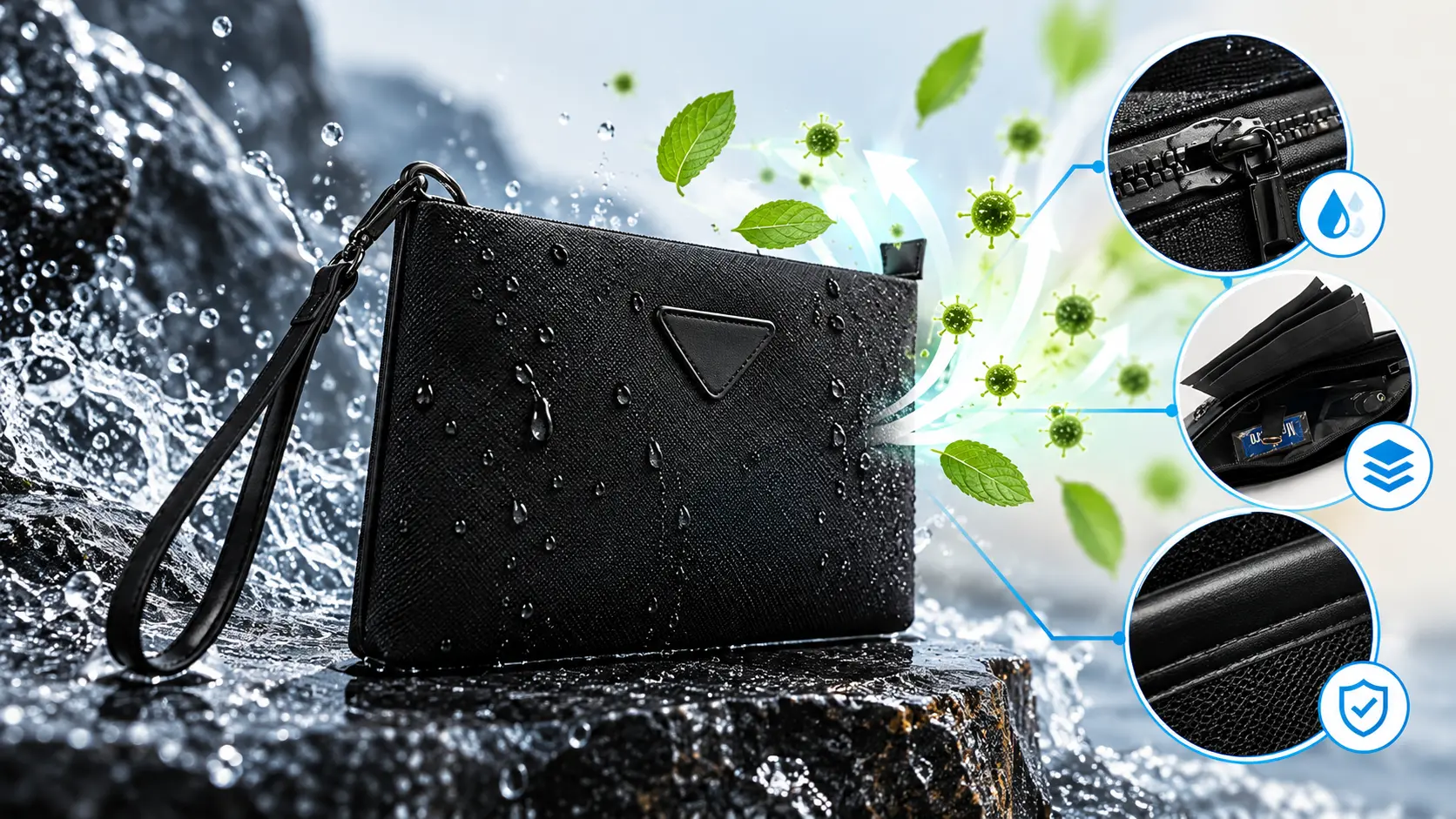
- Water Resistance: Coatings can help protect the product against everyday moisture.
- Hand Feel and Appearance: Premium retail products may require a softer or more refined surface than heavy outdoor storage bags.
- Target Cost: Fabric specification should support the product’s intended retail positioning.
For brands, the best fabric is the one that supports the application rather than simply carrying the highest denier number.
5. Balancing Water Resistance and Odor Control
Water resistance and odor control are related to the bag’s overall construction, but they should not be treated as the same performance requirement.
A bag may provide good odor control without being fully waterproof, while a highly water-resistant shell does not automatically make the product smell proof.
During product development, we normally evaluate the outer coating, seams, zipper structure and internal material system separately.
For projects requiring greater moisture protection, possible options may include:
- coated exterior fabrics;
- water-resistant zipper construction;
- internal waterproof linings;
- seam-sealing processes where suitable.
The correct solution depends on the intended use.
For example, a daily storage pouch may only need basic moisture resistance, while a travel or outdoor storage product may require stronger protection.
Brands should therefore define the expected use environment before adding higher-cost waterproof construction.
6. When Locks and Security Features Make Sense
Not every smell proof bag needs a lock.
This sounds simple, but it is an important product-development decision.
For a compact pouch, additional security hardware may add cost and bulk without significantly improving usability. For larger cases, backpacks or premium storage products, however, integrated locks can support a different market position.
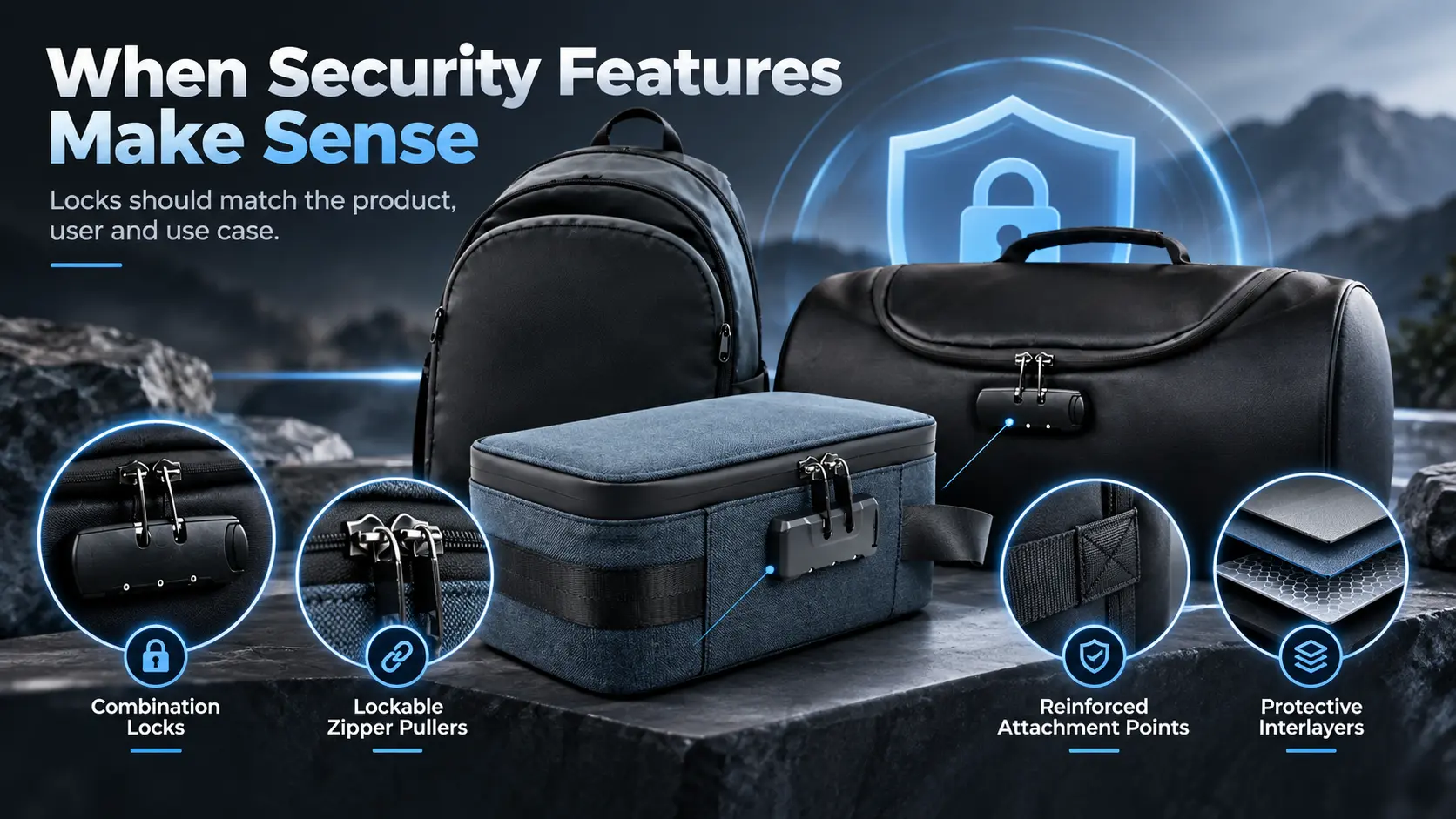
Depending on the product, buyers may consider:
- Combination Locks: Useful for products intended for travel or controlled personal storage.
- Lockable Zipper Pullers: A relatively simple way to add basic access control.
- Reinforced Attachment Points: Suitable when the product may be secured to another object.
- Protective Interlayers: Additional reinforcement can be considered for products requiring greater physical protection.
Our recommendation is to select security features according to the target customer rather than adding them simply because competitors use them.
Every extra component affects cost, weight, production time and final product appearance.
7. Interior Organization and Real-World Usability
Interior organization is often underestimated during early product development.
When we work with brands on OEM and ODM projects, one of the first questions we ask is what the end user is actually expected to store inside the bag.
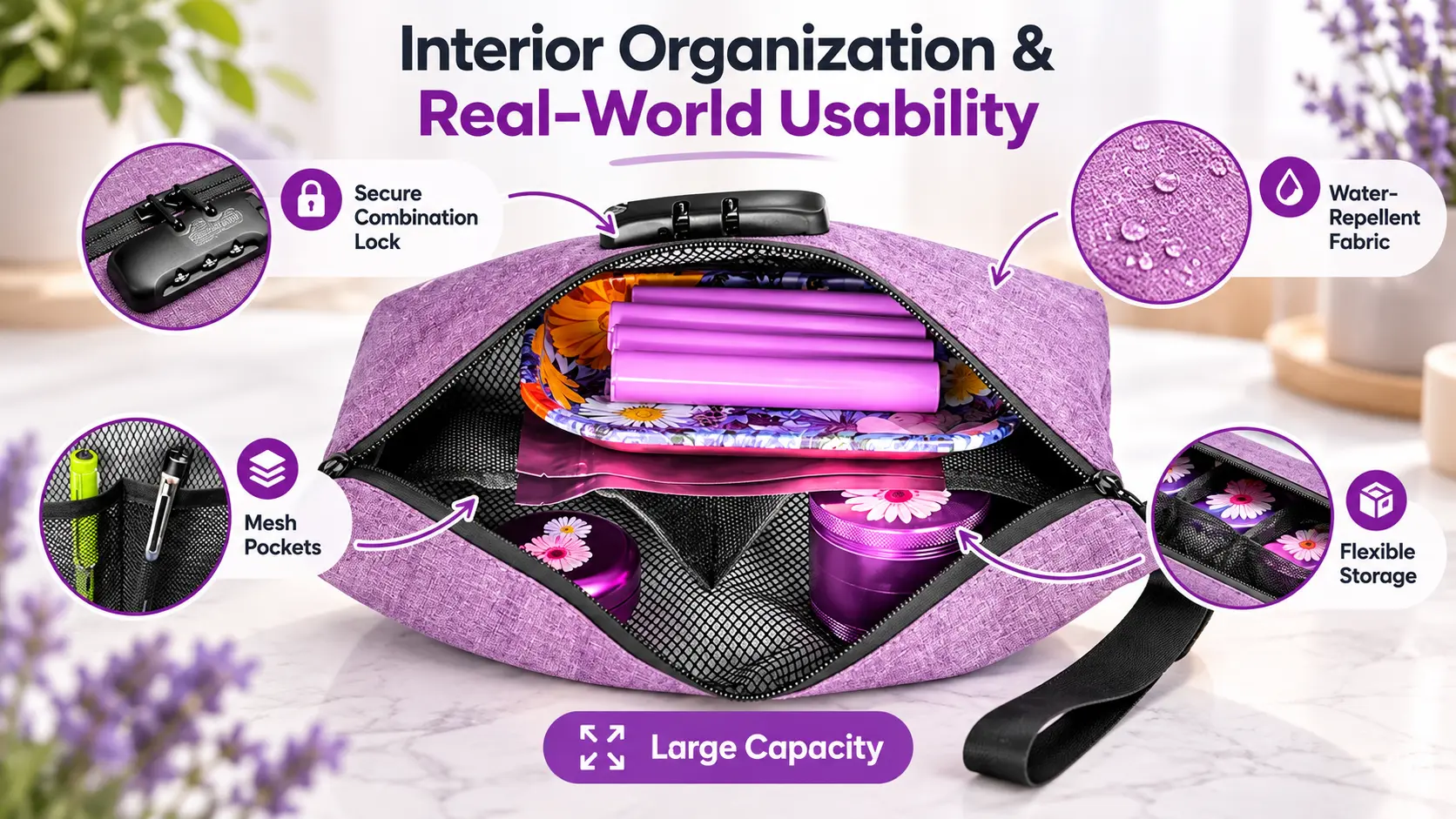
That answer helps determine whether the product needs adjustable dividers, mesh pockets, elastic loops, padded compartments or simply a clean open interior.
Common options include:
- Adjustable Dividers: Useful when buyers need flexible compartment sizes.
- Mesh Pockets: Suitable for organizing smaller accessories.
- Elastic Loops: Help keep tools or small items in fixed positions.
- Padded Sleeves: Useful for products designed to carry electronics or fragile items.
- Removable Components: Allow one product to support several use scenarios.
More organization is not automatically better.
Every additional pocket, divider or panel adds material, sewing operations and cost. The interior should support the real use case rather than simply make the specification list longer.
8. What Brands Should Decide Before OEM Production
For brands developing the best smell proof bag for their own market, product performance begins before the first sample is made.
A professional smell proof bag manufacturer can recommend materials and structures more effectively when the buyer has already defined the basic commercial direction of the product.
Before OEM production, we normally recommend confirming several areas.
Target User and Application
Is the product intended for everyday storage, travel, outdoor use or organized accessory storage?
The use scenario affects almost every material and structural decision.
Product Format
A pouch, hard or soft case, sling bag, backpack and duffel bag require different reinforcement, zipper and internal-layout solutions.
Target Retail Positioning
A value-oriented product and a premium private-label product should not automatically use the same materials or hardware.
Odor-Control Construction
The carbon structure, closure and surrounding materials should be selected together rather than independently.
Branding
Custom logos, woven labels, rubber patches, zipper pullers, colors and packaging can all be developed according to the brand’s positioning.
Production Volume
Order quantity influences material sourcing, color customization, hardware options and final unit cost.
At TrimLife, we prefer to discuss these decisions before finalizing the sample.
In our experience, solving structural and material questions during development is much more efficient than trying to correct them after mass production begins.
That is also why we see our role as more than simply producing a drawing provided by a buyer. A reliable manufacturing partner should help brands evaluate materials, construction, usability, cost and production feasibility before bulk production.
Frequently Asked Questions
What makes the best smell proof bag?
There is no single feature that determines the best smell proof bag. In our experience, reliable products combine an effective activated carbon layer with a suitable closure, durable outer material, well-constructed seams and a layout designed around the intended use.
How does an airtight zipper help reduce odor leakage?
An airtight or higher-sealing zipper helps reduce air exchange around the main opening of the bag. Its performance depends on the zipper profile, tape, slider and how the zipper is integrated into the overall bag construction.
Why is activated carbon used in smell proof bags?
Activated carbon contains a highly porous surface structure that can adsorb odor molecules. In a carbon lined smell proof bag, the carbon layer works together with the outer materials and closure system to improve odor containment.
What outer materials are suitable for smell proof bags?
The correct material depends on the product. Polyester, Oxford fabric and nylon are commonly considered because they can provide different levels of abrasion resistance, strength, water resistance, weight and hand feel.
Does a smell proof bag also need to be waterproof?
Not necessarily. Odor control and waterproofing are separate requirements. Some products only need basic water resistance, while travel or outdoor designs may benefit from stronger moisture protection.
What should brands look for in a smell proof bag manufacturer?
Brands should look beyond price and compare material knowledge, sampling capability, quality control, customization options and communication during development.
A reliable manufacturer should be able to explain why a particular material or structure is suitable for the project rather than simply following a specification without evaluating it.
At TrimLife, our OEM and ODM approach is based on this process: understanding the intended market, evaluating the construction, developing the sample and confirming production feasibility before moving into bulk manufacturing.