A storage bag can keep everyday items organized, but not every bag is designed to control odors. Two products may look nearly identical on the outside while performing very differently when exposed to strong-smelling contents. The difference often lies in the internal materials, closure construction, and how the components work together.
For brands, wholesalers, and product developers, these distinctions affect material selection, manufacturing costs, and customer expectations. Understanding odor-control technology also helps buyers avoid paying for unnecessary features or making performance claims that a product cannot reliably support.
This guide examines the smell proof bag vs regular storage bag decision through materials, odor protection, durability, cost, and practical sourcing considerations.
1. Smell Proof Bag vs Regular Storage Bag: Key Differences
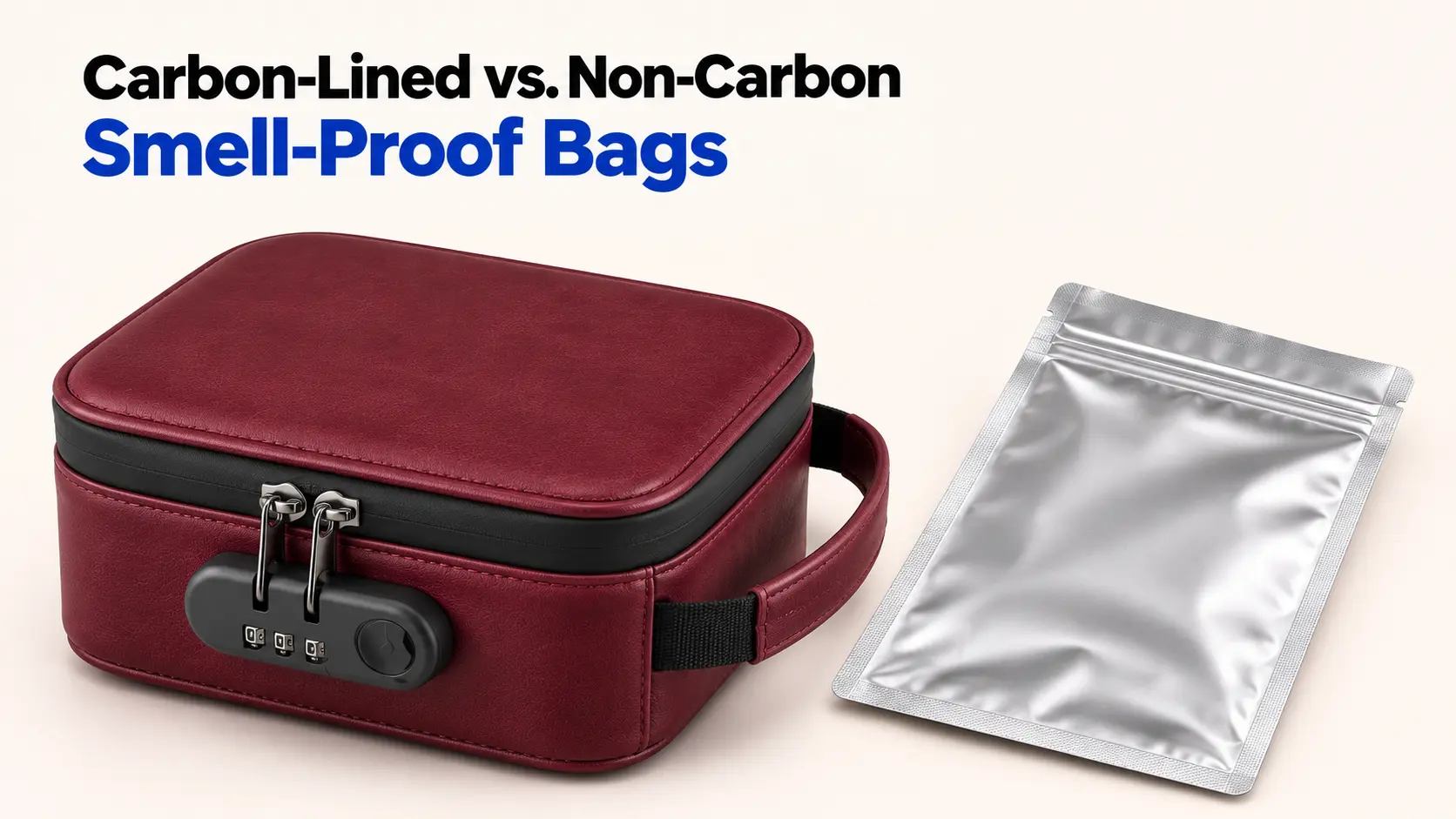
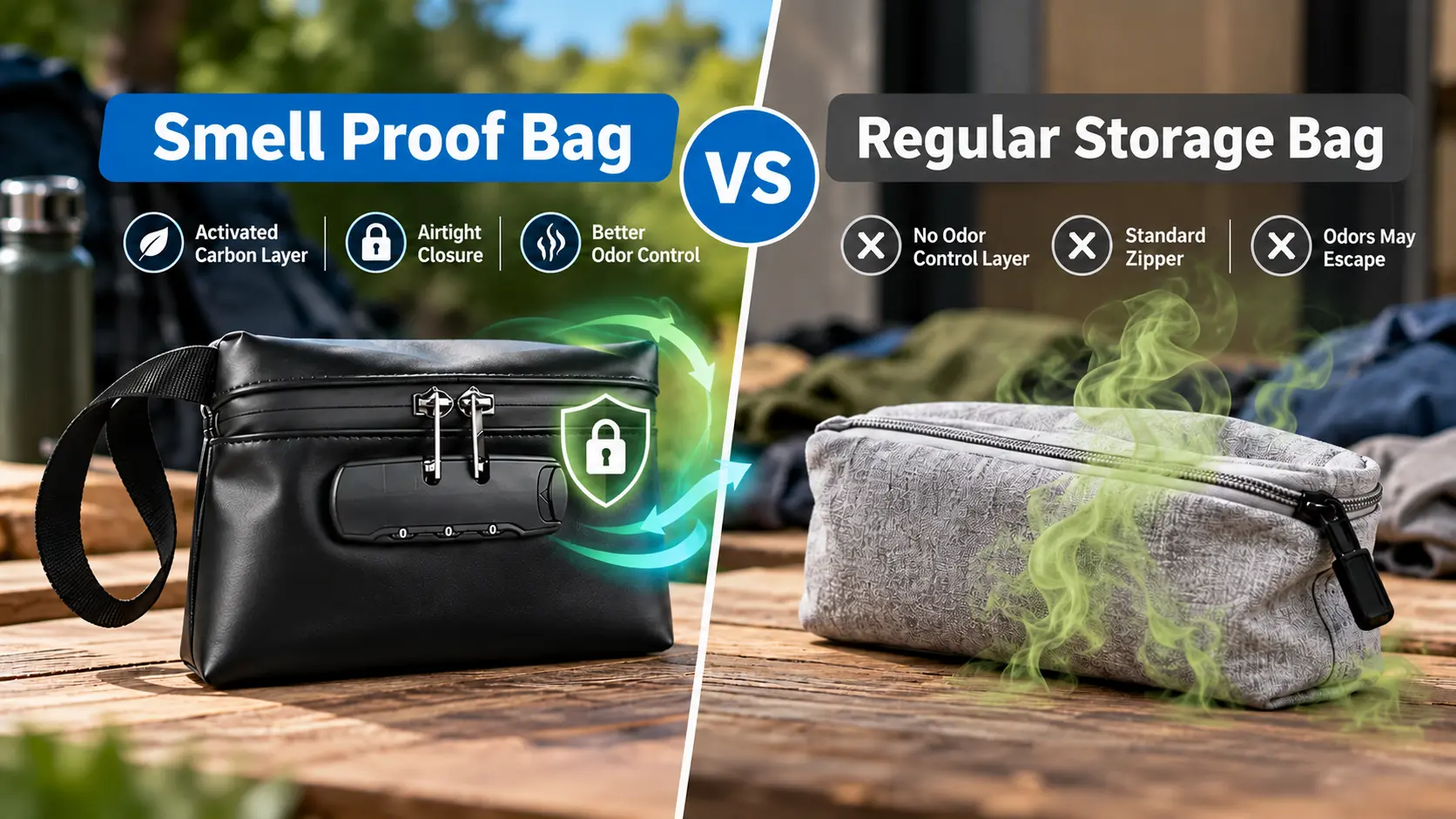
The primary difference is the intended function. A regular storage bag is generally designed to carry, protect, or organize belongings. A smell proof bag adds materials and construction features intended to reduce the escape of odor-causing compounds.
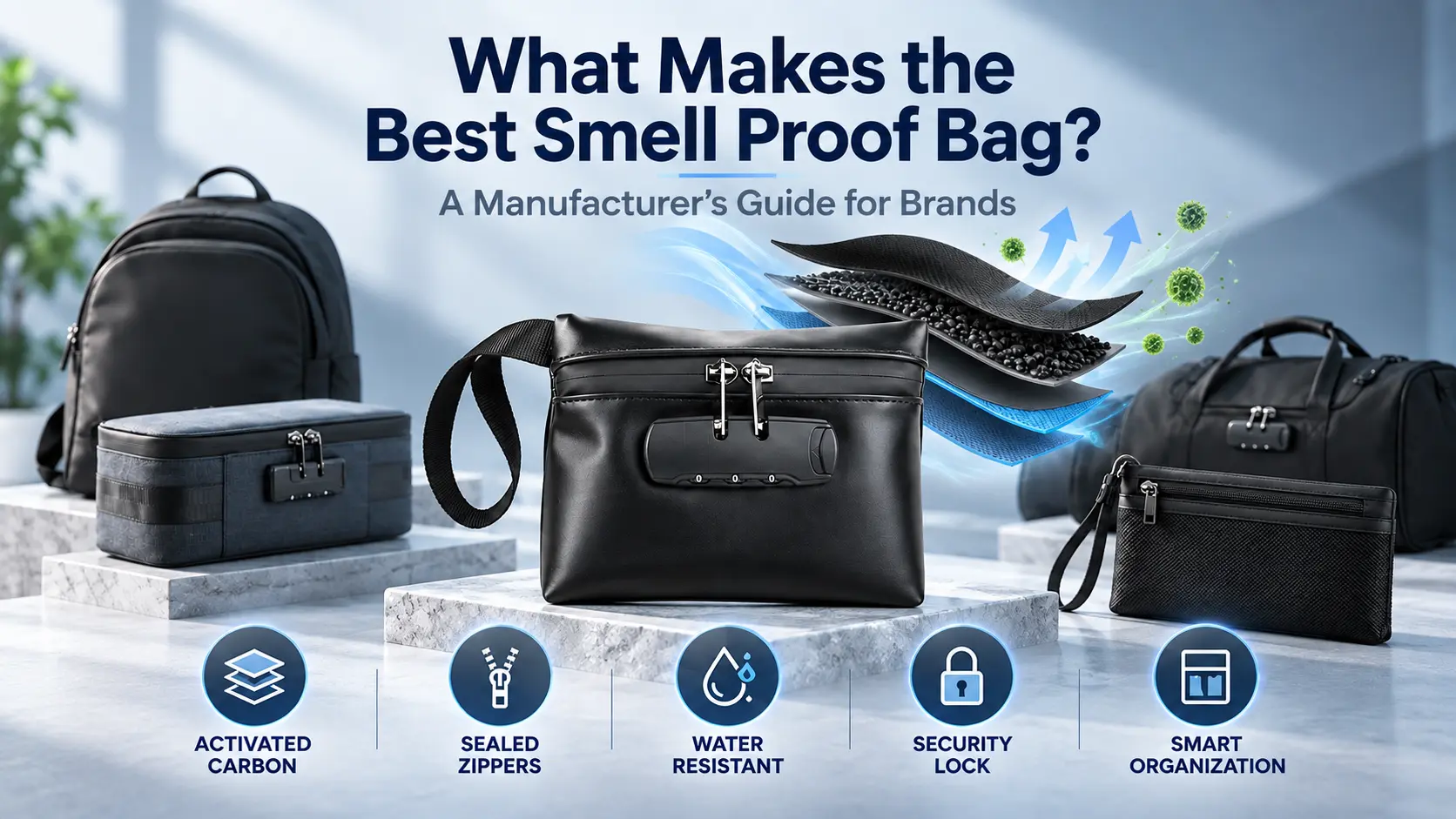
An effective odor-control design may combine an activated carbon layer, a low-permeability lining, and a carefully constructed closure. However, not every product marketed as smell proof uses the same technology or delivers the same performance.
A useful storage bag comparison should therefore consider the complete construction rather than relying on the product label alone.
Quick Comparison Table
| Feature | Regular Storage Bag | Smell Proof Bag |
|---|---|---|
| Primary purpose | General storage and organization | Storage with additional odor control |
| Exterior materials | Polyester, nylon, canvas, or other fabrics | Similar fabrics, often combined with specialized layers |
| Odor-control layer | Usually absent | Often activated carbon or another odor-control material |
| Closure system | Standard zipper, drawstring, or flap | Closure designed to reduce odor escape |
| Odor containment | Limited or incidental | Designed to reduce odor transmission |
| Moisture resistance | Depends on construction | Depends on construction |
| Manufacturing complexity | Generally lower | Often higher due to additional components |
| Customization | Size, color, pockets, and branding | Size, carbon layers, lining, closures, and branding |
| Typical applications | Everyday organization | Storage of items with noticeable odors |
The most important distinction is that odor-control performance depends on the entire bag, including its weakest points.
A high-quality carbon layer provides limited benefit if air can escape freely through the zipper, seams, or other openings.
2. Material and Construction Comparison
Materials are one of the clearest differences between ordinary storage products and specialized odor-control bags.
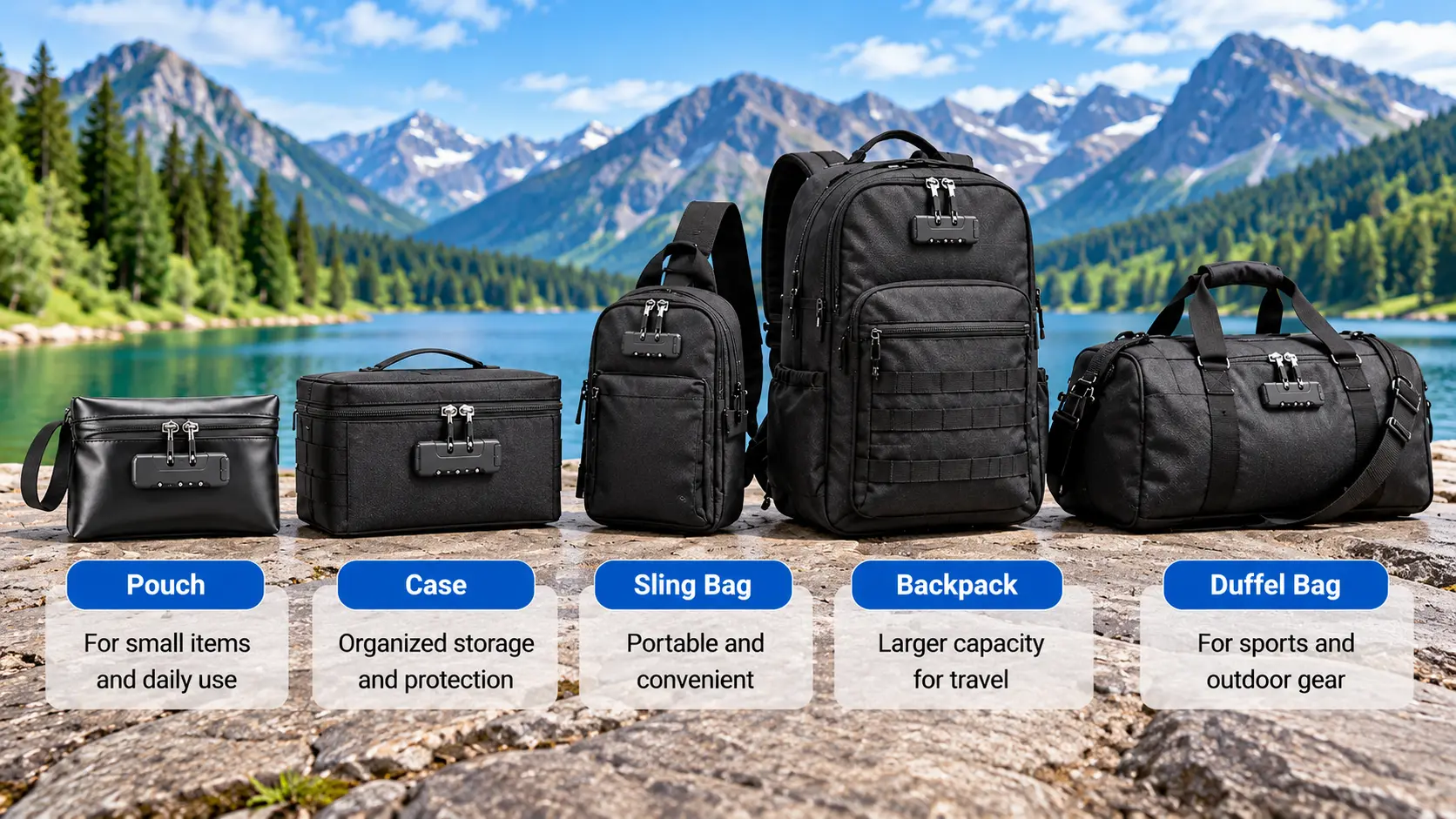
However, a smell proof bag does not automatically require heavier fabric or a more rigid structure. Manufacturers can develop lightweight pouches, structured cases, sling bags, backpacks, and duffel bags using different material combinations.
Exterior Shell Materials
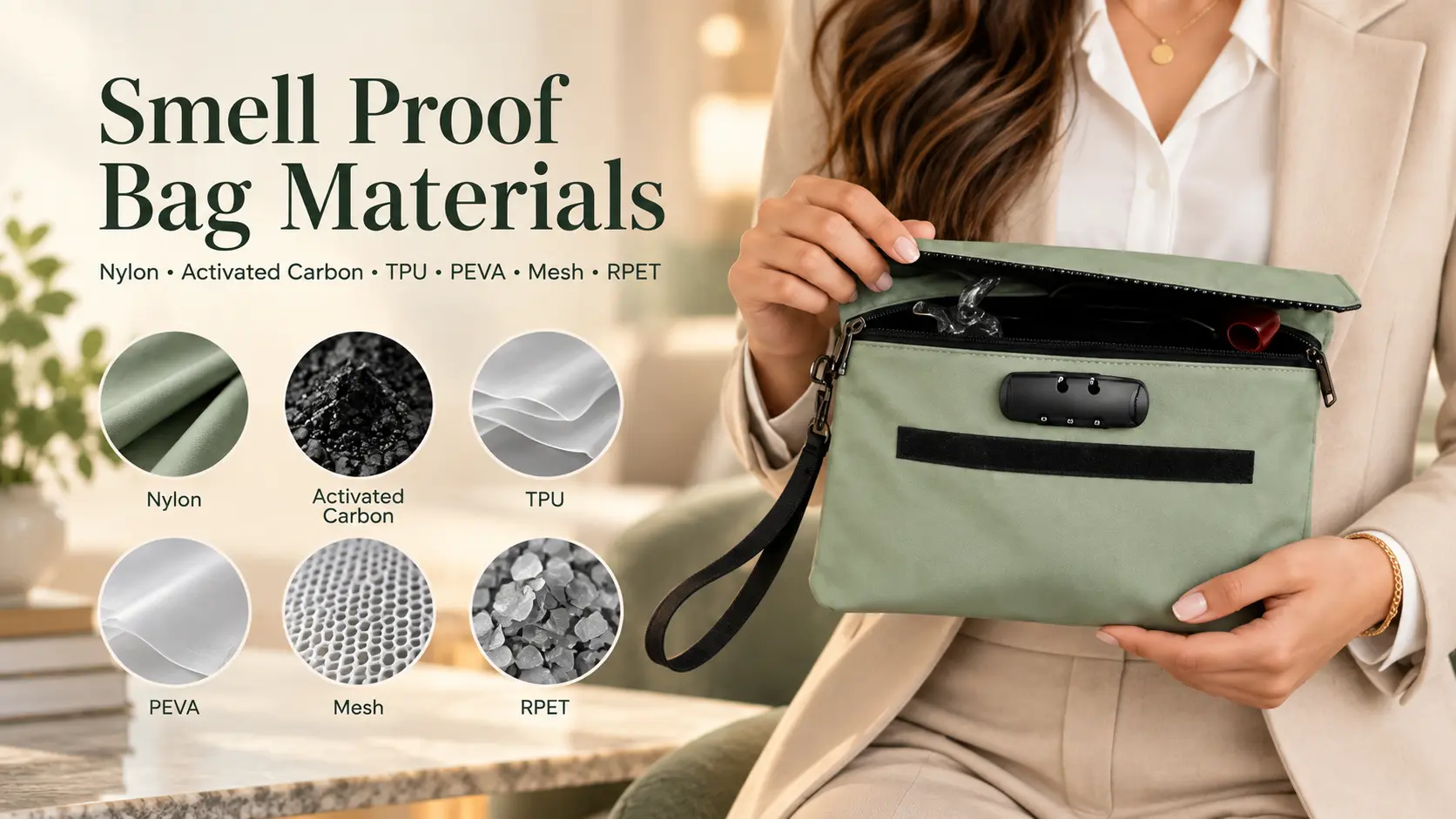
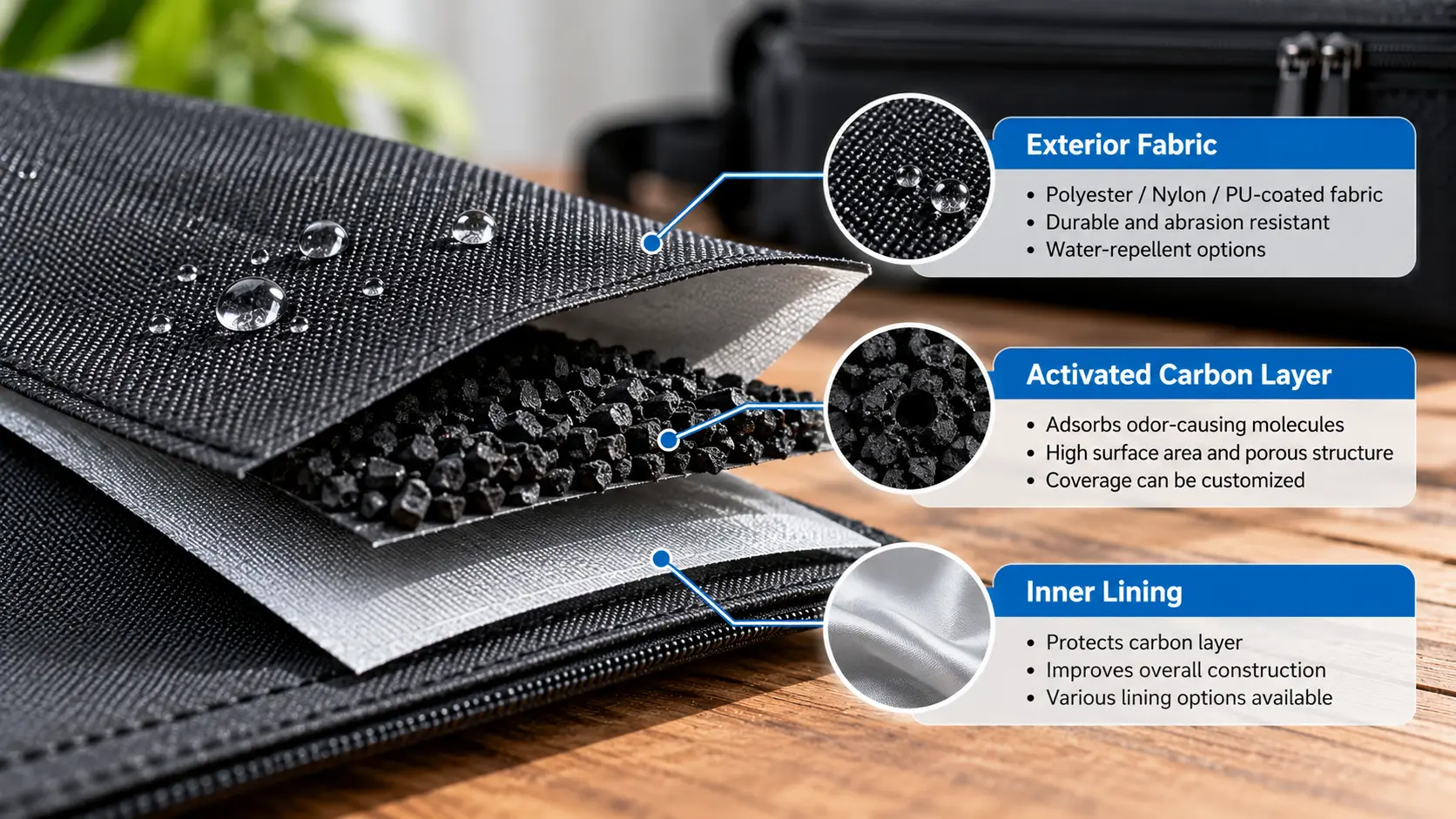
Regular storage bags commonly use polyester, nylon, cotton canvas, or other woven fabrics. These materials are selected according to appearance, weight, abrasion resistance, and cost.
Specialized bags may use similar exterior fabrics, including:
- Polyester: A versatile option offering different weights, textures, and finishing treatments.
- Nylon: Suitable for products requiring flexibility and abrasion resistance.
- PU-coated fabrics: Useful where additional surface moisture resistance is desired.
- Heavy-duty woven fabrics: Appropriate for products requiring greater structural strength.
Exterior fabric alone does not establish odor-control performance. A thick nylon shell without an effective barrier or adsorption layer may still allow odors to escape.
Activated Carbon Layers
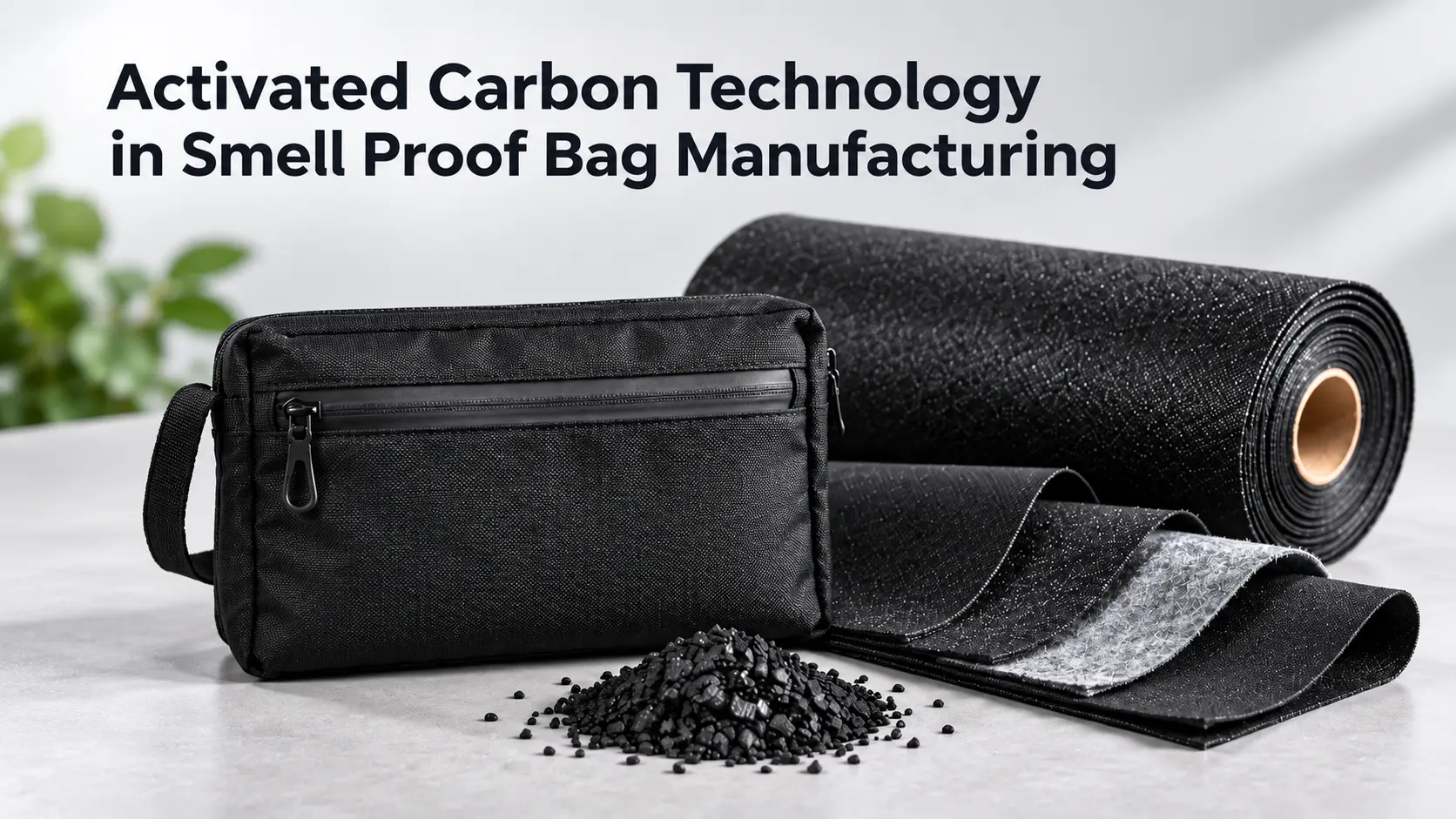
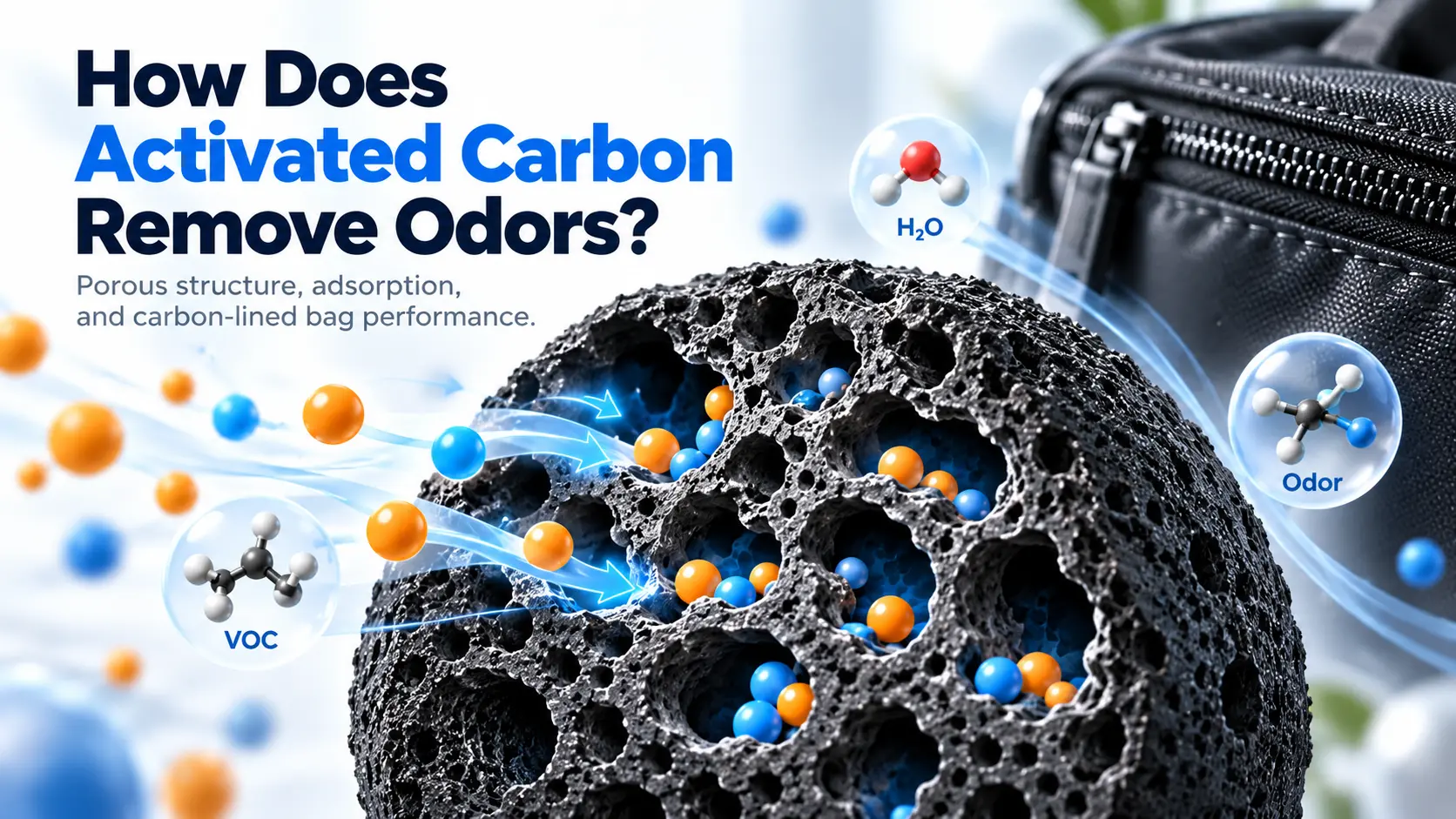
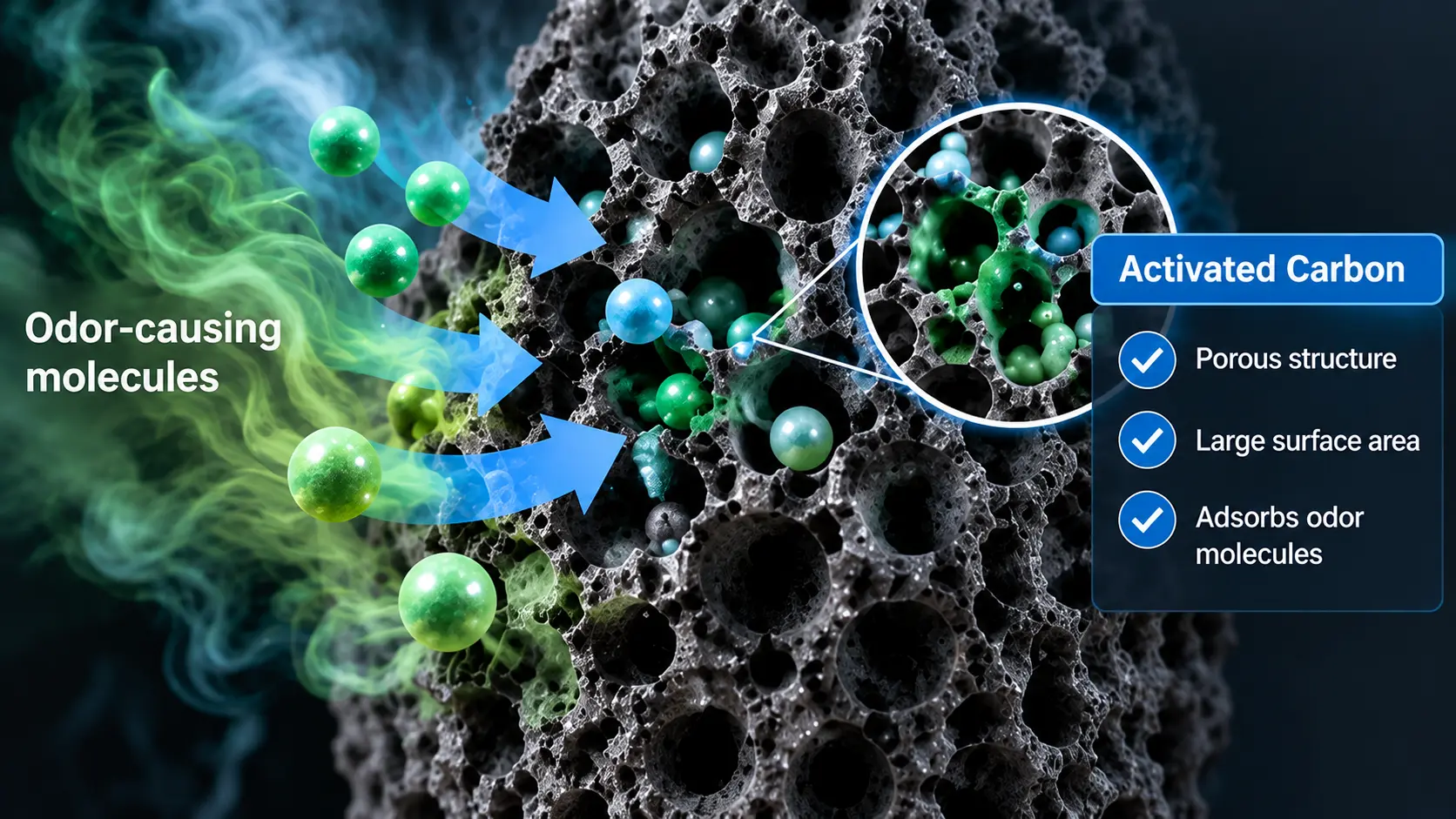
An activated carbon smell proof bag typically incorporates porous carbon material designed to adsorb certain odor-causing molecules.
Activated carbon has a highly developed internal pore structure that provides a large surface area for adsorption.
When odor molecules contact suitable carbon surfaces, some may be retained through physical adsorption.
Actual performance depends on several factors:
- Carbon type and pore structure
- Effective carbon loading and layer coverage
- Characteristics of the odor-causing compounds
- Humidity and temperature
- Exposure duration and previous use
A heavier carbon layer is not automatically more effective. Buyers should evaluate material specifications alongside relevant performance testing.
Inner Linings and Barrier Layers
Some products incorporate protective inner linings or polymer-based barrier films.
These layers may help protect the carbon material from abrasion, moisture, or direct contact with stored contents.
Depending on the construction, they can also reduce gas movement through portions of the bag.
However, a water-resistant lining should not automatically be described as an airtight odor barrier. Water penetration resistance and gas permeability are different material properties.
Closure Construction
The closure is another critical part of the design.
Regular storage bags often use standard coil zippers, drawstrings, or simple flaps.
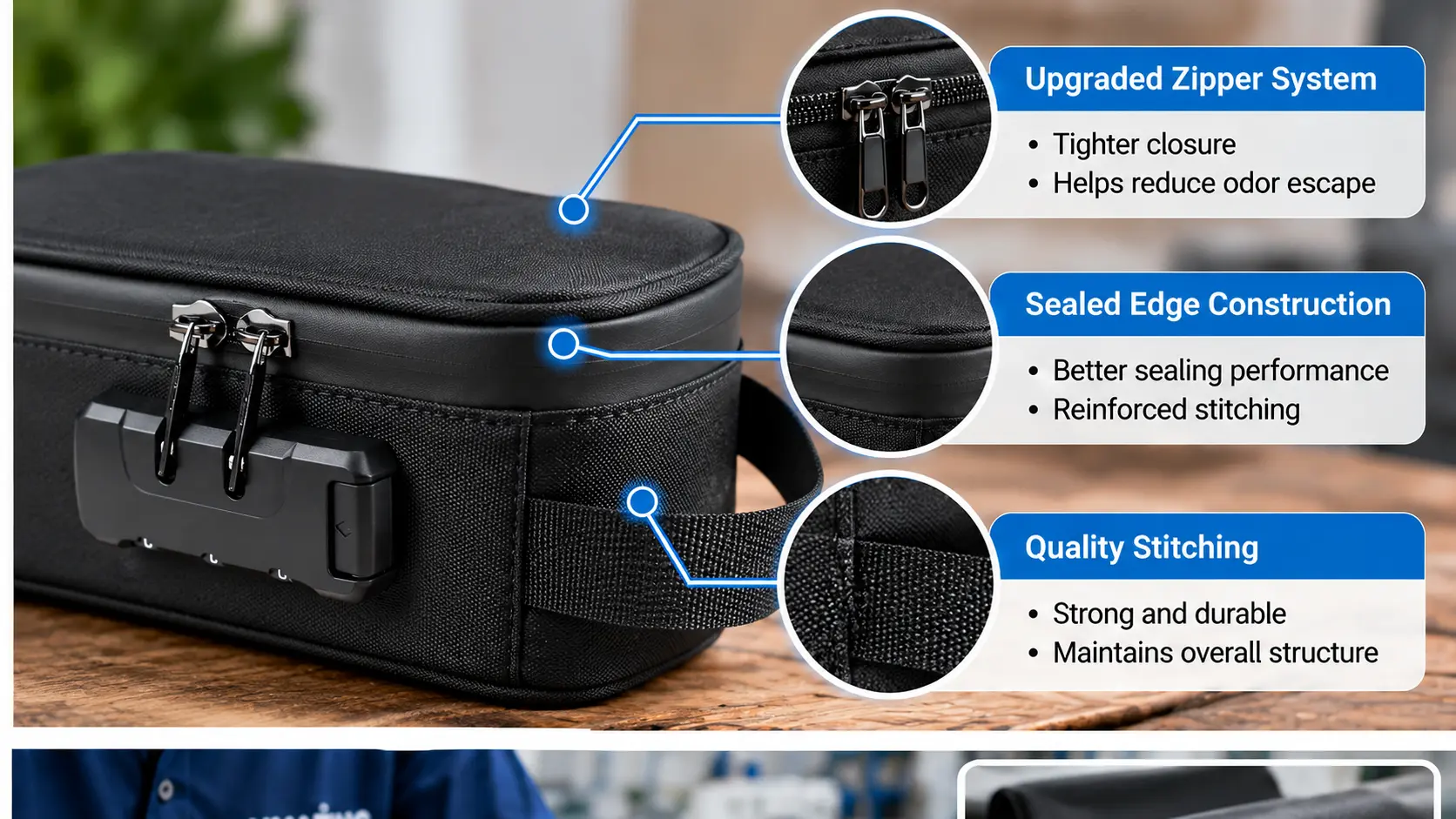
Specialized odor-control bags may use upgraded zipper systems, overlapping flaps, or other closure arrangements intended to reduce leakage.
The effectiveness of these features depends on how the zipper, surrounding fabric, seams, and opening are constructed.
For OEM buyers, the closure should be evaluated as part of the complete bag rather than as an isolated component.
3. How Activated Carbon Helps Control Odors
Activated carbon is widely used in filtration and adsorption applications because its porous structure can capture certain molecules from gases and liquids.
In a storage bag, activated carbon is intended to reduce the concentration of selected odor-causing compounds that reach and interact with the carbon material.
This process is known as adsorption, which differs from absorption.
Adsorption occurs when molecules adhere to a material’s surface. Absorption involves substances entering the bulk of another material.
Understanding this distinction helps explain both the capabilities and limitations of activated carbon.
Why Carbon Performance Varies
Not all odors consist of the same chemical compounds.
Different compounds interact differently with carbon surfaces, meaning one carbon material may perform well against certain odors but less effectively against others.
Humidity can also influence performance because water vapor may compete with some odor-causing molecules for adsorption sites.
Carbon capacity is finite. Over time, accumulated compounds may reduce the amount of available adsorption capacity.
For these reasons, no fixed carbon thickness or fabric weight can guarantee universal odor containment.
Carbon Layer Design in Manufacturing
When developing an odor barrier bag, manufacturers must consider how the carbon material is integrated into the product.
Important design decisions include:
- Whether the carbon layer covers the full storage compartment
- How the material is secured between fabric layers
- Whether folding and repeated handling affect the construction
- How seams and zipper openings interact with the carbon layer
- Whether the finished design can be manufactured consistently
The goal is not simply to add more carbon, but to create a balanced construction that supports the intended odor-control function.
4. Odor Protection and Sealing Performance
The smell proof bag vs regular storage bag comparison becomes particularly important when evaluating actual odor containment.
A regular fabric bag generally has no dedicated system for reducing odor transmission. Odor-causing compounds may move through fabric openings, zipper gaps, and other pathways.
Specialized products attempt to reduce these pathways through material selection and closure design.
Nevertheless, three different properties should not be confused.
Odor Resistance
Odor resistance describes a product’s ability to reduce the release or transmission of odor-causing compounds under specified conditions.
Its performance depends on the compounds involved, the bag’s construction, and the test conditions.
Airtightness
Airtightness concerns the movement of air through an enclosure.
A bag with a relatively tight closure may reduce air exchange, but this does not prove that it blocks every odor-causing compound.
Waterproofing
Waterproofing concerns resistance to liquid water penetration.
A waterproof fabric may still be incorporated into a bag with openings or seams that allow gas movement.
Likewise, a product designed for odor control is not necessarily waterproof.
Why the Complete Construction Matters
A bag’s performance can be limited by its least effective component.
For example, a carefully selected carbon layer may be undermined by an opening that allows air to bypass the carbon material.
This is why buyers should evaluate the finished product, not only individual fabric samples.
Manufacturers should also avoid describing products as completely odor-proof unless the claim is supported by appropriate evidence and clearly defined testing conditions.
5. Durability and Everyday Use
Odor protection is not the only consideration when choosing a storage product.
Customers also expect the bag to withstand repeated opening, closing, carrying, and handling.
However, a smell proof bag is not inherently more durable than a regular storage bag.
Durability depends on fabric quality, construction, hardware, reinforcement, and intended use.
Fabric and Seam Strength
A well-constructed regular bag can be more durable than a poorly manufactured specialized bag.
Both product categories benefit from appropriate seam allowances, reinforcement stitching, and materials selected for expected loads.
For products designed to carry heavier contents, manufacturers may incorporate reinforced handles, stronger attachment points, or additional structural support.
Zipper Durability
Closures are especially important because they experience frequent mechanical stress.
Repeated opening and closing can affect zipper alignment, slider performance, and surrounding fabric.
For products incorporating specialized closures, manufacturers should consider both mechanical durability and the continued integrity of the closure system.
Carbon Layer Protection
Activated carbon materials may require additional protection against abrasion, folding damage, or displacement.
Protective linings and suitable assembly methods can help maintain the intended layer arrangement during normal use.
Brands should evaluate durability through representative samples and tests appropriate to the product’s intended application.
6. Cost Comparison: Is a Smell Proof Bag Worth It?
The additional cost of a specialized storage bag comes from its material and construction requirements rather than the product name alone.
A conventional bag may require only an exterior shell, lining, zipper, and basic assembly.
A specialized design may introduce additional carbon material, barrier layers, closure components, and more demanding assembly or inspection procedures.
Factors That Influence Manufacturing Cost
| Cost Factor | Regular Storage Bag | Smell Proof Bag |
|---|---|---|
| Exterior fabric | Standard or premium options | Standard or premium options |
| Activated carbon layer | Usually not required | May be a major additional material cost |
| Inner lining | Basic lining options | May require protective or barrier layers |
| Zipper system | Conventional closures | May require upgraded closures |
| Assembly | Standard construction | Additional layer alignment and assembly |
| Quality inspection | General construction checks | General checks plus odor-control-related inspection |
| Packaging | Standard or customized | Standard or customized |
The final cost depends on specifications, order quantity, material sourcing, and production requirements.
Evaluating Long-Term Value
A specialized product may justify a higher retail price when it solves a genuine customer problem.
For example, a customer who regularly carries strong-smelling items may value effective odor reduction more than someone who only needs a basic organizer.
However, additional features do not automatically create better value.
Brands should match product specifications to customer needs rather than adding expensive components without a clear functional benefit.
For wholesale buyers, the most useful cost evaluation considers expected performance, production consistency, retail positioning, and potential quality-related returns.
7. Which Type of Bag Is Right for Your Needs?
The right choice depends on what customers plan to store, how frequently they use the bag, and which features matter most.
A practical storage bag comparison should begin with the intended application rather than assuming that the more specialized product is always preferable.
Everyday Organization
Regular storage bags are often sufficient for clothing, accessories, documents, and other items that do not require additional odor control.
They can provide good durability and organization at a lower manufacturing cost.
Travel and Personal Accessories
Specialized smell proof pouches or cases may appeal to customers who want to separate noticeable odors from other belongings.
Compact dimensions, accessible compartments, and reliable closures are often important in these applications.
Sports and Outdoor Equipment
Some sports accessories, used clothing, and outdoor items can develop noticeable odors.
A specialized bag may help manage odor transfer during temporary storage or transportation, depending on the materials and design.
Products used in damp conditions should also be evaluated for moisture management and cleaning requirements.
Retail Product Collections
Brands may offer different product levels within the same collection.
For example, an entry-level storage pouch can focus on organization, while a premium model adds carbon-based odor-control construction.
This approach allows buyers to serve different price points without treating every customer as having identical requirements.
Important Wildlife Safety Consideration
Odor-control storage bags should not be presented as substitutes for approved bear-resistant food storage systems.
Reducing noticeable odors does not establish that a product is wildlife-resistant or suitable for protecting food in bear habitats.
Outdoor brands should follow applicable local wildlife storage guidance when developing or marketing products for these environments.
8. How to Test Smell Proof Bags Before Bulk Ordering
For professional buyers, material descriptions and supplier claims are only the starting point.
Samples should be evaluated against agreed product specifications before bulk production begins.
A structured inspection process helps brands identify design weaknesses and establish consistent acceptance criteria.
Step 1: Inspect the Material Construction
Confirm the exterior fabric, lining, carbon material, and other specified components.
Check whether the carbon layer is positioned correctly and covers the intended areas.
Review available supplier documentation for the materials being used.
Step 2: Examine the Closure
Open and close the zipper repeatedly.
Check alignment, surrounding stitching, and any overlapping closure features.
Pay particular attention to the ends of the zipper and the connection between the closure and body panels.
Step 3: Conduct Comparative Odor Testing
Use a controlled testing method to compare sample performance.
Where practical, keep the odor source, quantity, exposure time, temperature, humidity, and test environment consistent.
A regular storage bag may serve as a reference sample.
Human smell assessments can provide preliminary observations, but they are subjective and should not be treated as proof of complete odor containment.
Where quantitative performance claims are required, brands should consider appropriate laboratory methods for the target compounds.
Step 4: Evaluate Mechanical Durability
Inspect seams, handles, straps, and zipper performance under representative conditions.
Testing may include repeated closure cycles, seam-strength checks, and load testing where relevant.
The selected methods should reflect the product’s intended use.
Step 5: Confirm Production Specifications
Before approving bulk production, document:
- Approved materials and layer arrangement
- Dimensions and dimensional tolerances
- Closure type and construction
- Stitching and reinforcement requirements
- Logo placement and packaging details
- Inspection procedures and acceptance criteria
An approved sample provides a practical reference for production, but manufacturers should also establish suitable quality-control procedures for bulk orders.
9. Custom Smell Proof Bags for Brands and Wholesalers
For brands developing private-label products, customization offers more than changes to colors and logos.
It allows product teams to select materials, dimensions, and functional features according to their target market.
Well-planned custom smell proof bags can help brands create a recognizable product collection while controlling manufacturing complexity.
Exterior Material Selection
Buyers can choose fabrics based on desired appearance, weight, abrasion resistance, and budget.
Polyester, nylon, and coated fabrics offer different combinations of these properties.
Carbon Layer Configuration
Carbon material selection should consider the intended application, available specifications, and construction compatibility.
Layer coverage and assembly methods should be confirmed during sample development.
Size and Internal Organization
Dimensions can be adjusted for compact accessories, personal storage, or larger equipment.
Internal dividers, mesh pockets, elastic holders, and removable compartments can improve organization.
Closure and Hardware
Depending on the design, brands may select different zipper systems, pullers, buckles, straps, and reinforcement details.
Closure performance should be assessed together with the complete bag structure.
Logo and Packaging Customization
Common branding options include woven labels, embroidery, screen printing, rubber patches, and selected hardware details.
Packaging can also be developed according to retail presentation and distribution requirements.
Product Development and Sampling
Working with an experienced smell proof bag manufacturer allows buyers to review construction feasibility before committing to larger production quantities.
At TrimLife, OEM/ODM development can begin with drawings, reference samples, or product specifications.
Our team supports material selection, structural development, branding, and sample production, with a typical sampling timeframe of 3–5 days, depending on the project requirements.
The purpose of sampling is to confirm the product’s appearance, functionality, and construction before bulk manufacturing.
10. How Manufacturers Ensure Consistent Quality
Manufacturing consistency is essential for products that rely on multiple functional layers.
Even when individual materials meet their specifications, inconsistent cutting, assembly, or stitching can affect the finished product.
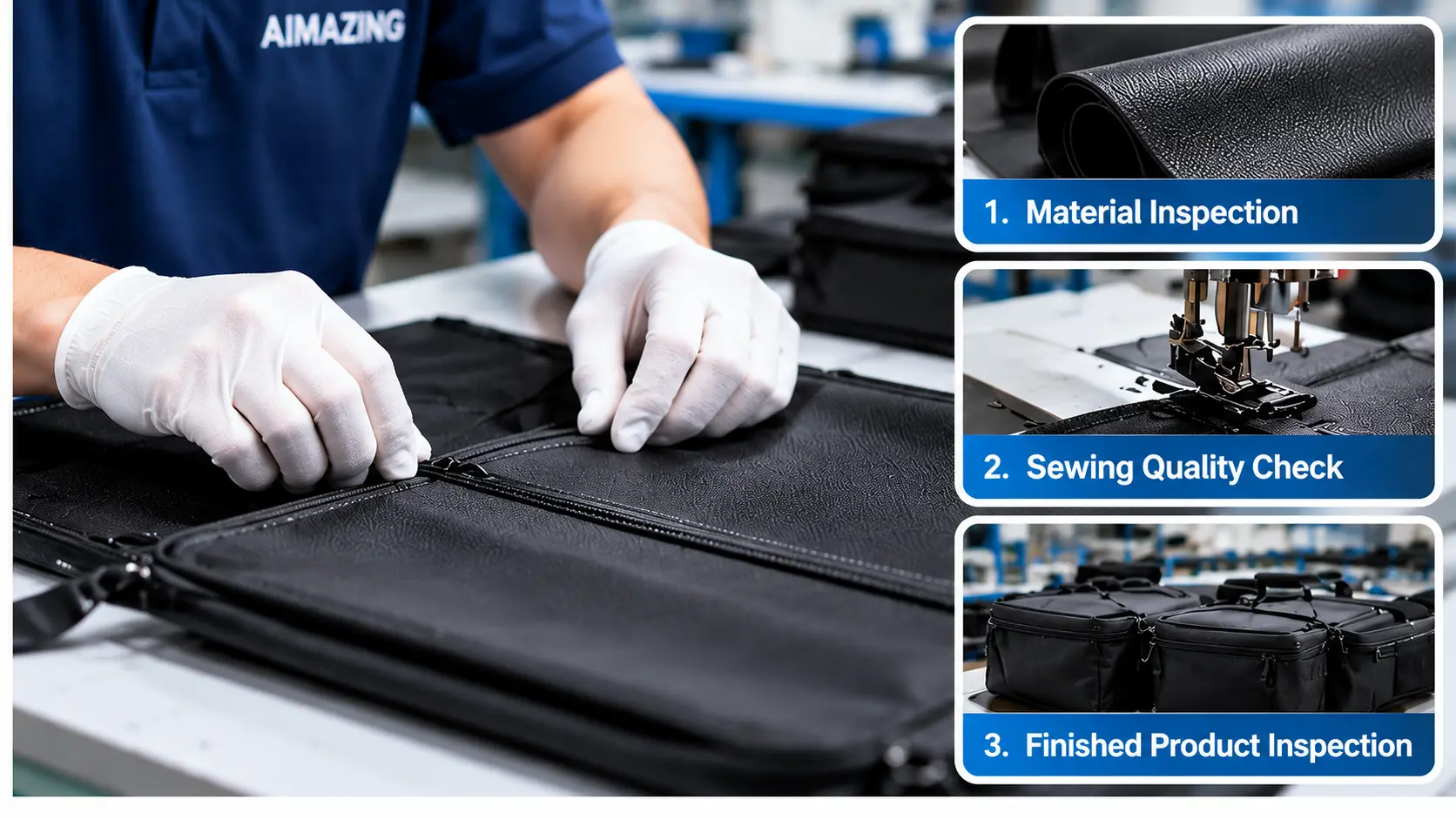
Quality management should therefore cover materials, production processes, and finished-bag inspection.
Incoming Material Inspection
Manufacturers should verify that delivered materials match approved specifications.
Checks may include fabric appearance, thickness, coating condition, carbon-layer specifications, and visible defects.
Where necessary, material certificates or third-party test reports can provide additional supporting information.
Cutting and Layer Alignment
Accurate cutting helps ensure that the different material layers fit together as intended.
For multilayer products, alignment is particularly important around seams, corners, and closures.
Sewing and Assembly
Production teams should follow approved construction requirements, including seam allowances, reinforcement positions, and zipper installation.
Special attention should be given to areas where layers join or where closures connect to the main compartment.
In-Process Quality Control
Inspection during production can help identify problems before large quantities are completed.
Typical quality control process include:
- Material placement and visible layer defects
- Stitching consistency
- Zipper operation
- Dimensional accuracy
- Handle and strap attachment
- Logo positioning
Final Product Inspection
Finished products should be checked against the approved sample and agreed specifications.
Functional checks may be included where suitable testing methods and acceptance criteria have been established.
It is important to distinguish general workmanship inspection from validated odor-containment testing.
A visually acceptable product does not automatically demonstrate a particular level of odor-control performance.
For brands sourcing custom smell proof bags, clear specifications, documented inspection standards, and consistent communication with the manufacturing partner are essential to maintaining product quality.
11. Final Verdict: Which Storage Bag Should You Choose?
The smell proof bag vs regular storage bag decision is not simply about choosing a more expensive or more technically complex product.
A regular storage bag remains a practical solution when customers primarily need organization, portability, and everyday protection.
A specialized odor-control bag becomes more relevant when reducing odor escape is a defined product requirement.
For brands and wholesalers, the most important considerations are material suitability, closure construction, realistic performance expectations, manufacturing cost, and quality consistency.
An activated carbon smell proof bag can provide useful odor-control functionality, but its effectiveness depends on more than the presence of carbon alone.
By evaluating complete product construction and testing representative samples, buyers can make more informed sourcing decisions and develop products that better match customer expectations.
Develop Your Own Smell Proof Bag Collection
Looking for a reliable OEM/ODM partner for your next product development project?
At TrimLife, we support custom materials, activated carbon layer configurations, bag structures, closures, logos, and packaging for brands, wholesalers, and distributors.
From initial design discussions to sampling and bulk production, our team works with you to develop practical solutions based on your product requirements.
Contact TrimLife to discuss your custom smell proof bag project and request a quotation.
Frequently Asked Questions
1. What is the difference between a smell proof bag and a regular storage bag?
A smell proof bag is designed with additional materials or construction features intended to reduce odor escape, such as activated carbon layers and specialized closures. A regular storage bag primarily focuses on organization and carrying convenience and generally does not include dedicated odor-control components.
2. Do smell proof bags completely block odors?
Not necessarily. Performance depends on the odor-causing compounds, carbon material, closure construction, environmental conditions, and product condition. Smell proof bags are designed to reduce odor transmission, but complete containment should not be assumed without appropriate testing.
3. How long does activated carbon last in a smell proof bag?
There is no universal service life. Activated carbon performance depends on carbon type, loading, exposure to odor-causing compounds, humidity, and usage conditions. Manufacturers should avoid promising a fixed lifespan without relevant supporting data.
4. Are smell proof bags waterproof or airtight?
Not automatically. Odor resistance, waterproofing, and airtightness are separate performance characteristics. A product may incorporate water-resistant materials or an upgraded closure without meeting a defined waterproof or airtight standard.
5. What should buyers check before ordering custom smell proof bags?
Buyers should review the carbon material, layer coverage, closure construction, dimensions, stitching, and intended use. They should also inspect representative samples and agree on relevant quality standards before approving bulk production.
6. Can brands customize the materials, size, and logo of smell proof bags?
Yes. OEM/ODM manufacturers can offer different fabrics, carbon-layer arrangements, sizes, compartments, closures, branding methods, and packaging options. Available configurations depend on the product design, material compatibility, and production requirements.