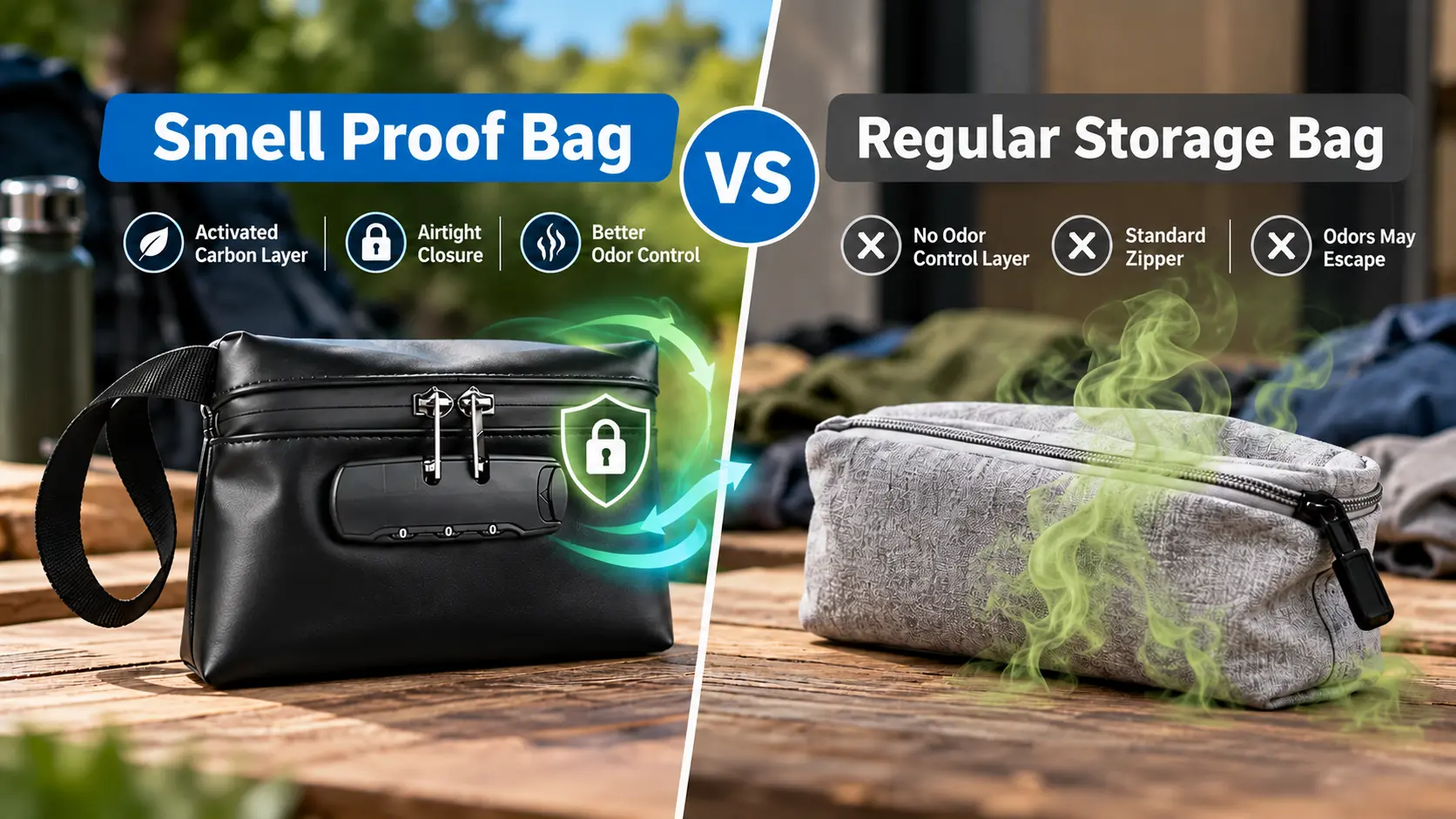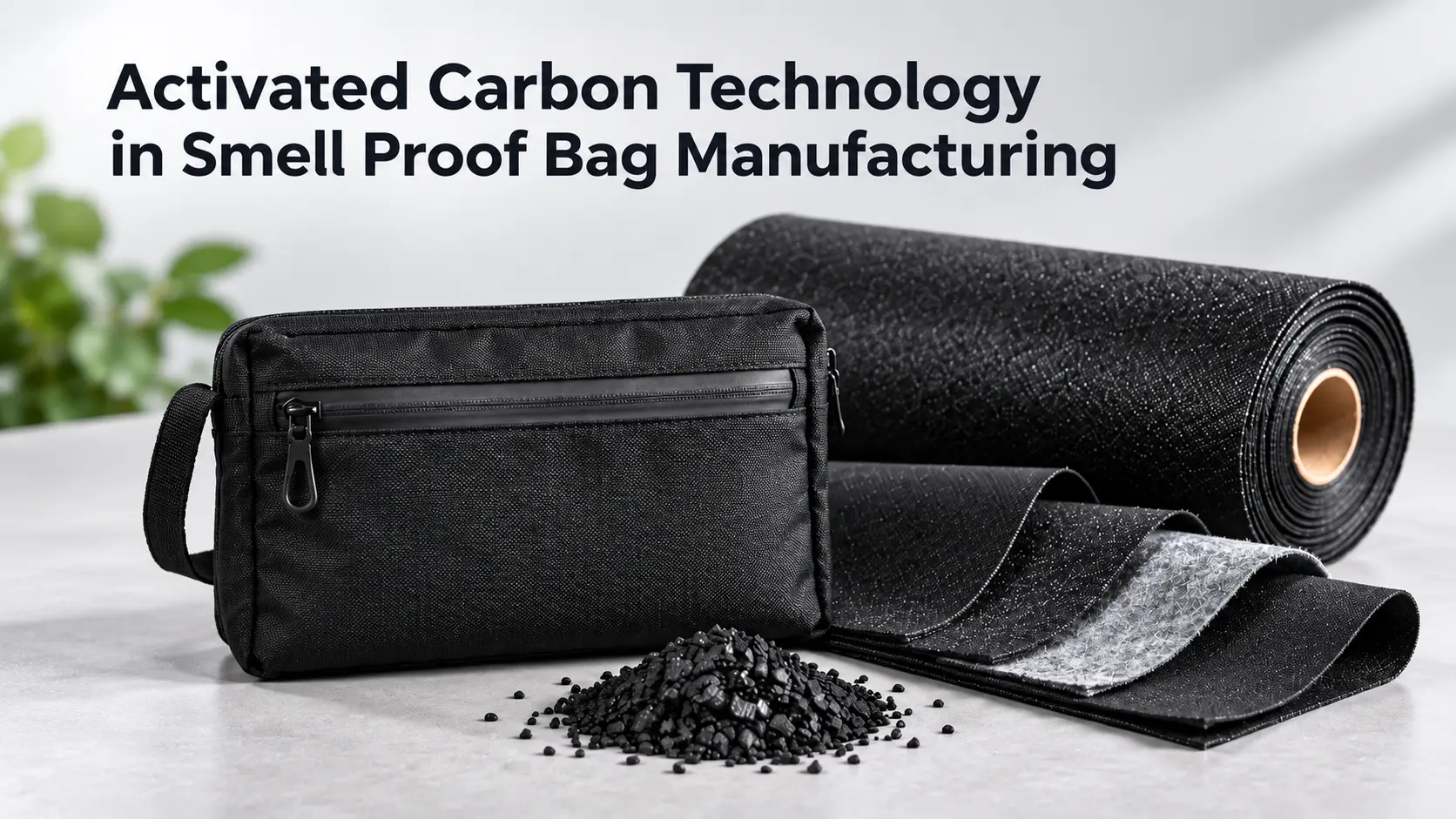
Choosing the right smell proof bag materials is an important part of developing a reliable odor-control product.
A smell proof bag may look simple from the outside, but its performance depends on more than the fabric you see. For brands and wholesale buyers, material selection can influence odor control, durability, product cost and the overall user experience.
From outer fabrics and activated carbon linings to barrier materials and sealing components, each element has a specific role in the finished bag. Understanding these options can help you make better decisions when developing a custom smell proof bag for your market.
1. What Materials Are Used in Smell Proof Bags?
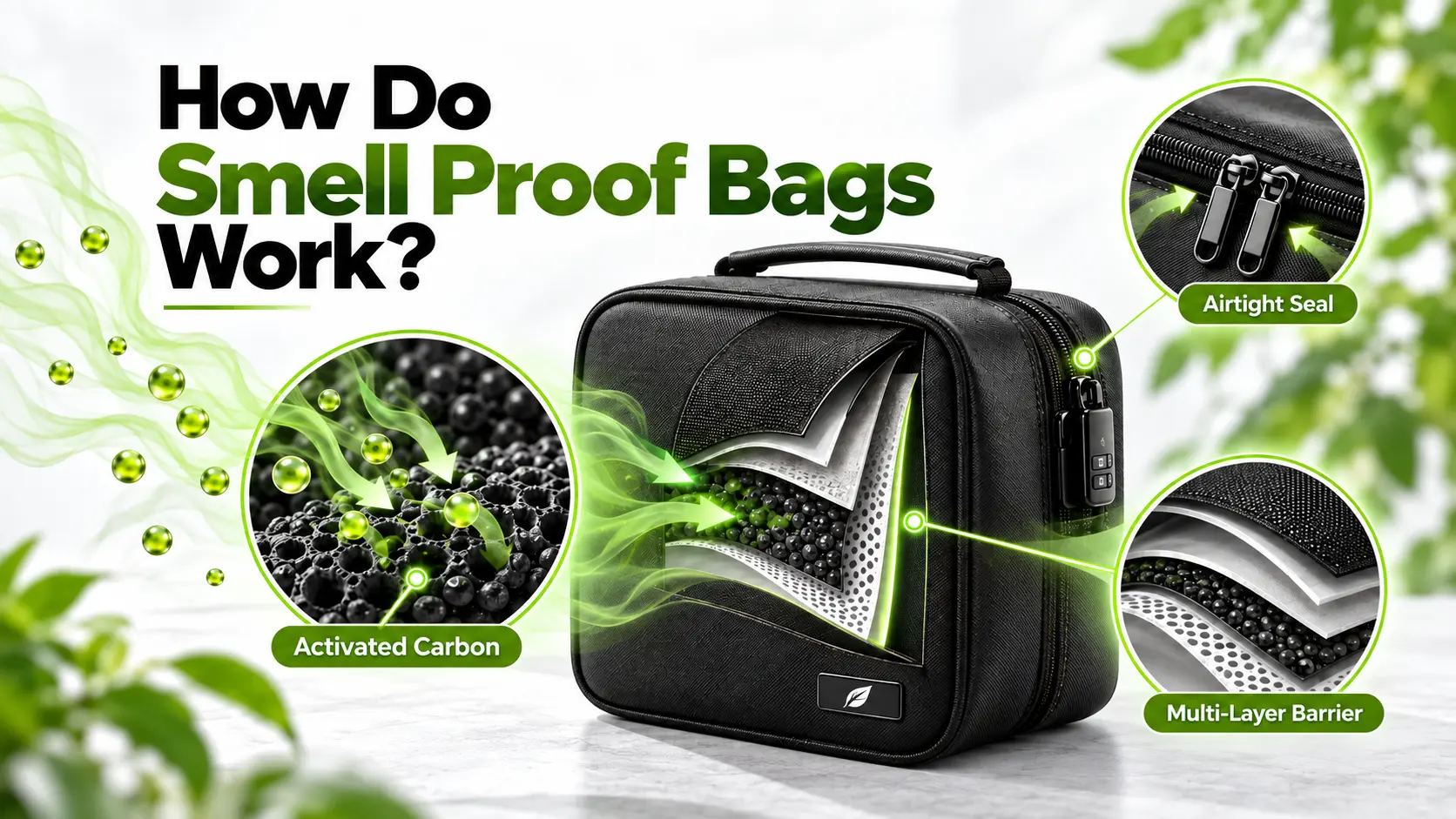
A smell proof bag typically combines several types of materials, with each one serving a different purpose. The outer fabric provides durability and appearance, while activated carbon fabric is commonly used for odor adsorption. Barrier films, inner linings and sealing components help support the overall construction.
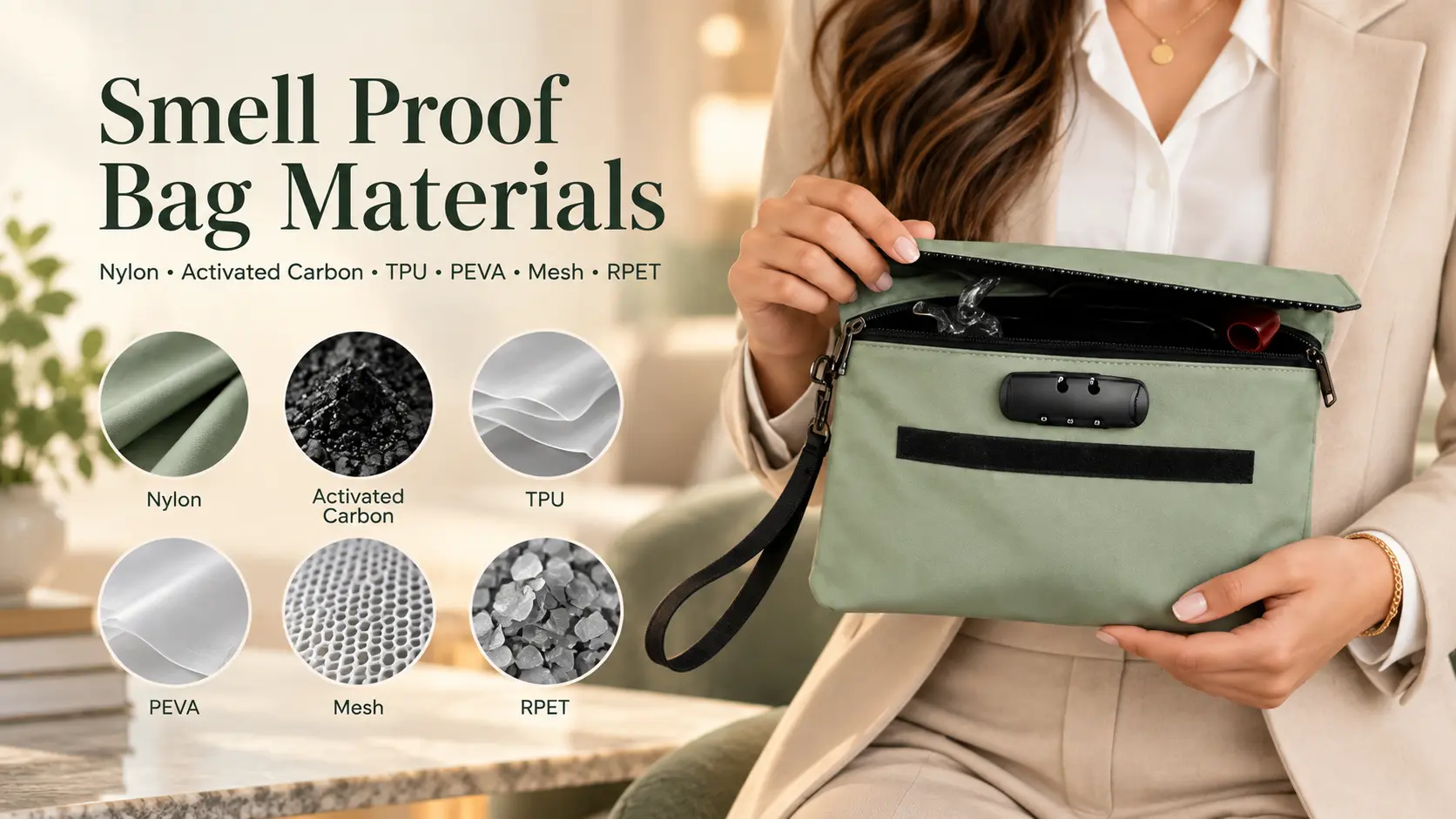
Common materials used in smell proof bag materials include:
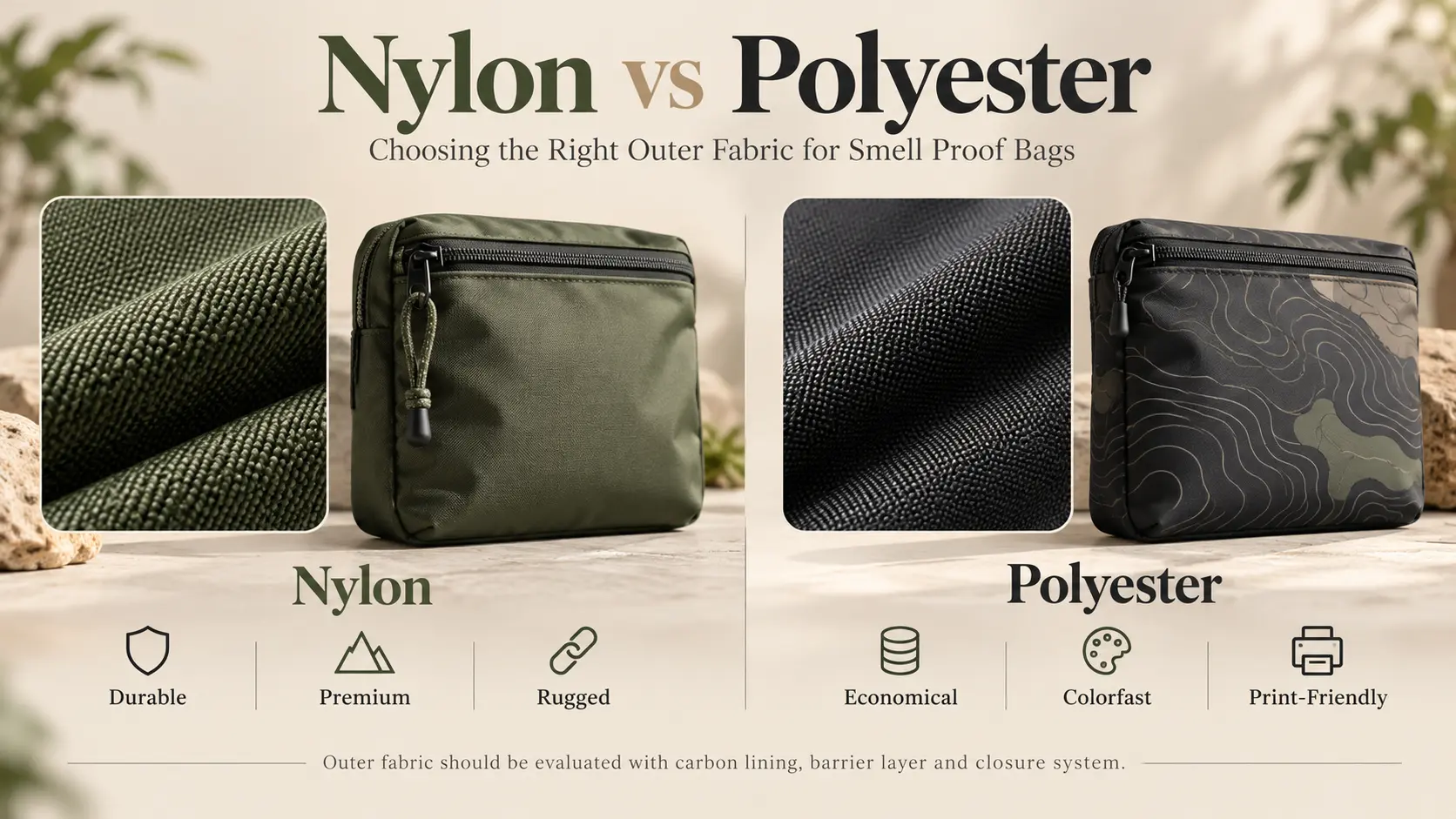
Nylon: Known for its tear and abrasion resistance, making it suitable for premium and rugged bag applications.
Polyester: A cost-effective option with good durability, colorfastness and printability for high-volume production.
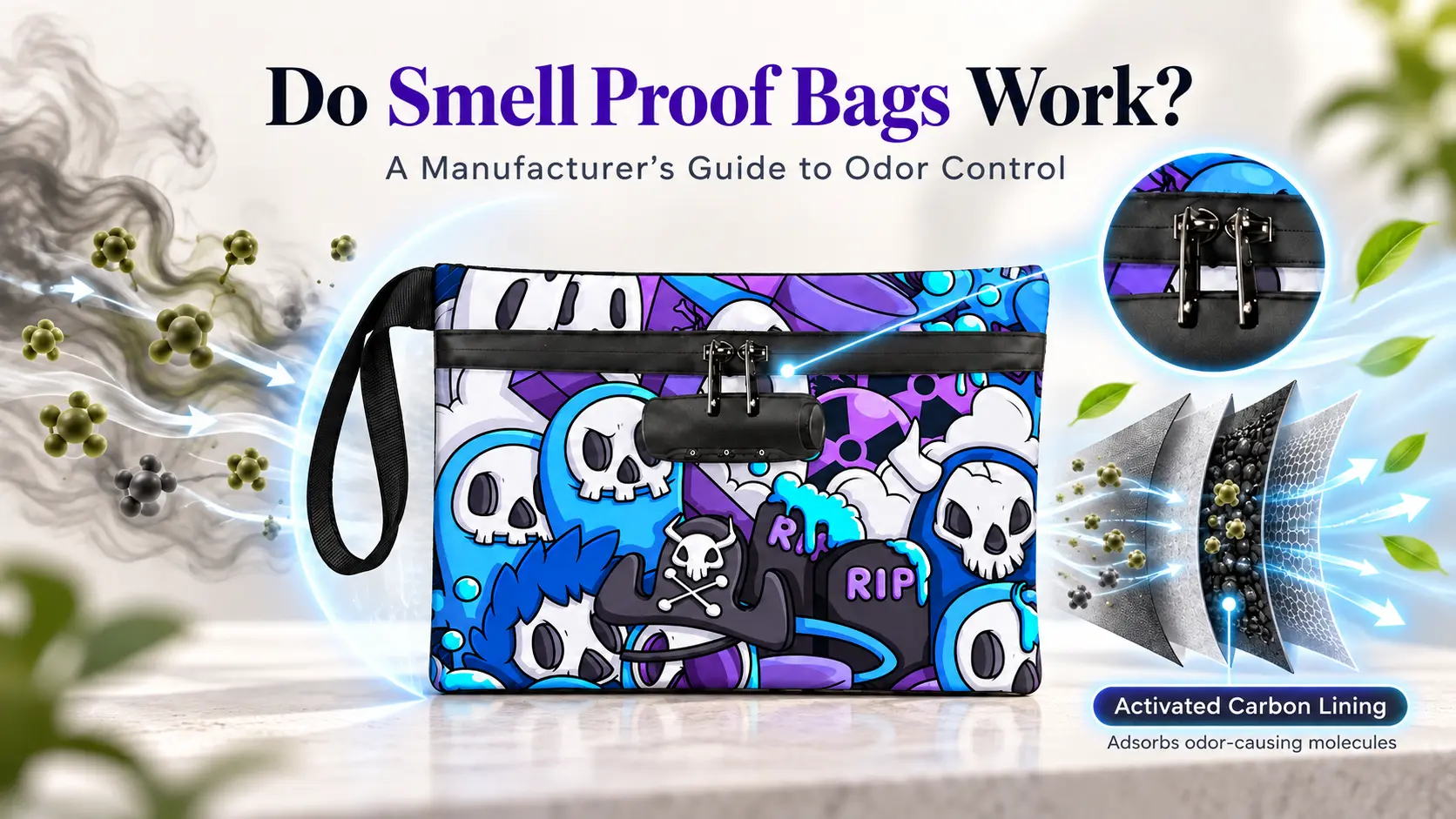
Activated Carbon Fabric: The key odor-control material, designed to adsorb and retain many volatile odor compounds.
TPU: A flexible and durable film material that can be used as a moisture-resistant or barrier layer.
PEVA: A lightweight, flexible material often selected for barrier and moisture-resistance requirements.
Mesh: Commonly used as an inner lining or protective layer to improve durability and protect the carbon fabric from direct friction.
RPET: Recycled polyester fabric that can be selected for projects where recycled-content materials are part of the product requirements.
The right smell proof bag material depends on the intended application, target price, durability requirements and product design. For OEM development, these materials can be evaluated individually before being combined into a construction that matches the project’s specific requirements.
2. Why Activated Carbon Is the Key Material for Odor Control
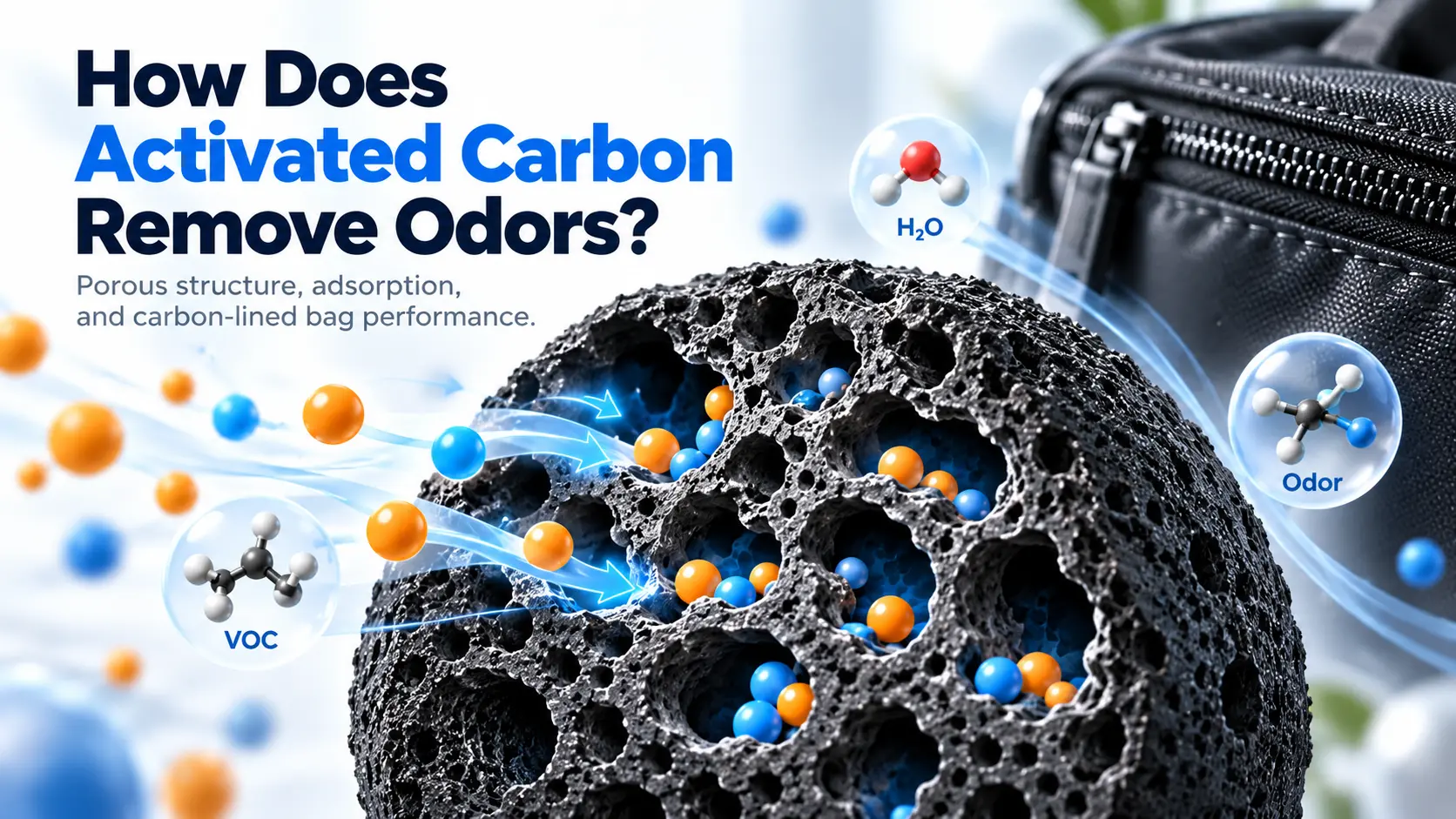
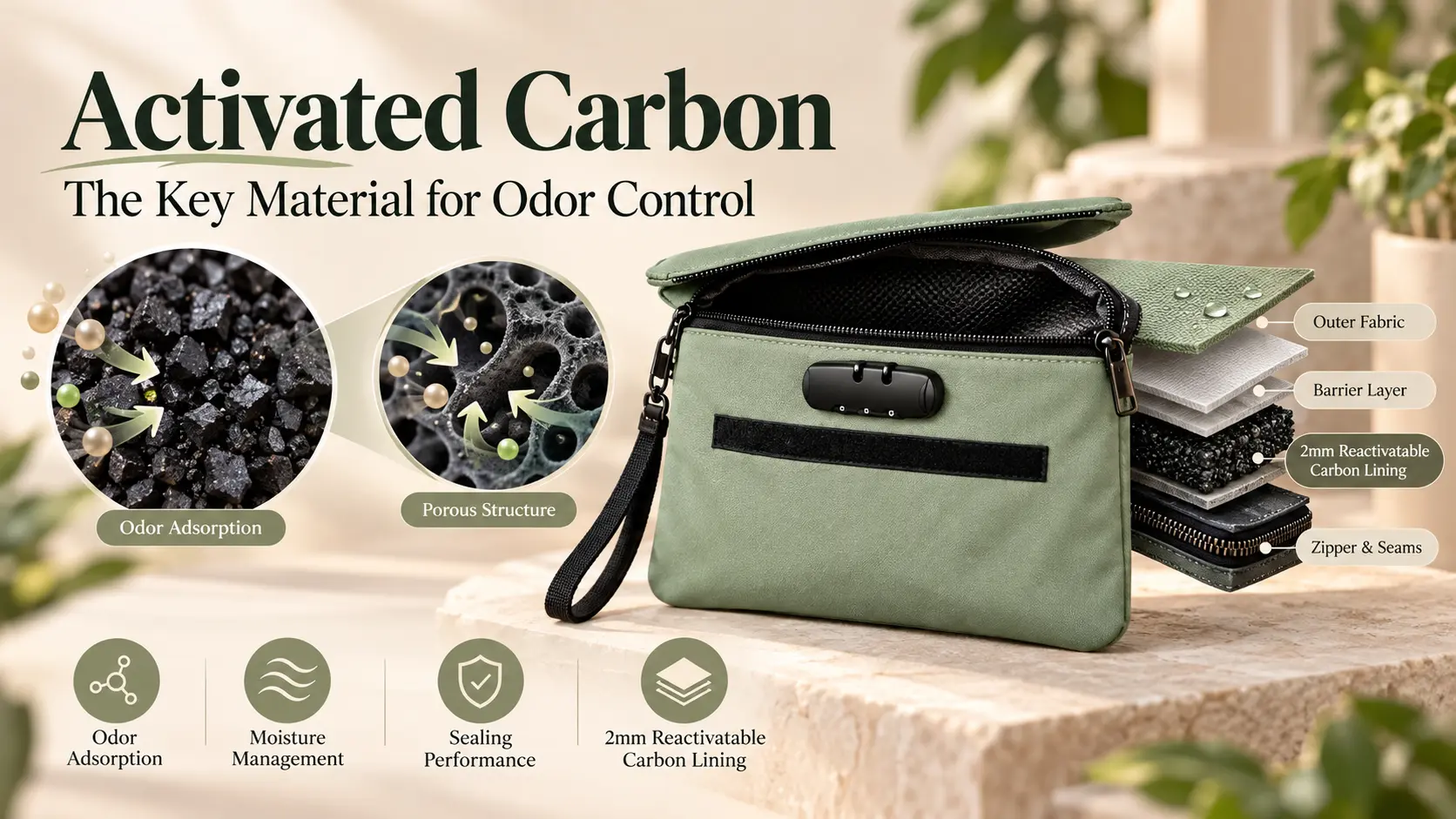
Activated carbon is widely used as the primary odor-control layer in smell proof bag materials because its porous structure provides a large surface area for adsorbing many volatile odor compounds. During activation, carbon is processed to develop a network of microscopic pores that can attract and retain odor molecules within the carbon structure.
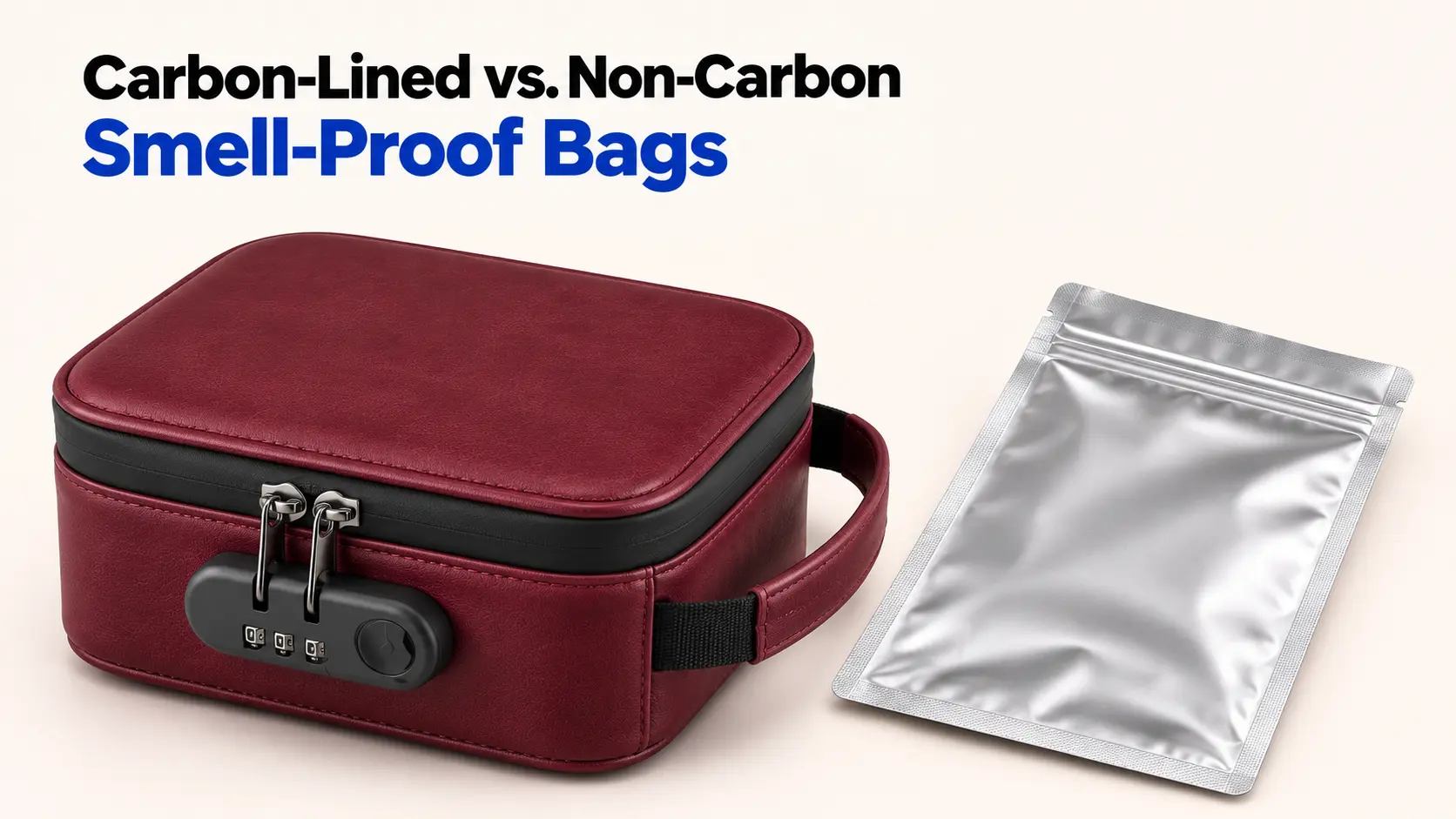
For a smell proof bag, however, activated carbon should not be considered a standalone solution. Its effectiveness depends on factors such as carbon quality, loading, layer thickness, coverage, moisture exposure, and the sealing performance of the finished bag. The outer fabric, barrier layer, activated carbon lining, zipper and seams all work together to determine the overall odor-containment performance.
Key factors to consider when selecting activated carbon
Porous Structure: Activated carbon contains a network of microscopic pores that provides adsorption sites for many volatile odor compounds.
- Van Der Waals Forces: Molecular attraction pulls airborne scent particles deep into microscopic carbon pore channels.
Carbon Quality & Loading: The type and amount of activated carbon used in the lining can influence its adsorption capacity and overall performance.
Lining Coverage: Consistent carbon coverage across the bag’s internal surfaces helps provide more uniform odor-control performance.
Moisture Management: Appropriate barrier materials can help limit moisture exposure and protect the activated carbon layer during normal use.
Construction Compatibility: The carbon lining needs to be integrated with the outer fabric, barrier layer and closure system without compromising flexibility or durability.
Reactivation Potential: Some activated carbon fabrics can be designed for reactivation under appropriate conditions, helping extend the usable life of the lining.
For OEM projects, the goal is not simply to select the thickest or highest-carbon material. The right smell proof bag material should be matched to the product’s size, application, target price, expected usage and required odor-control performance. This is where material selection and bag construction need to be evaluated together. This is where material selection and bag construction need to be evaluated together. For example, for premium smell proof bags, we often recommend a 2mm reactivatable activated carbon lining as the core odor-control layer, combined with the appropriate outer fabric, barrier and sealing system for the intended application.
3. Carbon Lining Thickness: Does It Matter?
Thick activated carbon filtration cores dictate the long-term adsorption capacity and operational lifespan of any storage unit utilizing a dense carbon lining, complemented by premium activated carbon integrations. Budget storage pouches fail consumer expectations because manufacturers substitute expensive activated carbon cloth with ineffective carbon powder sprays.
Sourcing engineers specify high-density woven carbon cloths to ensure that every square centimeter of the storage compartment features active odor-adsorbing capacity that survives repeated folding and heavy daily use. Comparing thin layers to thick filtration matrices demonstrates that a robust construction can help maintain more consistent odor-control performance over repeated use, subject to the specified testing conditions.
- Adsorption Capacity Scaling: A higher carbon loading or thicker carbon layer can increase the available adsorption capacity, although overall performance also depends on carbon quality, structure and coverage.
- Carbon Spray Elimination: Sprayed-on carbon dust flakes off rapidly, whereas woven laminates maintain structural integrity.
- Cost Versus Performance Balance: Premium filtration cores demand higher raw material budgets but eliminate high retail return rates.
- Folding Resilience: Well-integrated carbon fabrics can offer better durability and more consistent odor-control performance through repeated folding and handling.
Thickness matters, but it does not determine odor-control performance on its own. Carbon loading, distribution, fabric construction, lamination, surface exposure, zipper sealing and the overall bag structure all affect the final result.
For example, a 2mm activated carbon lining does not automatically provide twice the performance of a 1mm layer. For premium smell proof bags, the carbon layer should be selected as part of the complete bag construction, based on the intended application and performance requirements.
4. Nylon vs Polyester Smell Proof Bags
Nylon and polyester are both widely used as outer fabrics for smell proof bags, but the right choice depends on the product’s application, target price, durability requirements and brand positioning. Instead of choosing one material as universally better, OEM buyers should evaluate how each fabric works with the carbon lining, barrier layer and closure system.
| Material | Key Advantage | Cost Consideration | Suitable For |
|---|---|---|---|
| Nylon | High tear and abrasion resistance | Generally higher | Premium, rugged and outdoor applications |
| Polyester | Good durability, colorfastness and printability | Generally more economical | High-volume, promotional and retail applications |
For premium or rugged custom smell proof bags, nylon can be a suitable choice when durability and a higher-end appearance are priorities. Polyester can be a practical option for projects where cost efficiency, color consistency and large-volume production are more important.
The outer fabric is only one part of the product. For OEM development, the final material selection should be evaluated together with the activated carbon lining, barrier layer, zipper, seams and overall construction to achieve the right balance between performance, cost and product positioning.
5. TPU Zippers and Airtight Closure Systems
Airtight zipper tracks prevent pressurized gas escape by compressing dual-channel rubber sealing profiles under high mechanical tension during every closing cycle on any advanced airtight smell proof bag, incorporating an approved odor barrier material. Even the thickest activated carbon cloth will fail if the primary opening allows ambient air to exchange freely with the internal storage chamber. Professional soft-goods manufacturers integrate specialized extrusion zippers that lock mating rubber teeth together tightly to establish a complete hermetic seal. Sourcing managers must verify that closure mechanisms withstand repeated pulling stress without losing elasticity.
- Dual-Channel Rubber Tracks: Interlocking rubber sealing profiles compress tightly to help minimize air exchange through the zipper area.
- Mechanical Tension Sealing: The slider applies consistent tension across the sealing profile to support reliable closure performance.
- Environmental Elasticity Retention: High-grade elastomeric compounds resist hardening and cracking under extreme temperature shifts.
- Pressure Differential Defense: A well-sealed zipper helps reduce odor release caused by pressure changes during storage and transport.
6. Multi Layer Construction of Professional Smell Proof Bags
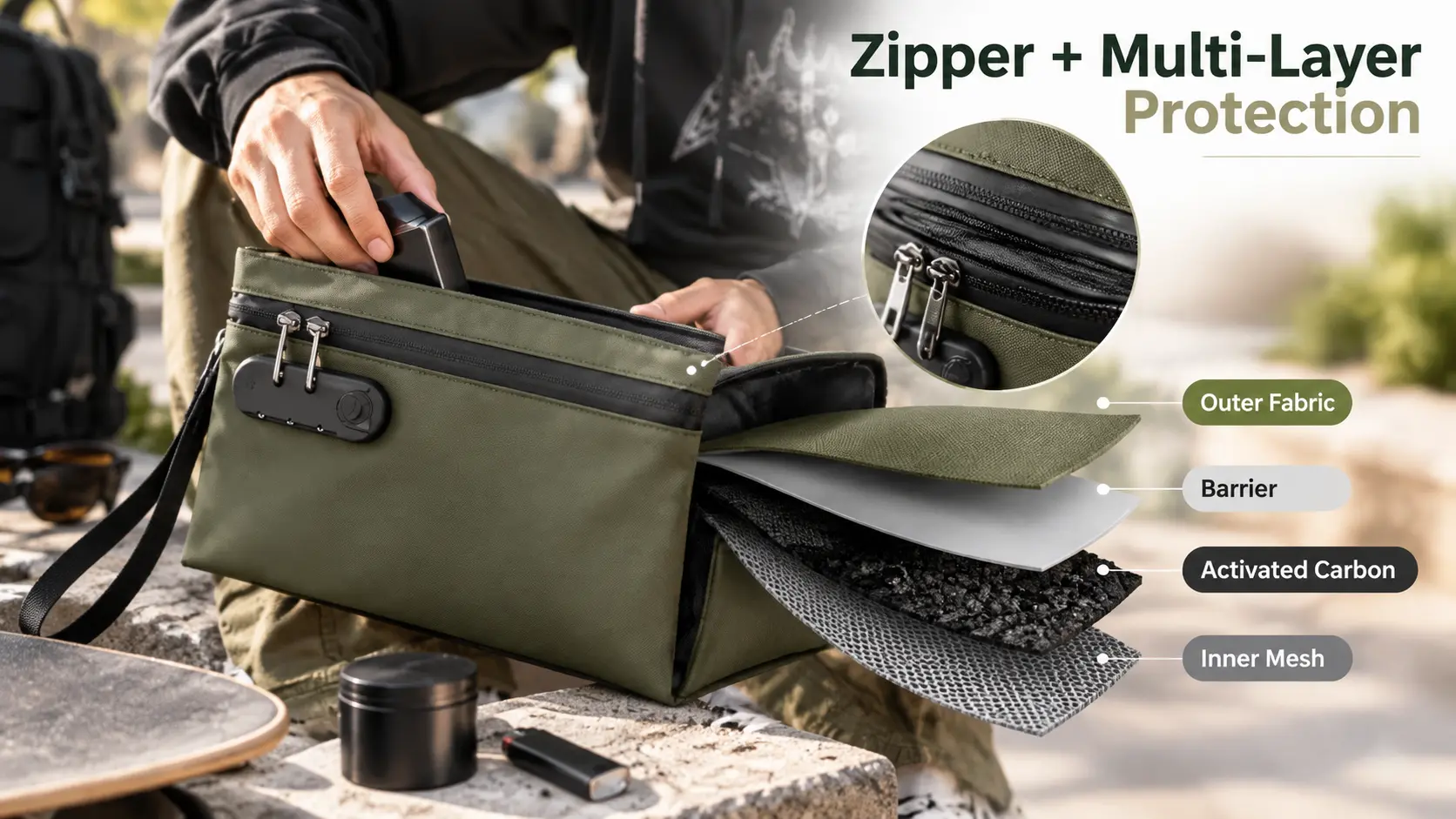
Professional odor containment relies on a precise four-tier structural matrix consisting of an abrasion-resistant outer fabric, a puncture-resistant moisture barrier, an activated carbon filtration core, and a cleanable inner mesh lining within every high-performance odor barrier material framework, verified by standard smell proof bag material specifications.
Sourcing factories laminate these disparate textile layers together under intense heat and pressure to form a cohesive composite fabric wall. This layered configuration protects the carbon layer while providing suitable contact between odor-containing air and the adsorption layer.
- Outer Protective Shell: High-denier ballistic nylon or polyester defends the internal carbon matrix from external tears.
- Moisture Barrier Film: Waterproof TPU or PEVA layers prevent ambient humidity from deactivating carbon pores.
- Activated Carbon Core: Microporous activated carbon fabric adsorbs and retains many volatile odor compounds within its porous structure.
- Protective Inner Lining: Woven mesh interiors shield brittle carbon fibers from internal sharp objects.
7. How Factories Select Materials for OEM Smell Proof Bags
Choosing materials for a custom smell proof bag is not simply about selecting the thickest fabric or the highest-cost components. For OEM projects, the right material combination depends on the product’s application, target price, durability requirements, design and expected usage.
A practical development process typically starts with understanding the buyer’s requirements and then matching the material structure to the finished product.
Define the Product Requirements: Review the intended application, bag size, target market, expected usage and target cost before selecting materials.
Match Materials to Performance: Evaluate options such as nylon, polyester, activated carbon fabric, TPU and PEVA according to the required durability, odor-control and moisture-resistance performance.
Develop and Test Samples: Turn the selected material structure into a physical sample to evaluate construction, functionality and overall usability before mass production.
Review Manufacturing Feasibility: Check stitching, lamination, zipper installation and other production processes to ensure the selected materials can be manufactured consistently at scale.
Control Quality During Production: Use incoming material inspection and in-process and finished-product quality checks to maintain consistency from materials through bulk production.
For example, a premium smell proof bag may benefit from a more durable outer fabric and a 2mm reactivatable activated carbon lining, while a cost-sensitive high-volume project may require a different material combination. The right solution depends on the complete product specification rather than one material alone.
This is where an experienced smell proof bag manufacturer can add value beyond production. By evaluating materials, construction and manufacturing requirements together, a factory can help buyers develop a bag that balances odor-control performance, durability, cost and market positioning.
8. Sustainable Materials for Future Smell Proof Bags
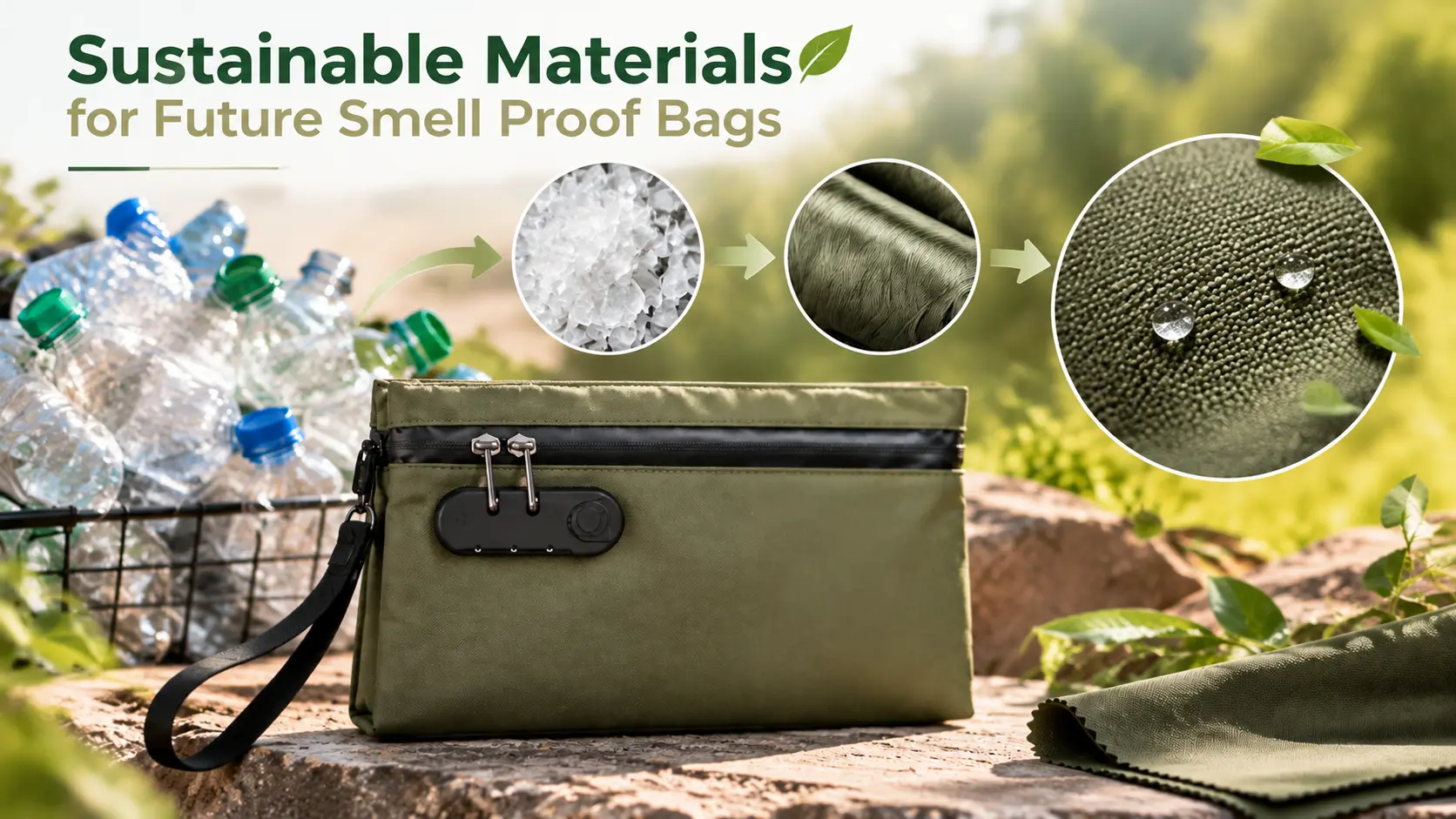
Going green doesn’t mean letting funk leak, which is why modern soft-goods engineering is heavily pivoting to recycled polyethylene terephthalate and sustainable RPET textiles as a go-to smell proof bag material that clears brutal global eco-standards while supporting the sealing and durability requirements of the finished bag.
Savvy manufacturing floors are taking post-consumer plastic bottles and spinning them into heavy-duty yarns that throw down just as much tensile strength and tear resistance as old-school virgin nylons. Sourcing directors help global brands transition toward green inventories by offering certified sustainable material options that appeal to environmentally conscious retail consumers, utilizing an approved odor barrier material.
- RPET Yarn Integration: Post-consumer plastic bottles are spun into high-strength textile fibers for exterior bag shells.
- Environmental Compliance: Sustainable material sourcing aligns brands with international eco-friendly retail mandates.
- Performance Retention: Well-specified RPET fabrics can provide durability and weather resistance suitable for many bag applications, depending on fabric construction and material grade.
- Green Brand Positioning: Eco-conscious material choices attract modern consumers seeking sustainable outdoor gear.
Frequently Asked Questions (FAQ)
What material blocks smell best in bags?
If you want a scent-containment build that actually holds the line, forget the cheap mesh and run a heavyweight composite stack: a bulletproof, high-denier ballistic nylon exterior fused to a waterproof TPU membrane, with a tight-woven activated carbon cloth locked right in the middle. A multi-layer construction combining a durable outer fabric, moisture-resistant barrier and activated carbon lining can provide more effective odor containment than a single-layer textile structure.
Is activated carbon better than charcoal?
Activated carbon is generally more suitable for odor-control applications because its activation process creates a much larger porous surface area for adsorption than ordinary charcoal. Manufacturing engineers build with specialized carbon cloths precisely because that insane internal surface area acts like an absolute vacuum for trapping volatile gas molecules on contact.
Are smell proof bags waterproof?
Don’t let a “water-resistant” tag fool you into thinking a bag can handle a swim, because standard stitched seams will let moisture right through the door. While a heavy ballistic nylon shell with a DWR coating handles a splash just fine. For applications requiring higher levels of water protection, high-frequency RF-welded seams and sealed zipper systems can provide stronger protection than conventional stitched construction. The final waterproof performance should be verified according to the required test standard.
How do factories ensure airtight zipper performance?
Factories ensure airtight zipper performance by utilizing extrusion-molded rubber teeth and dual-channel sealing tracks that compress uniformly under calibrated slider tension. Factories can use appropriate sealing, pressure and leakage tests to evaluate zipper performance according to the product specification and intended application.
What are eco-friendly smell proof bags made from?
Eco-friendly smell proof bags are manufactured using recycled polyethylene terephthalate RPET exterior fabrics combined with certified biodegradable or recyclable internal barrier films. Sourcing sustainable textiles allows brands to reduce their carbon footprint while meeting the specified odor-control and durability requirements for the target application.
How do you test if a smell proof bag works?
You test if a smell proof bag works by utilizing gas chromatography testing, controlled olfactory chamber evaluations, and automated pneumatic pressure audits in a dedicated laboratory. Sourcing managers verify that multi-layer textile composites and extrusion rubber zippers evaluate whether the multi-layer construction and zipper system provide the required level of odor containment under defined test conditions.