1. What Changed in U.S.–China Trade in September 2026?
1.1 The $30 Billion Bilateral Tariff Framework and Smell Proof Bag Sourcing
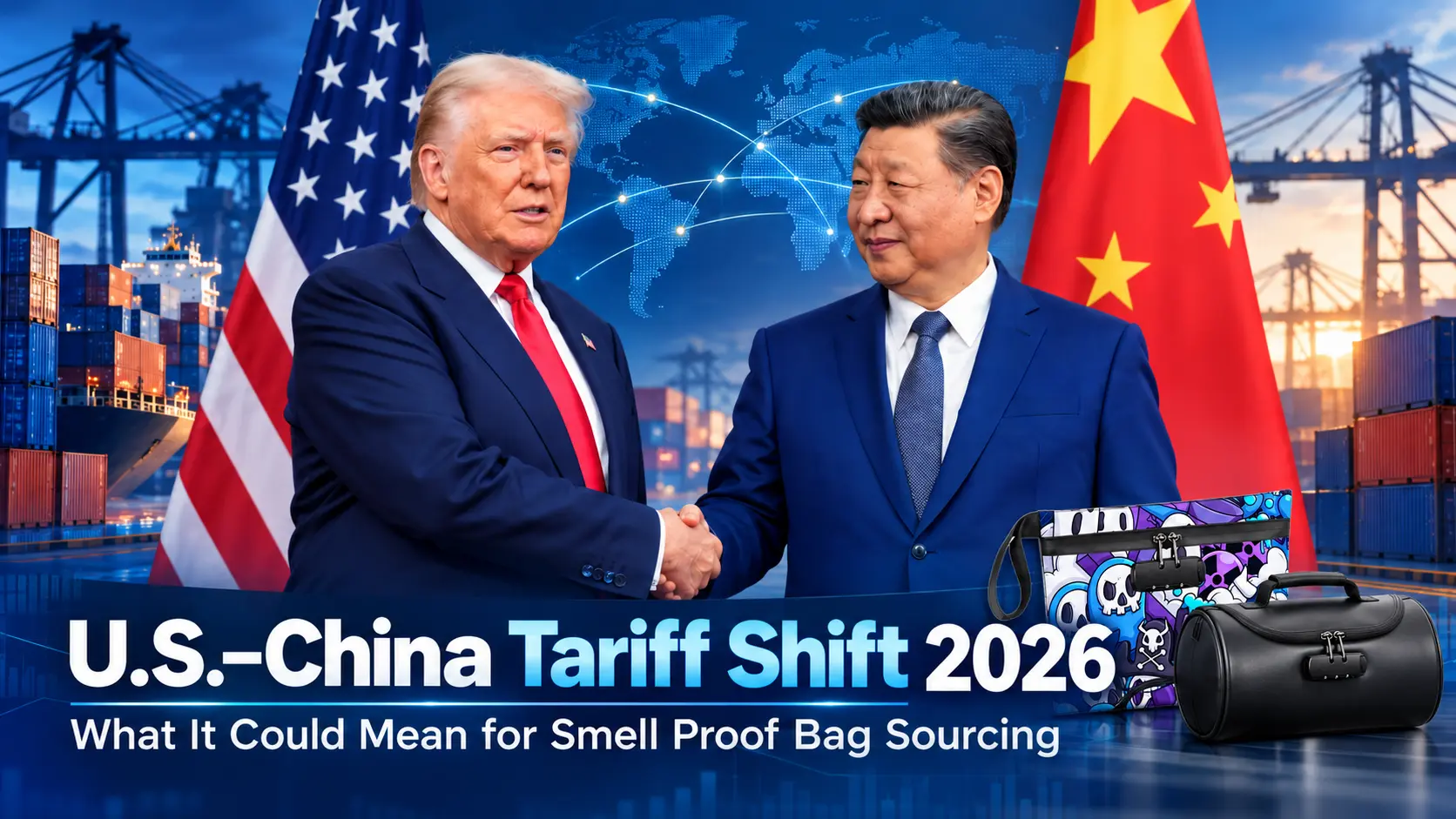
Trade relations between Washington and Beijing experienced a notable structural update through a newly established bilateral mechanism. Negotiators finalized an economic agreement via a newly formed Board of Trade framework to address mutual trade flows. This agreement targets approximately thirty billion dollars worth of non-sensitive consumer merchandise in both directions. Both governments agreed to evaluate targeted tariff adjustments, which may also affect future smell proof bag sourcing decisions. Importers must review official government announcements rather than rely on generalized news summaries.

1.2 US China Tariffs on Bags: Preferential Treatment Is Not the Same as a Confirmed Bag Tariff Cut
Official announcements do not automatically guarantee that every imported soft good receives reduced duty status. The current trade framework confirms a consultative mechanism for non-sensitive consumer goods without publishing a comprehensive tariff schedule for all textile subcategories. Importers must examine specific Harmonized Tariff Schedule codes to determine precise Section 301 applicability. Assuming a blanket tax reduction across all soft-goods categories introduces unnecessary regulatory compliance risks.
2. Why the Tariff Discussion Matters to the Bag and Soft-Goods Industry
2.1 Tariffs Are Only One Part of Landed Cost
Macroeconomic policy changes alter the broader calculations for functional bag sourcing from China among international wholesale buyers and retail brands. Evaluating soft-goods suppliers requires analyzing total acquisition expenses rather than focusing solely on initial factory quotations. Total landed cost encompasses raw material expenses, international ocean freight rates, customs brokerage fees, and estimated quality defect allowances. A holistic financial assessment protects profit margins during changing global economic cycles.
2.2 Functional Bags Compete Differently From Commodity Bags
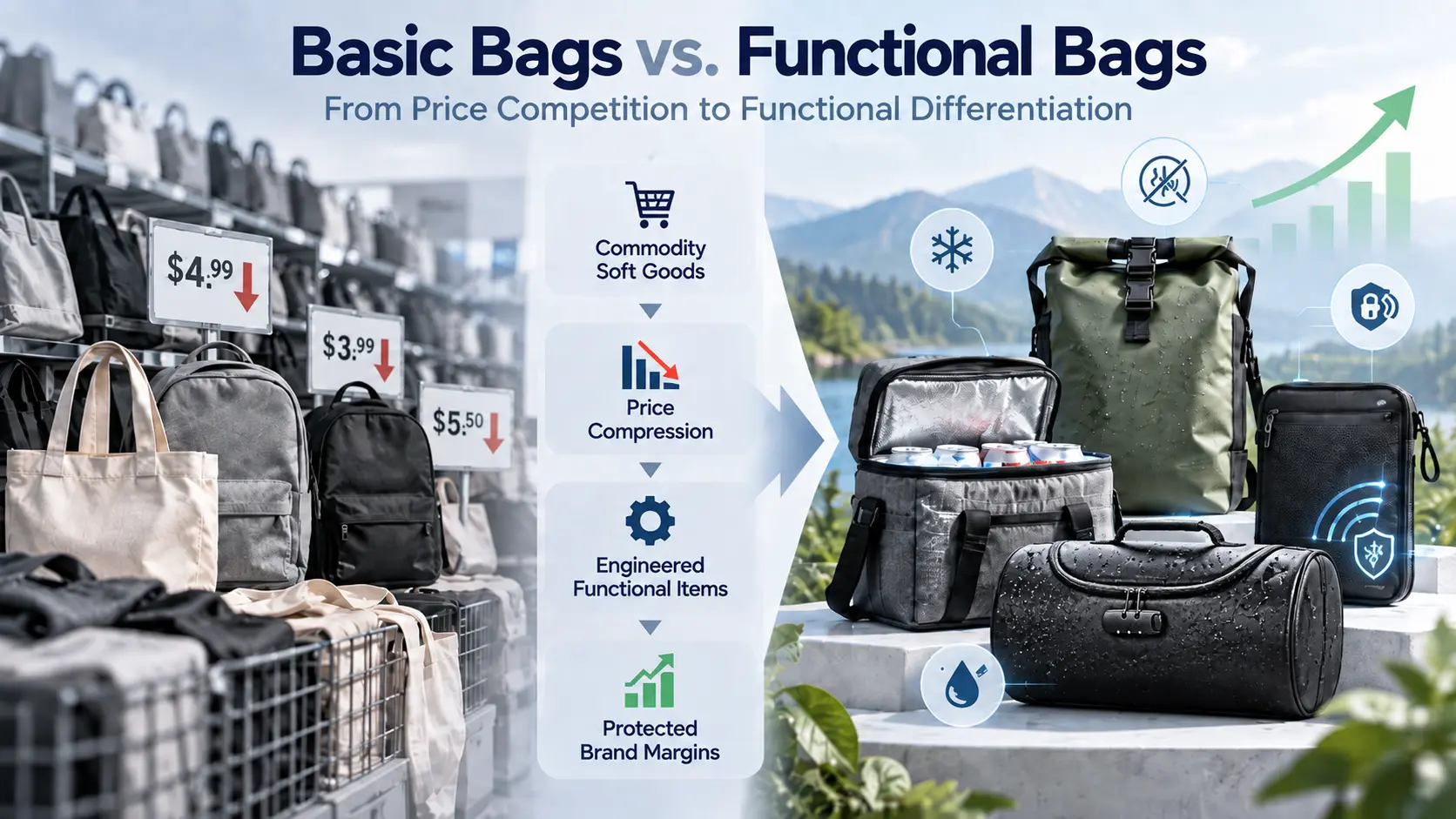
Basic soft goods face intense price competition and severe margin compression across crowded digital marketplaces.
Commodity totes and simple backpacks lack structural barriers, making them easy for discount competitors to replicate.
Advanced soft goods command stronger pricing power by solving specific storage problems through sophisticated material engineering.
Functional differentiation insulates brand portfolios against the pressures of low-cost manufacturing alternatives.
3. What Should U.S. Brands Watch Before Changing Their Sourcing Strategy?
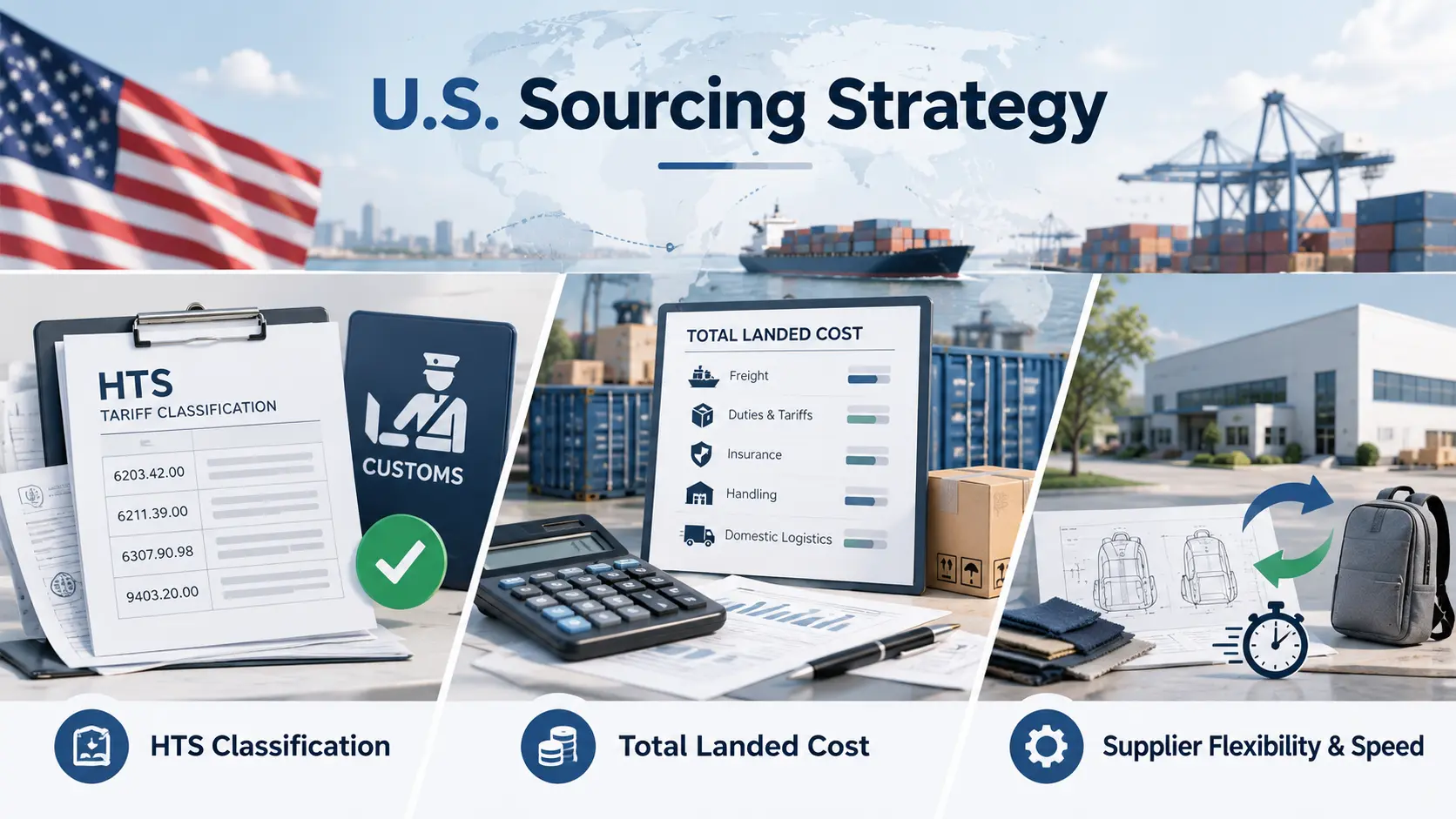
3.1 HTS Classification and Final Tariff Lists
Procurement teams must verify exact customs classifications before restructuring international supply chains or adjusting retail pricing models. Exact numerical HTS codes dictate official duty rates and regulatory requirements for specialized merchandise categories. Relying on vague product descriptions like consumer goods or textiles leads to costly customs clearance delays. Close collaboration with certified trade compliance experts ensures long-term operational accuracy.
3.2 Total Landed Cost Rather Than Unit Price
Strategic sourcing decisions depend on comprehensive financial forecasting across the entire product lifecycle. Factory gate pricing represents only a fraction of total acquisition expenses when managing international container shipments. Packaging specifications, minimum order thresholds, and local warehousing overhead impact final profitability significantly. Balanced cost evaluations ensure sustainable financial returns for wholesale distributors.
3.3 Supplier Flexibility and Product Development Speed
Modern retail environments demand rapid inventory adjustments and accelerated seasonal product development cycles. Soft-goods manufacturers must offer flexible assembly scales and responsive sampling capabilities to support growing brands. Agile supply chain partners help retail companies minimize inventory holding risks while testing new concepts. Sourcing resilience relies on close communication and shared technical expertise.
4. Why Functional Bags May Gain More Attention Than Basic Bag Categories
4.1 From Price Competition to Functional Differentiation
Shifting consumer preferences reward brands that deliver verified performance rather than basic aesthetic styling. Standard storage containers struggle to maintain healthy retail margins in highly saturated commercial markets. Engineered products incorporate complex material combinations and specialized closure mechanisms to justify premium price points. Value-added features transform ordinary retail items into essential lifestyle equipment.
[Commodity Soft Goods]
       │
       ▼
[Intense Price Compression]
       │
       ▼
[Engineered Functional Items]
       │
       ▼
[Protected Brand Margins]
4.2 The Strategic Value of Engineered Soft Goods
Specialized soft goods protect brand equity by addressing complex consumer requirements with precision. Items featuring odor control, thermal insulation, digital signal shielding, or precise vapor containment create defensible market positions. Retailers benefit from higher average order values and reduced customer return rates. Focusing on engineered utility builds a lasting competitive advantage.
5. Why Smell Proof Bags Represent a Different Product Opportunity
5.1 A Function-Led Product Instead of a Style-Only Bag
Odor control soft goods rely on advanced material science rather than seasonal fashion trends to drive consumer demand. Customers purchase these items to solve strict storage and environmental containment challenges effectively. This functional focus makes the product value proposition straightforward and easy to communicate across digital marketing channels. High utility drives consistent, year-round retail demand.
5.2 Multiple Formats Create Room for Product-Line Expansion
A comprehensive strategy for smell proof bag sourcing and brand development utilizes varied product form factors to capture different consumer use cases.
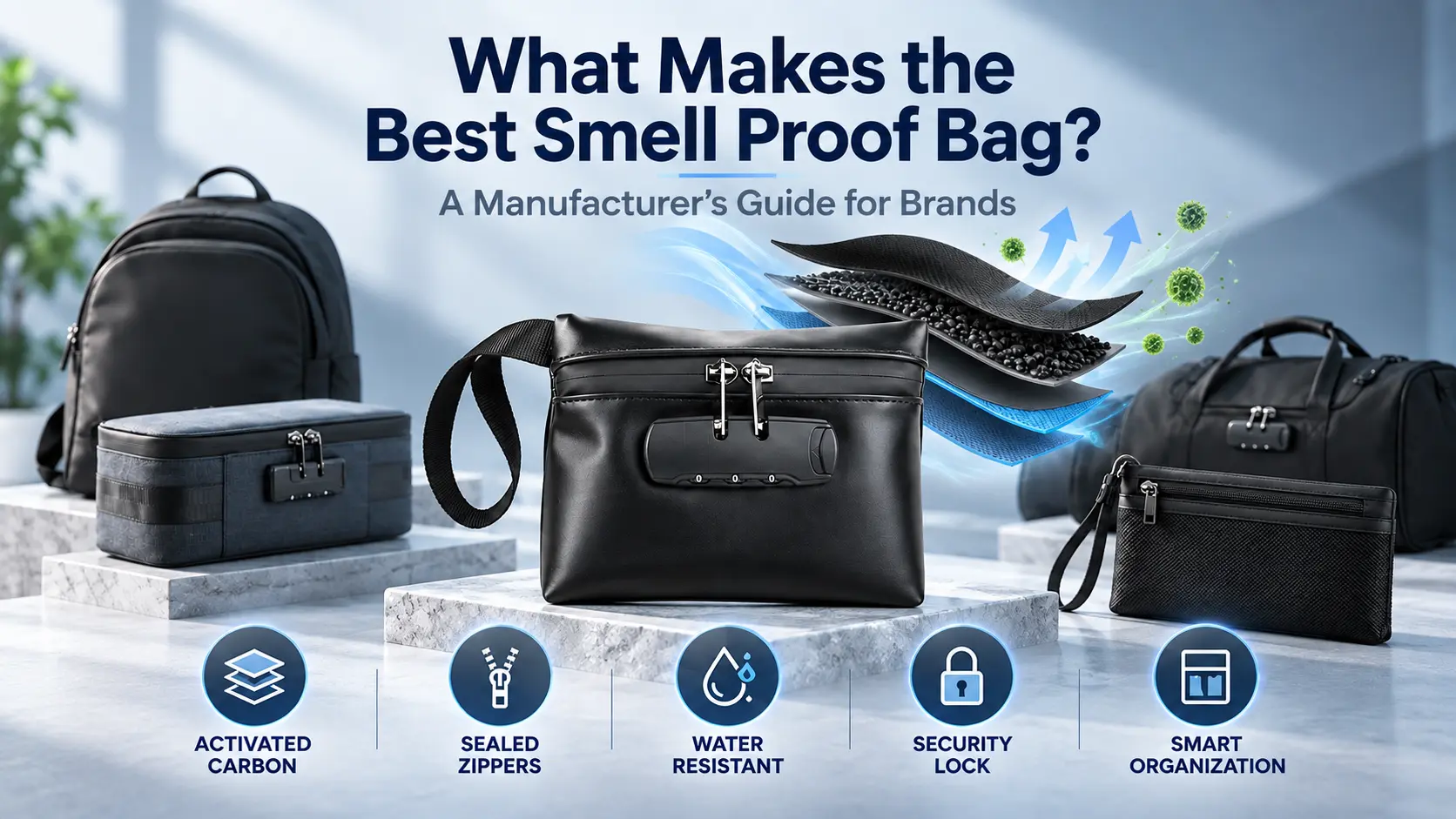
Companies can expand their commercial offerings from compact travel pouches and multi-use cases to versatile crossbody slings, technical backpacks, and large duffels. Offering a complete product ecosystem increases average customer lifetime value and retail shelf presence. Strategic scale transforms single-item brands into category leaders.
6. What Actually Makes a Smell Proof Bag Work?
6.1 Activated Carbon and Multi-Layer Material Systems
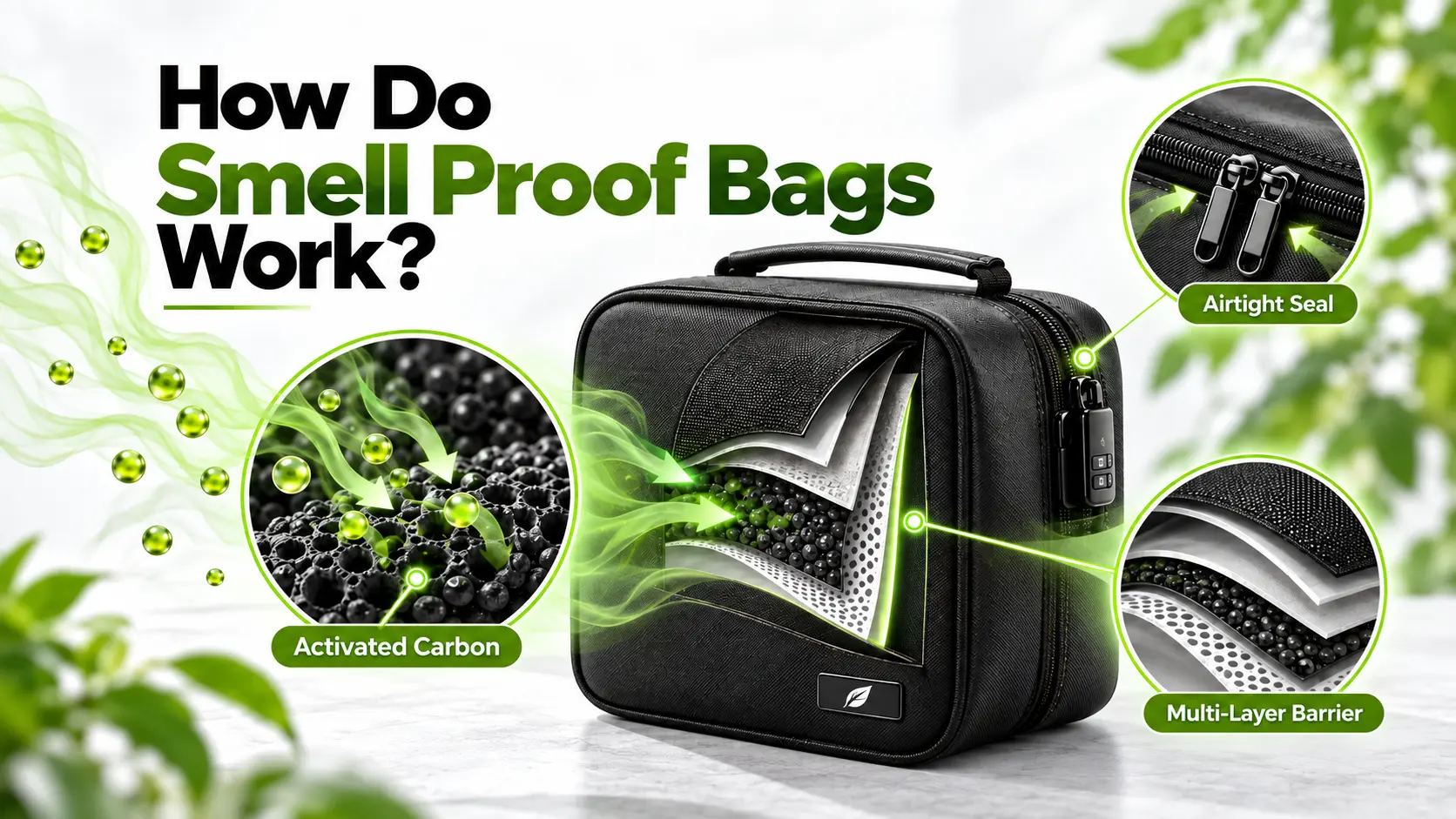
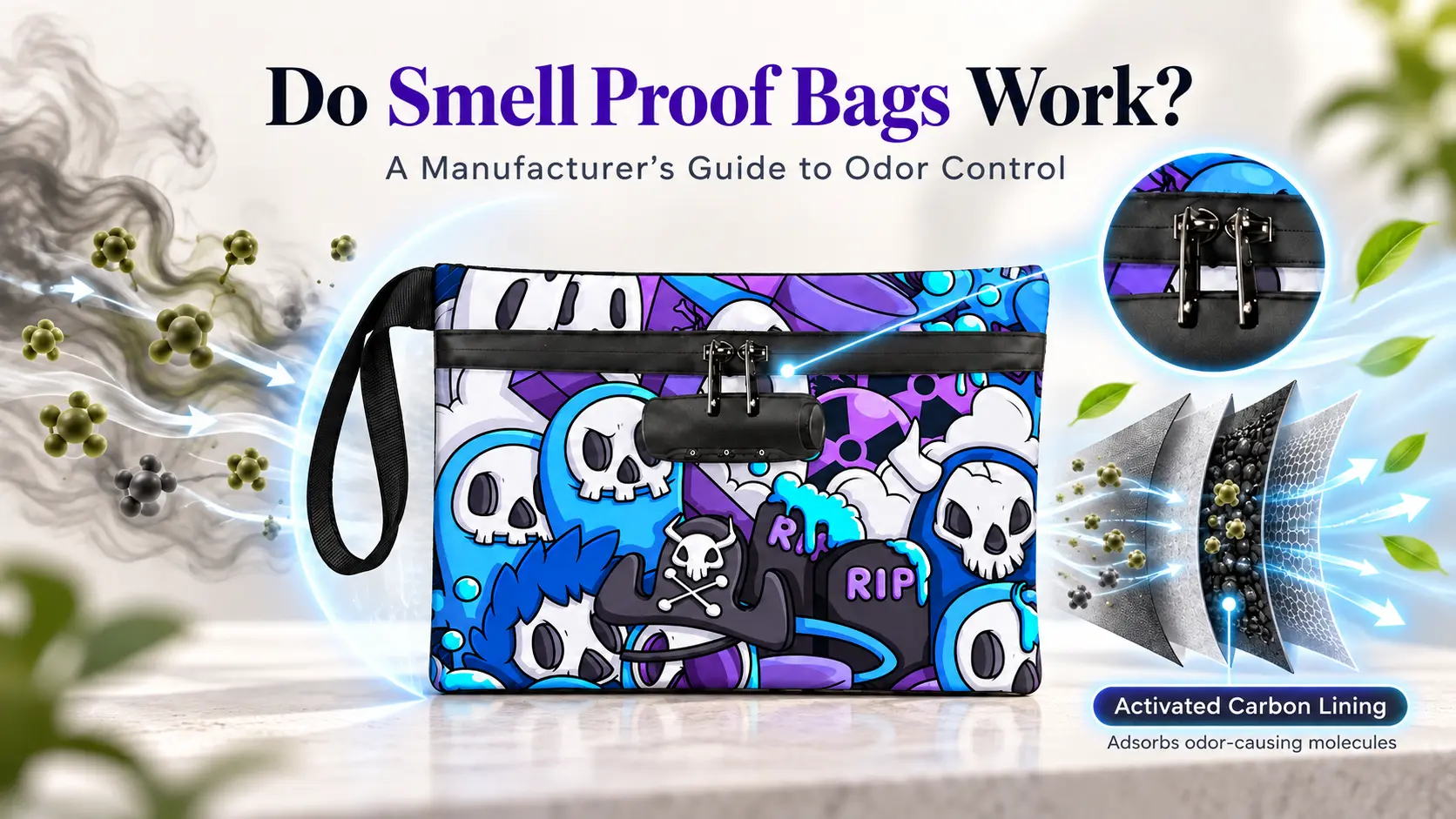
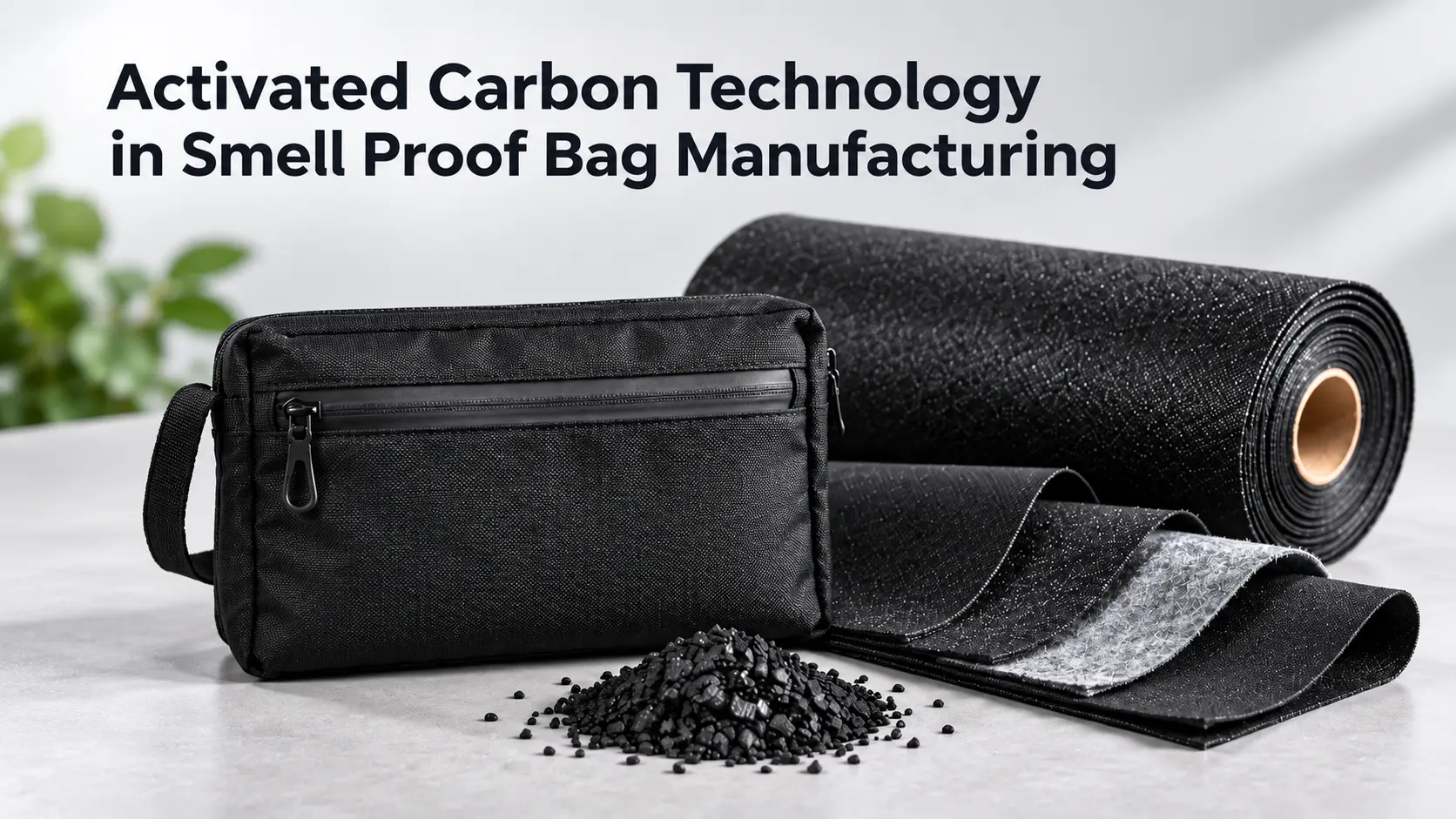
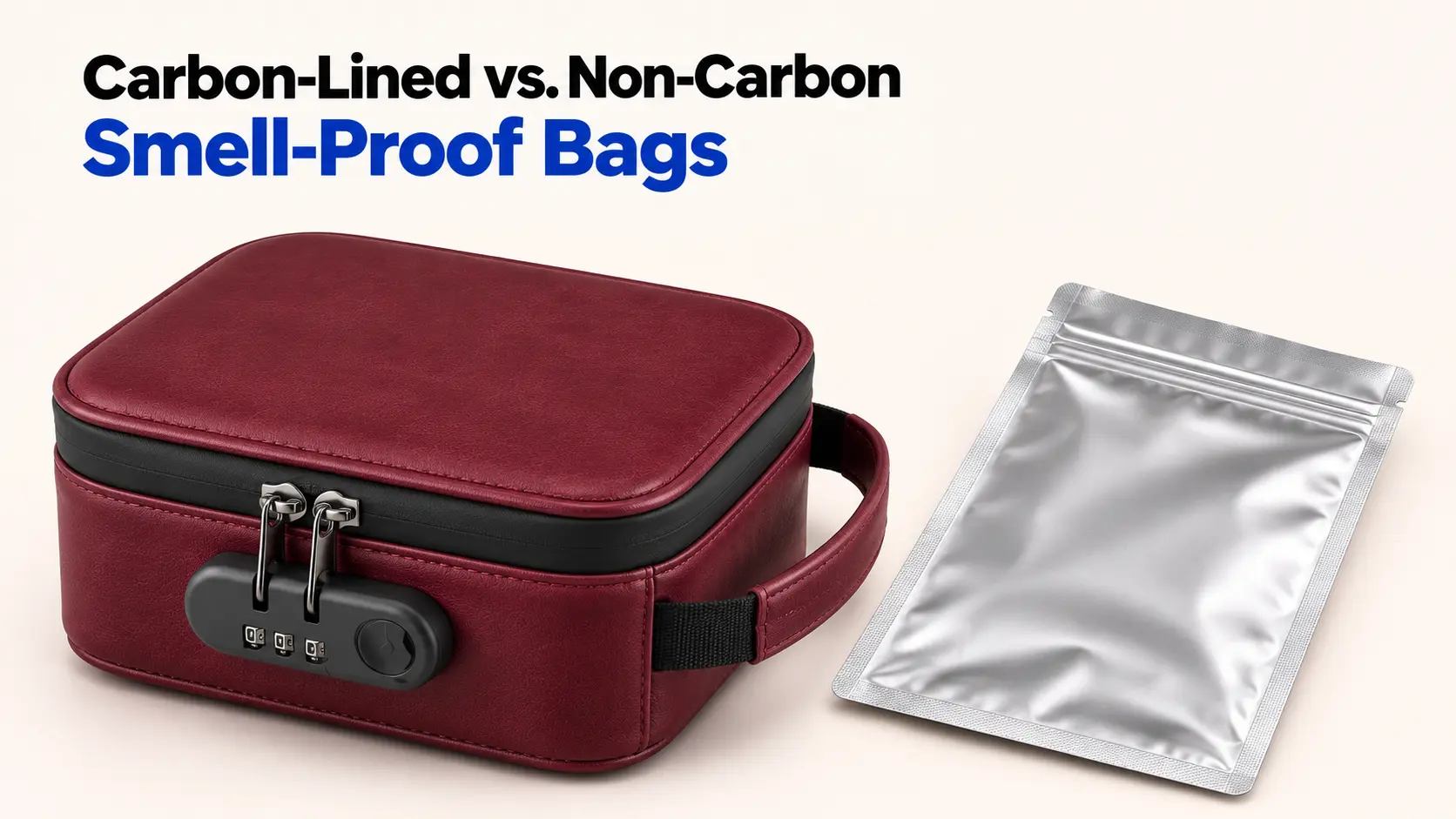
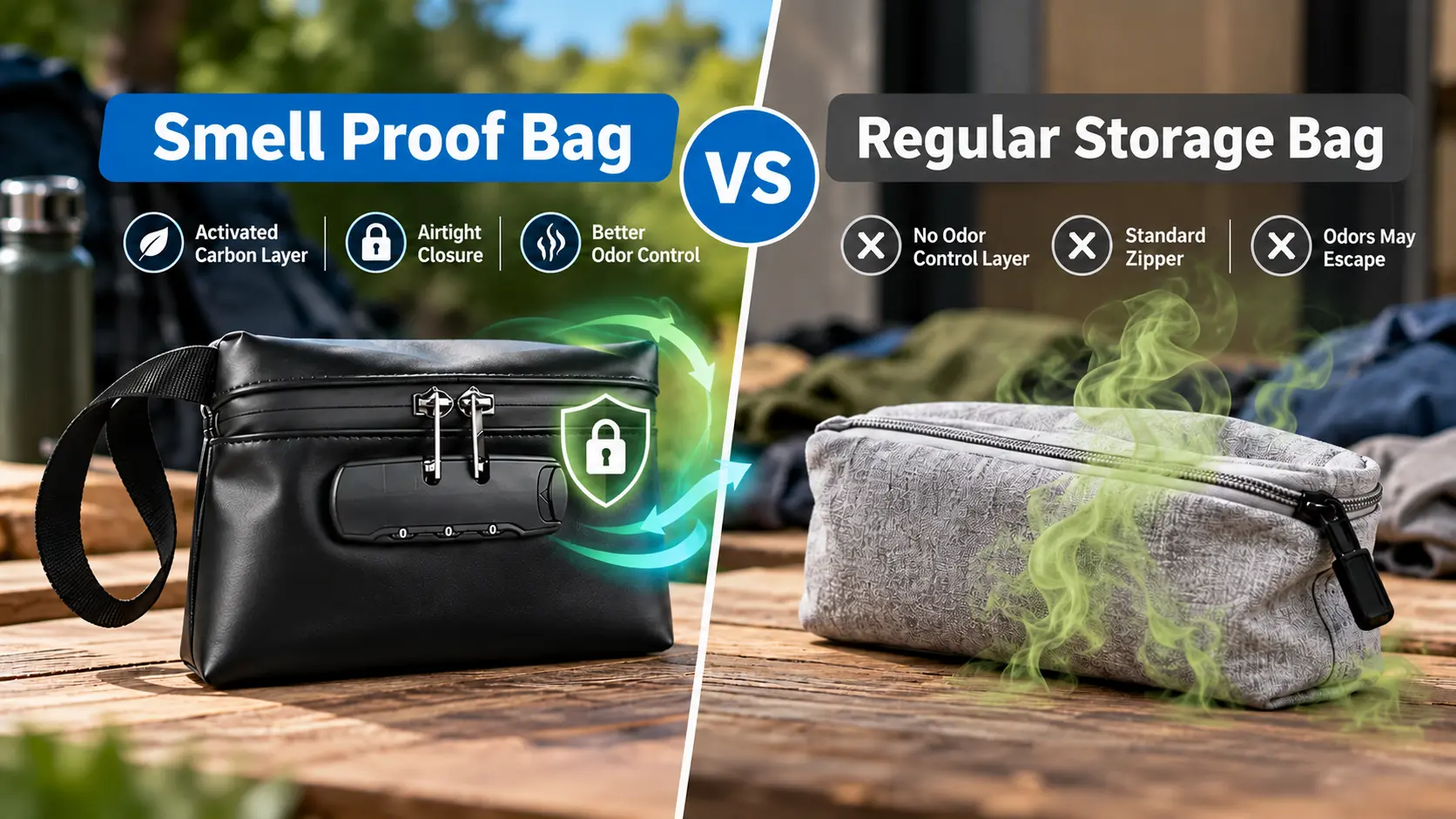
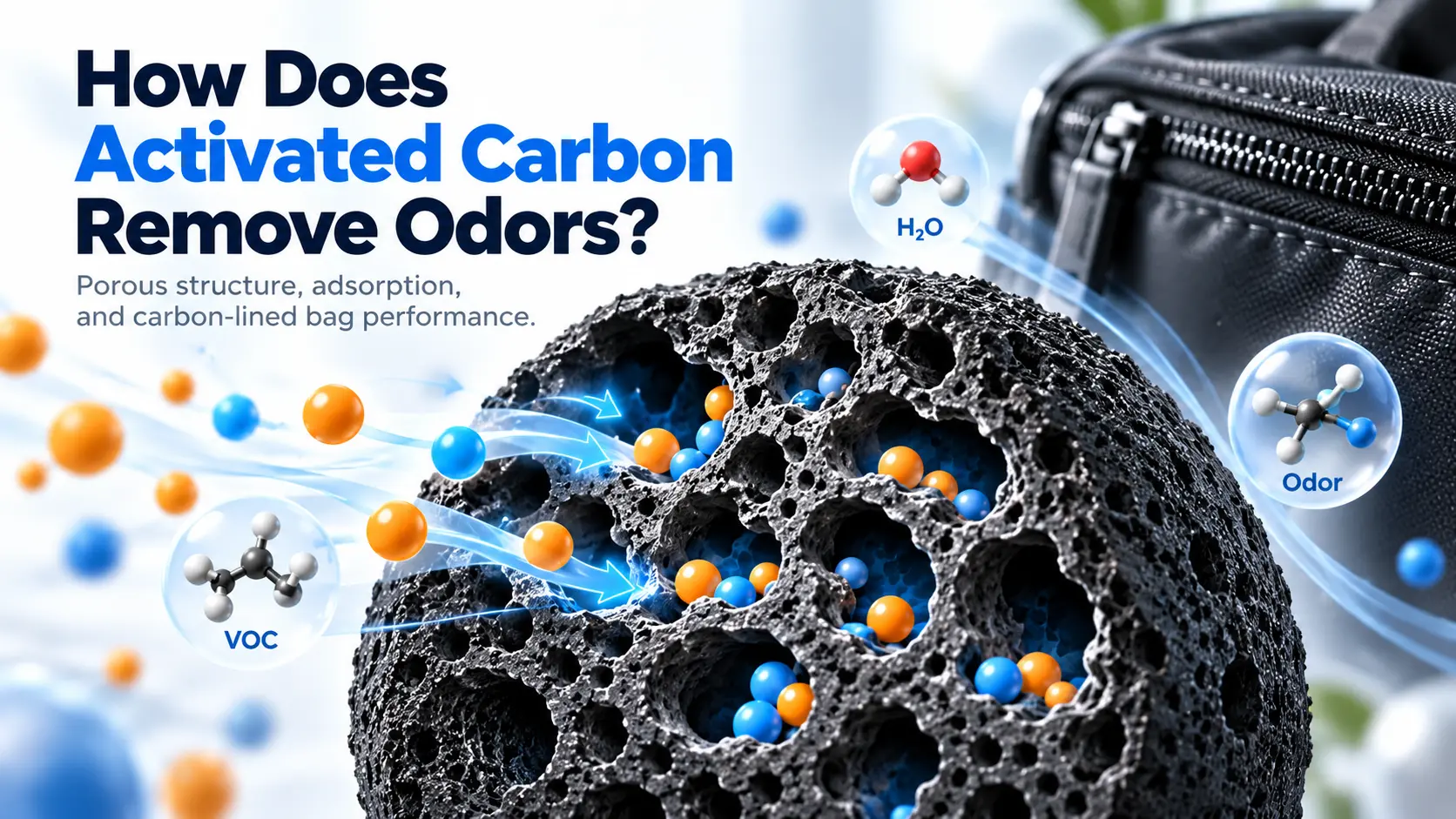
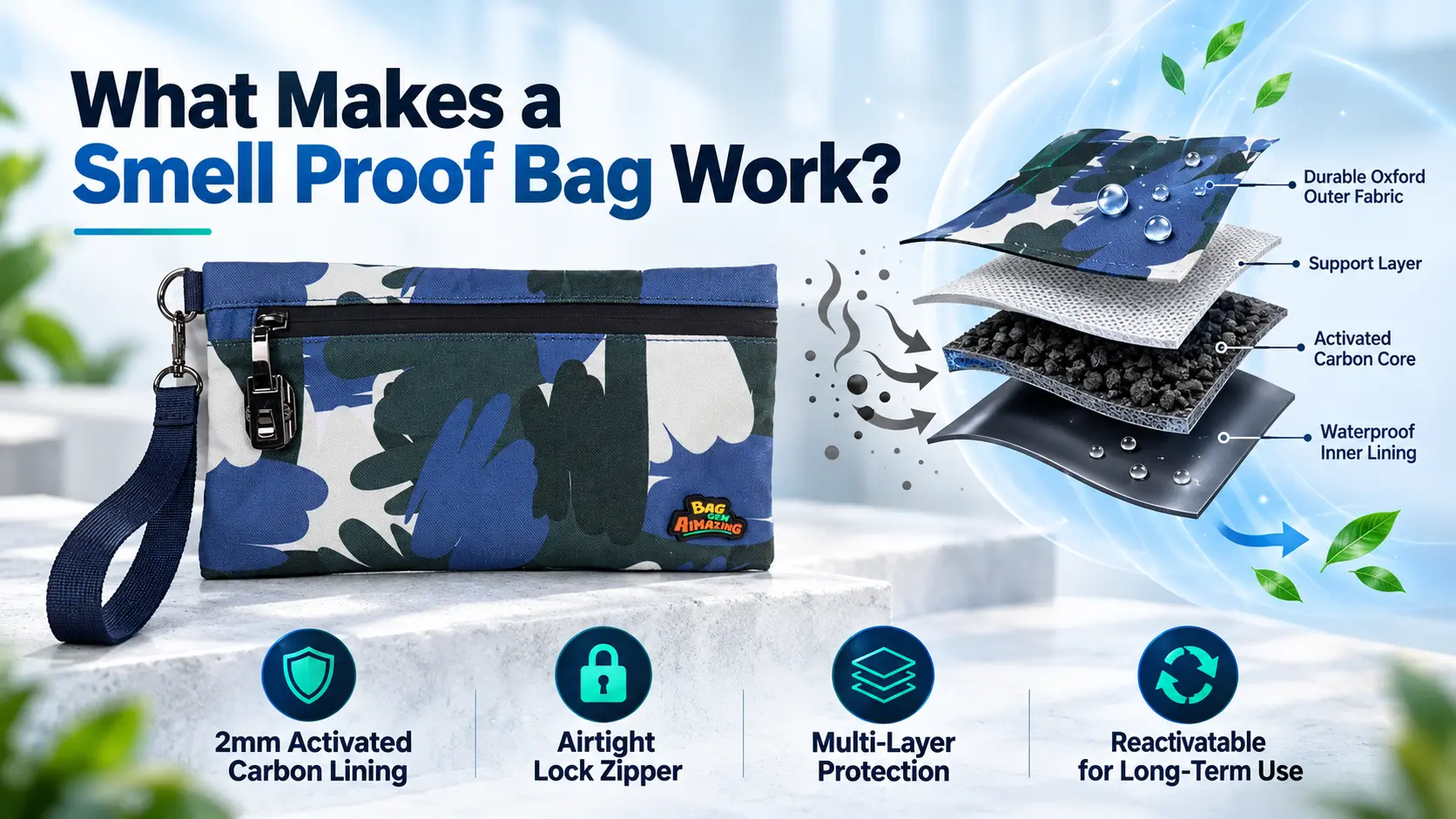
High-performance activated carbon smell proof bags require a sophisticated multi-layer composite construction rather than simple fabric stitching. The core system integrates activated carbon cloth layers between durable exterior face fabrics and protective inner linings. Millions of microscopic carbon pores immobilize volatile organic compounds through permanent physical adsorption. This multi-tier architecture prevents ambient moisture from degrading internal filtration efficiency.
For TrimLife smell proof bags, one key difference is the use of a 2mm high-density reactivatable activated carbon lining. The thicker carbon layer provides more adsorption material within the bag structure, while its reactivatable design supports continued use after proper regeneration. This gives brands a more performance-focused material option when developing products intended for repeated, long-term odor control.
[Durable Outer Face Fabric]
       │
       ▼
[Support & Non-Woven Layers]
       │
       ▼
[Activated Carbon Adsorption Core]
       │
       ▼
[Air-Tight Inner Waterproof Lining]
6.2 Closure Design Is Just as Important as Carbon Material
Even the highest-grade activated carbon cloth fails if the container features a loose or porous opening. Advanced soft-goods engineering pairs premium carbon linings with airtight zipper tracks, waterproof roll-top buckles, and welded seals. This complete closure loop prevents internal vapor pressure from bypassing the filtration matrix. Exceptional sealing mechanics guarantee reliable real-world performance.
6.3 Different Use Cases Need Different Structures
Compact personal accessories require minimalist low-profile closures designed for rapid pocket retrieval. Large expedition carriers require heavy-duty structural frames and robust mechanical locking hardware to withstand continuous travel stress. Matching structural integrity to intended consumer habits prevents both over-engineering and premature product failure. Custom engineering ensures optimal functionality across every unique format.
7. From an Idea to a Sellable Product: How ODM Development Changes the Equation
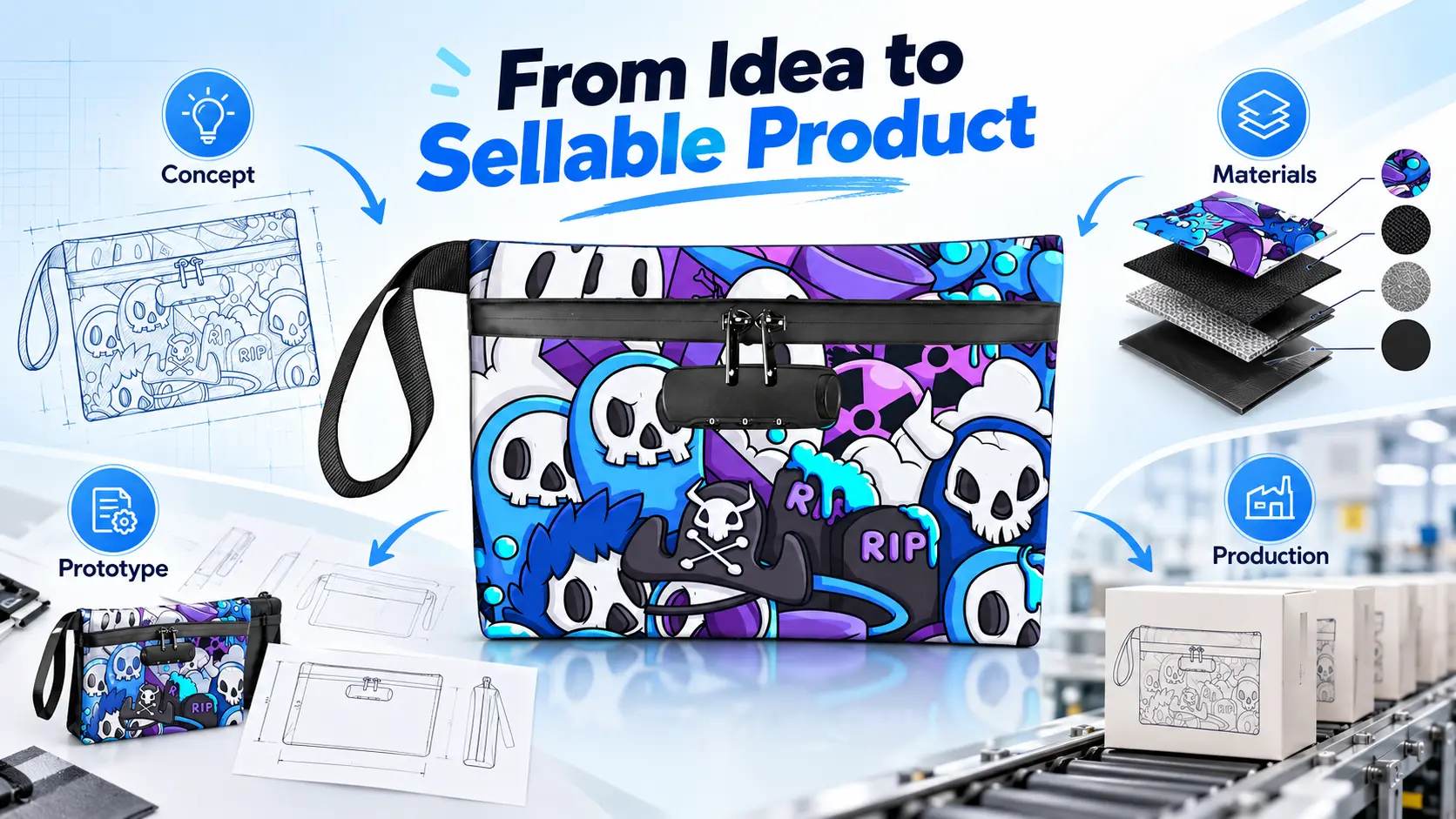
7.1 Concept and Market Positioning
Transforming an abstract retail concept into a viable commercial product requires collaborative technical planning. Effective smell proof bag sourcing starts with analyzing target retail price points, intended user demographics, and functional requirements. This initial alignment phase ensures efficient development without costly design missteps. Strategic planning establishes a clear roadmap for successful mass production.
7.2 Material and Construction Development
Selecting appropriate textiles, carbon weights, and hardware trims dictates the physical durability of soft goods. Engineering teams draft precise digital tech packs to map out multi-layer material stacking and seam allowances. Technical expertise ensures that selected components meet international safety and performance standards. Rigorous material testing prevents unexpected structural failures during retail deployment.
7.3 Prototype, Testing and Iteration
Rapid prototyping allows manufacturing partners to evaluate physical samples under simulated stress conditions before assembly. Physical testing verifies zipper longevity, seam strength, and overall vapor retention capabilities. Iterative design adjustments refine the product structure to achieve optimal manufacturing efficiency. Prototyping minimizes financial risk for emerging retail brands.
7.4 Private Label and Retail-Ready Production
Scalable manufacturing execution converts approved master prototypes into consistent, retail-ready commercial inventory. Strict quality control protocols monitor incoming raw materials, in-process stitching accuracy, and final packaging standards. Consistent manufacturing output protects brand reputation across competitive global sales channels. Reliable mass production fuels sustained business expansion.
8. Building a Smell Proof Bag Business Beyond the First Order
8.1 Start With a Focused Hero Product
Launching a successful soft-goods collection begins by introducing a single, highly refined hero product to the market. Concentrating design and marketing resources on one exceptional item builds strong initial brand recognition. A proven hero product establishes consumer trust and provides reliable baseline revenue. Brand expansion proceeds smoothly after securing initial market validation.
8.2 Expand Through Size, Structure and Use Case
Growing brands scale their catalog by introducing complementary form factors based on the original hero concept. Expanding into varied volumetric capacities and specialized formats captures new consumer segments. Maintaining a unified design language across all items reinforces professional brand identity. Structured portfolio growth maximizes long-term commercial profitability.
8.3 Build Bundles and Product Ecosystems
Curated product bundles and synchronized accessory sets increase average order values across e-commerce channels. Offering complementary soft-goods items provides comprehensive storage solutions for dedicated consumers. Ecosystem building fosters deeper brand loyalty and encourages repeat retail purchases. Strategic bundling accelerates overall enterprise growth.
9. From Factory Supplier to Smell Proof Bag Partner: Where TrimLife Fits
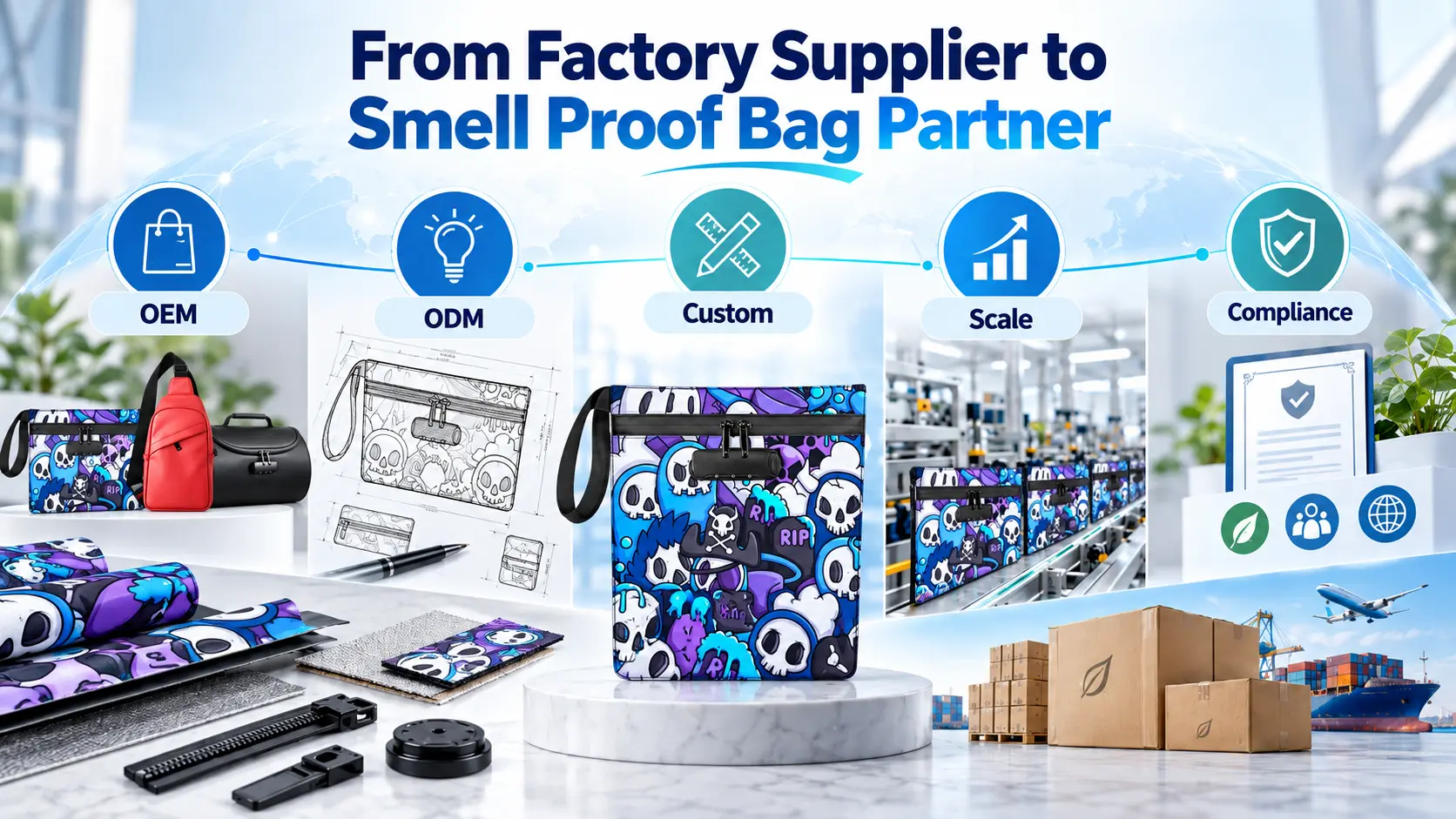
9.1 OEM for Brands With Established Designs
Established retail brands with fully realized tech packs require a reliable manufacturing partner with flawless execution capabilities. Factory operations must maintain strict adherence to engineering specifications and delivery schedules. Professional production teams deliver consistent build quality across high-volume commercial consignments. Reliable original equipment manufacturing protects established smell proof bag supply chain investments.
9.2 ODM for Brands Developing New Products
Emerging brands benefit greatly from comprehensive original design manufacturing support during early product conceptualization. Experienced partners provide invaluable guidance regarding material selection, structural engineering, and cost optimization. Collaborative development accelerates time-to-market schedules for innovative retail collections. Strategic partnership bridges the gap between creative vision and commercial reality.
9.3 Custom Development Beyond Logo Printing
True custom manufacturing encompasses bespoke dimensions, specialized carbon weights, unique hardware selection, and tailored retail packaging. Modifying core structural parameters ensures products stand out effectively in competitive retail categories. Comprehensive customization delivers distinct functional advantages for ambitious brand partners. Tailored engineering transforms standard accessories into proprietary market solutions.
9.4 A Partner From Product Zero to Commercial Scale
Collaborative manufacturing relationships extend far beyond basic transactional assembly lines and short-term factory contracts. A dedicated development partner supports brands through every stage of growth from initial brainstorming to global scaling. TrimLife provides the engineering expertise, material sourcing capabilities, and quality control systems needed for sustainable success. Working together turns innovative concepts into enduring commercial market leaders.
9.5 Verified Compliance and Social Responsibility
TrimLife combines product development capability with independently audited manufacturing standards and responsible production practices. Our factory is supported by certifications and assessments including ISO 9001:2015, SEDEX/SMETA, amfori BSCI, REACH, RoHS, and California Proposition 65 compliance. Together, these frameworks address quality management, ethical labor practices, workplace conditions, material safety, and chemical compliance. For international buyers, this provides stronger supply-chain transparency and helps reduce compliance risks when scaling custom smell proof bag programs across different markets.
Looking to develop custom smell-proof bags and scalable soft-goods solutions for your brand?
Our team provides end-to-end manufacturing development from digital tech pack design and material engineering to bulk production.
Frequently Asked Questions (FAQ)
What is smell proof bag sourcing and why does it matter?
Smell proof bag sourcing is the strategic procurement and manufacturing process for soft goods engineered to control volatile organic compounds. It matters because it allows brands to offer high-margin, differentiated products that solve specific consumer storage problems. Sourcing these specialized items requires technical expertise in activated carbon integration, multi-layer laminates, and airtight closure systems. Partnering with an experienced OEM/ODM manufacturer ensures these complex functional requirements are executed reliably at scale.
Are smell proof bags included in the 2026 U.S.–China tariff reset?
The current trade framework confirms preferential tariff treatment for approximately thirty billion dollars of non-sensitive goods in each direction. However, official regulatory schedules do not explicitly list all soft-goods subcategories or specific luggage codes at this time. Brands should verify exact HTS-level classifications with trade compliance professionals before assuming a specific product qualifies for duty reductions. Proactive verification prevents unexpected financial exposure during customs clearance.
How do I check the tariff rate for a smell proof bag imported from China?
Checking the applicable tariff rate requires identifying the precise Harmonized Tariff Schedule numerical code corresponding to your product’s primary exterior material and intended use. Importers can consult official U.S. International Trade Commission databases or work directly with licensed customs brokers. Evaluating exact HTS subheadings ensures accurate landed cost forecasting. Official customs documentation remains the only reliable source for duty determinations.
Does a lower tariff automatically make China the cheapest sourcing option?
A lower tariff rate does not automatically make manufacturing in a specific country the most cost-effective option overall. Total landed cost calculations must also factor in raw material expenses, minimum order quantities, ocean freight volatility, and factory quality control standards. Sourcing decisions should evaluate total long-term business value rather than focusing exclusively on initial duty adjustments. Comprehensive financial analysis ensures sustainable commercial profitability.
What is the difference between OEM and ODM smell proof bag development?
An original equipment manufacturer builds products strictly according to technical drawings and material specifications provided by the client brand. An original design manufacturer provides end-to-end support including product conception, engineering design, material sourcing, and prototype optimization. Choosing an ODM partner accelerates product innovation and reduces sampling errors. Collaborative development transforms abstract brand ideas into market-ready commercial successes efficiently.
Can a smell proof bag brand start with one product and expand later?
Starting a brand with a single refined hero product is a highly effective market entry strategy. Concentrating design and marketing resources on one exceptional item builds strong initial consumer recognition and trust. Once the hero product establishes baseline revenue, brands can expand their catalog through varied sizes, structures, and use cases. Structured portfolio growth maximizes long-term commercial profitability.