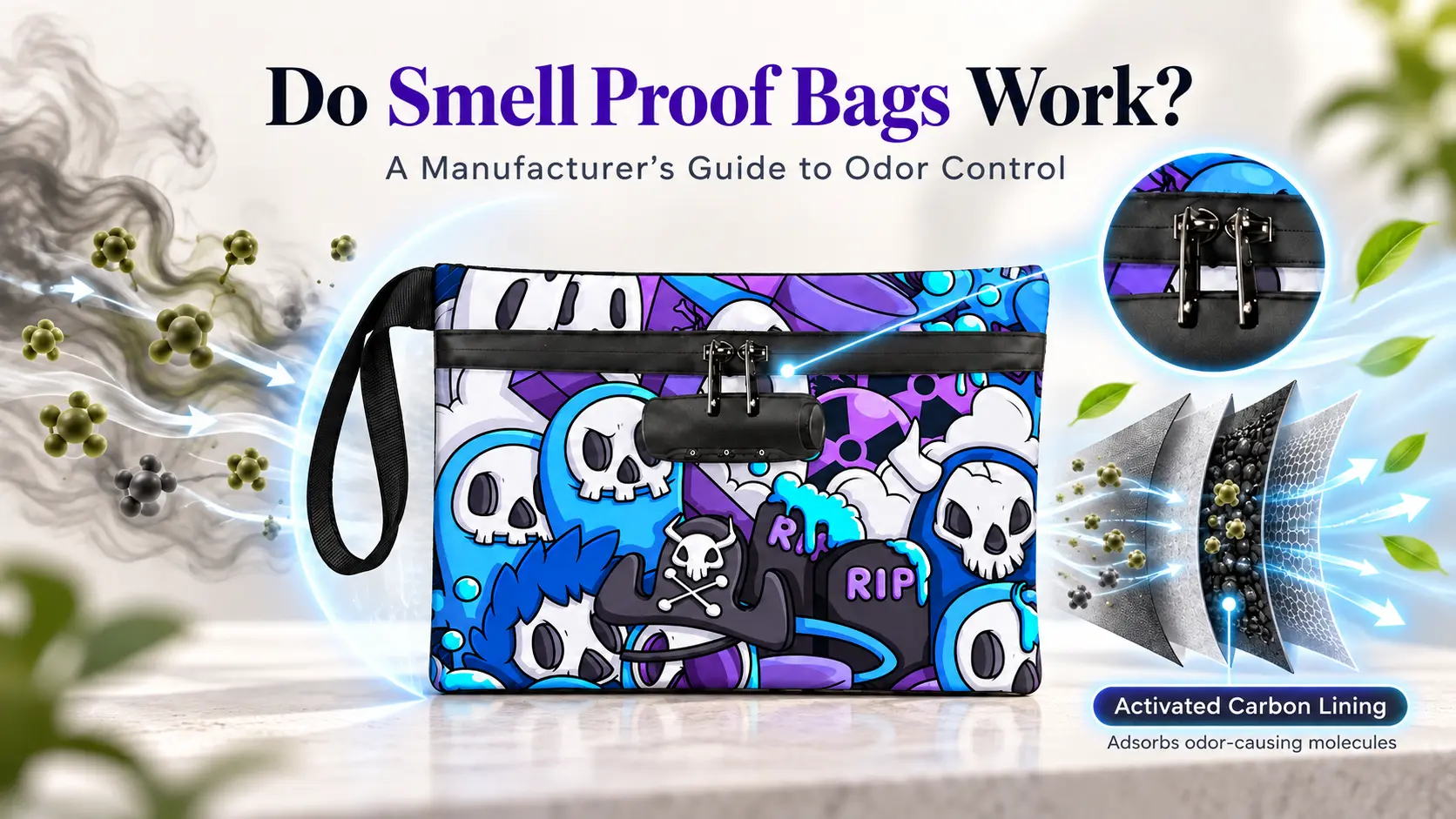
Do smell proof bags work? Yes, a well-designed smell proof bag can significantly reduce unwanted odors. But not every bag delivers the same results, and no material can guarantee complete odor containment under every condition.
At TrimLife, we work with brands developing custom smell proof bags, and one question often comes up during product discussions: what actually makes a bag effective at controlling odors?
The answer isn’t as simple as adding an activated carbon lining or choosing a sealing zipper. The materials, construction, and way the bag is used all matter.
In this guide, we’ll explain how smell proof technology works, what affects its performance, and what brands should consider before placing a bulk order.
1. What Does “Smell Proof” Actually Mean?
The term “smell proof” sounds straightforward, but it can mean different things depending on how a bag is constructed.
In practice, most smell proof bags are designed to reduce the escape of odor-causing compounds rather than create a completely gas-tight environment.
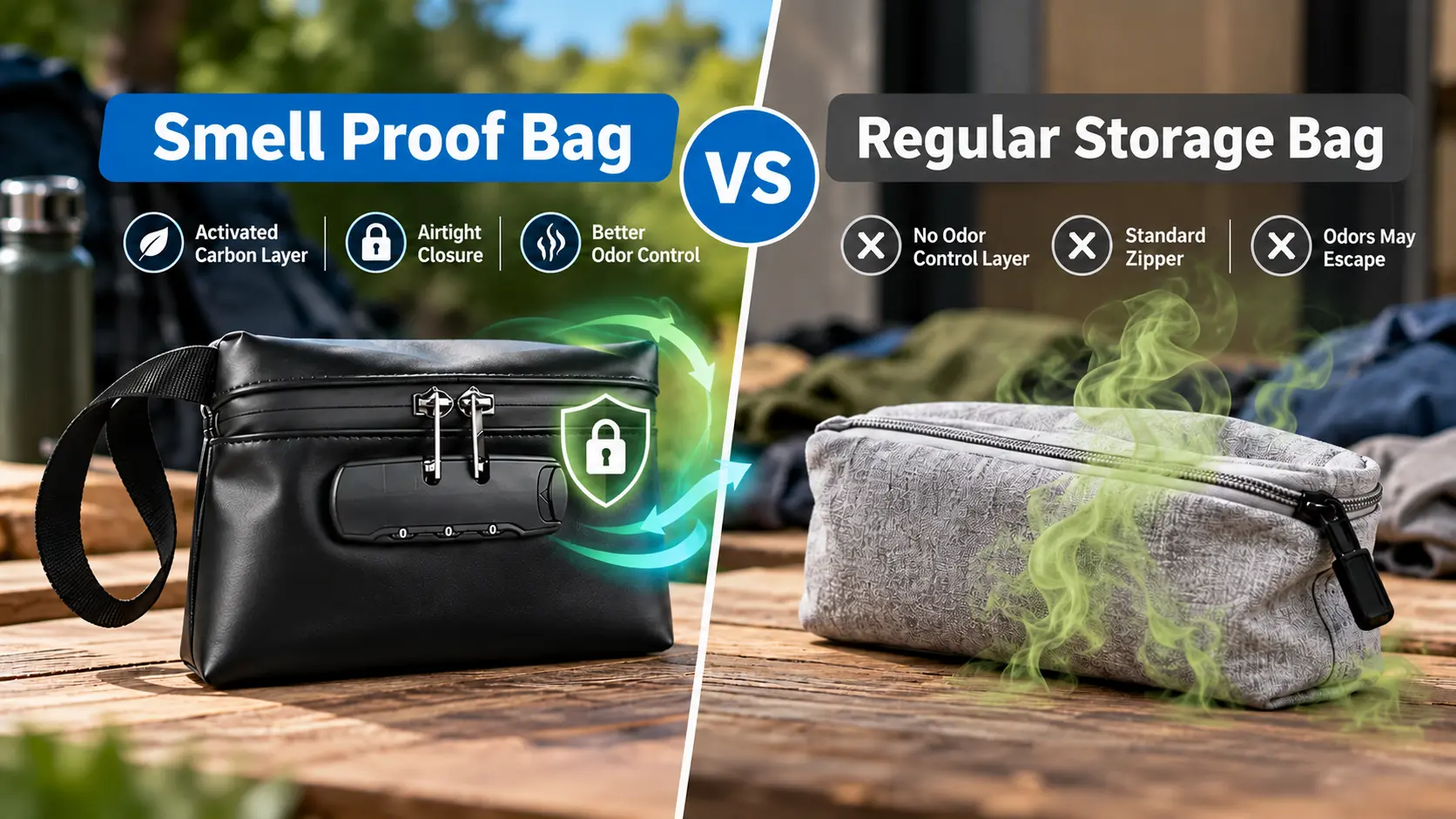
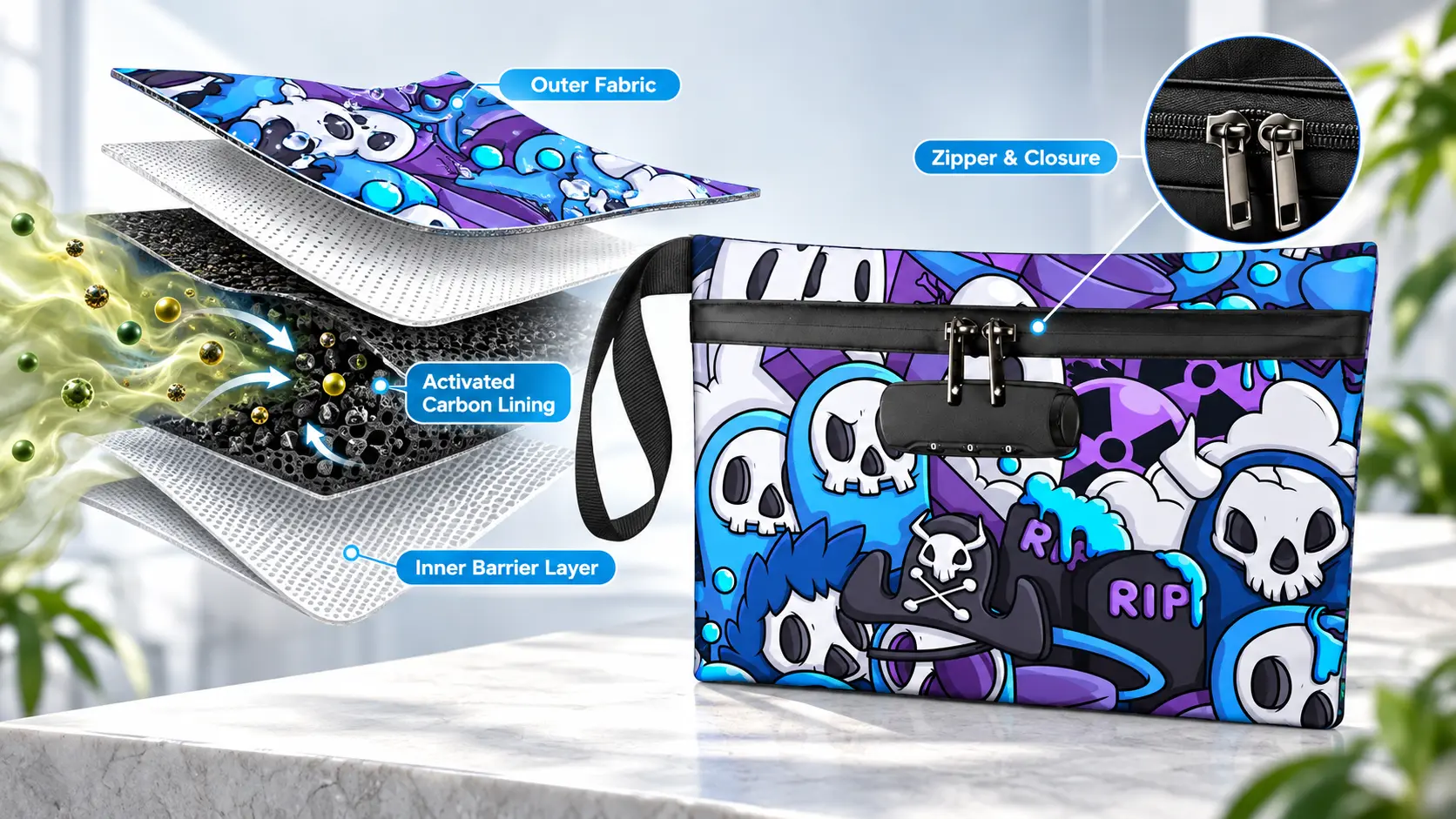
A typical odor-control bag combines several components:
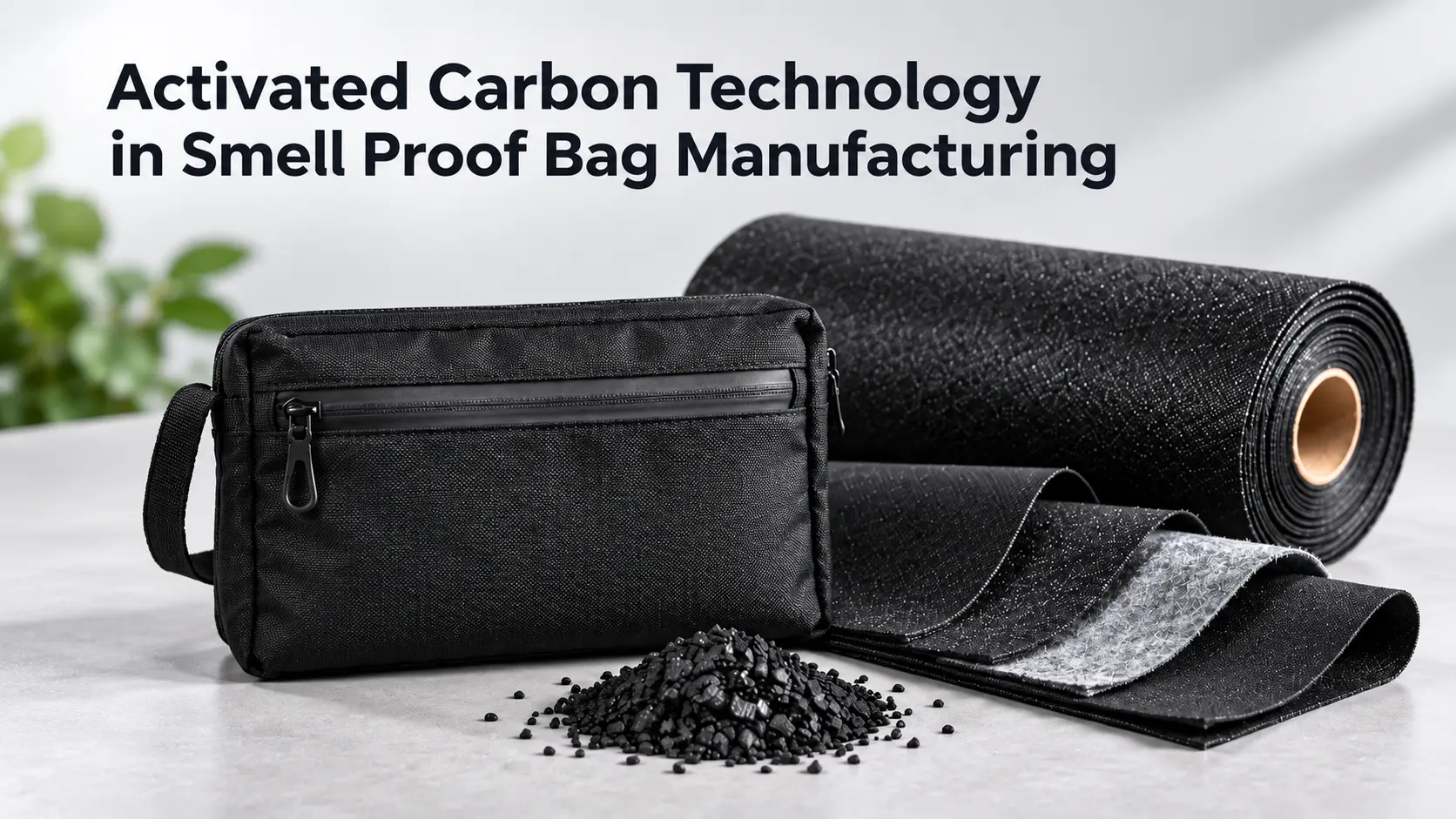
Activated Carbon Lining: Adsorbs certain odor-causing molecules onto its porous surface.
Outer Fabric: Provides structure, durability, and protection for the internal materials.
Inner Lining or Barrier Layer: Helps manage moisture, protect the carbon layer, or limit gas transmission, depending on the material selected.
Zipper and Closure System: Helps reduce air exchange through the opening when properly designed and closed.
Each component has a different job.
For example, activated carbon can capture certain odor molecules, but it cannot compensate for a large opening around a poorly fitted zipper.
Similarly, a tightly constructed bag without an effective odor-control material may limit airflow but still allow some odor compounds to migrate through its materials over time.
That’s why we encourage brands to evaluate the complete bag construction instead of relying on a single advertised feature.
2. Are Smell Proof Bags Effective in Everyday Use?
Are smell proof bags effective? In many everyday storage situations, they can noticeably reduce unwanted odors when the materials and closure system are properly designed.
However, effectiveness depends on the conditions in which the bag is used.
A pouch that performs well during short-term storage may behave differently after repeated opening, prolonged exposure to strong odors, or extended use in humid environments.
Here are three factors worth understanding.
Odor Concentration
Stronger odors or greater quantities of odor-producing materials can place higher demands on the carbon lining.
Activated carbon has a limited adsorption capacity. Once the available adsorption sites become occupied, its ability to capture additional compounds may decrease.
Frequency of Opening
Even a well-designed closure cannot prevent odors from escaping while the bag is open.
For products intended to be opened frequently, zipper accessibility and ease of closure deserve as much attention as the material construction.
Storage Conditions
Temperature, humidity, and storage duration can influence odor-control performance.
Moisture can also compete with certain odor compounds for adsorption sites, depending on the carbon material and operating conditions.
Our advice for brands: Before approving a design, consider how customers will actually use the product. A compact everyday pouch and a larger travel bag may need different material arrangements and closure solutions.
Rather than relying on a universal performance claim, ask your manufacturer how the proposed design can be evaluated under realistic use conditions.
3. What Affects the Performance of an Odor Blocking Bag?
When developing an odor blocking bag, we generally recommend looking at four areas: activated carbon, zipper construction, material structure, and manufacturing consistency.
Each can influence how the finished product performs.
| Performance Factor | What Brands Should Check | Why It Matters |
|---|---|---|
| Activated Carbon Lining | Carbon type, quality, thickness, and adsorption performance | Influences how effectively certain odor compounds can be captured |
| Zipper & Closure | Zipper design, fit, end gaps, and ease of operation | Poorly constructed openings can allow odors to escape |
| Fabric & Inner Layers | Outer fabric, lining, coatings, and barrier construction | Influences durability and gas transmission through the bag |
| Manufacturing Consistency | Seam construction, material placement, and quality inspection | Helps maintain consistent construction across production batches |
3.1 Why Activated Carbon Quality Matters
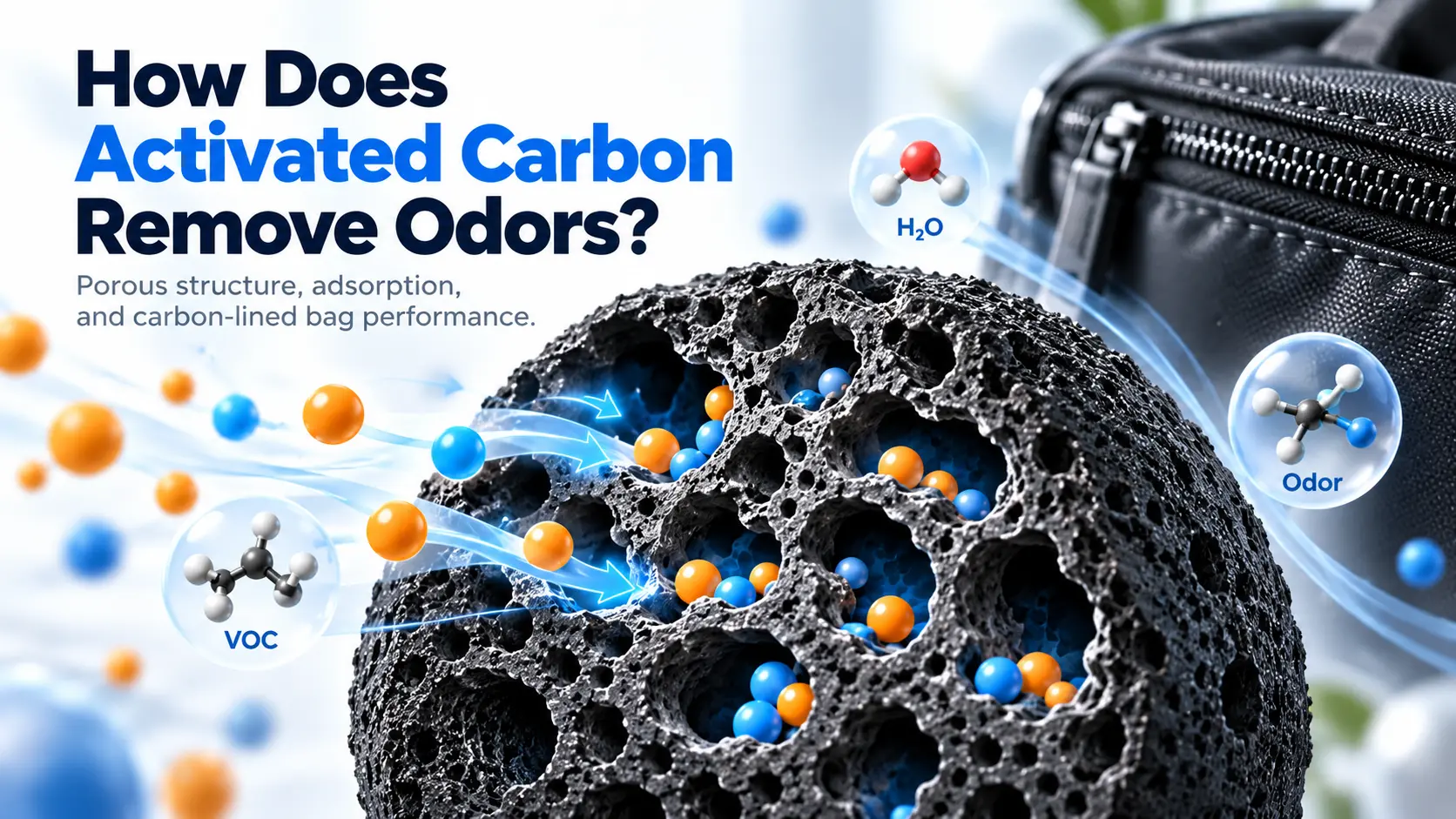
Activated carbon is widely used in smell proof technology because its porous structure provides a large internal surface area for adsorption.
However, not all activated carbon materials are the same.
Their performance depends on factors such as pore structure, adsorption capacity, carbon loading, and the compounds being controlled.
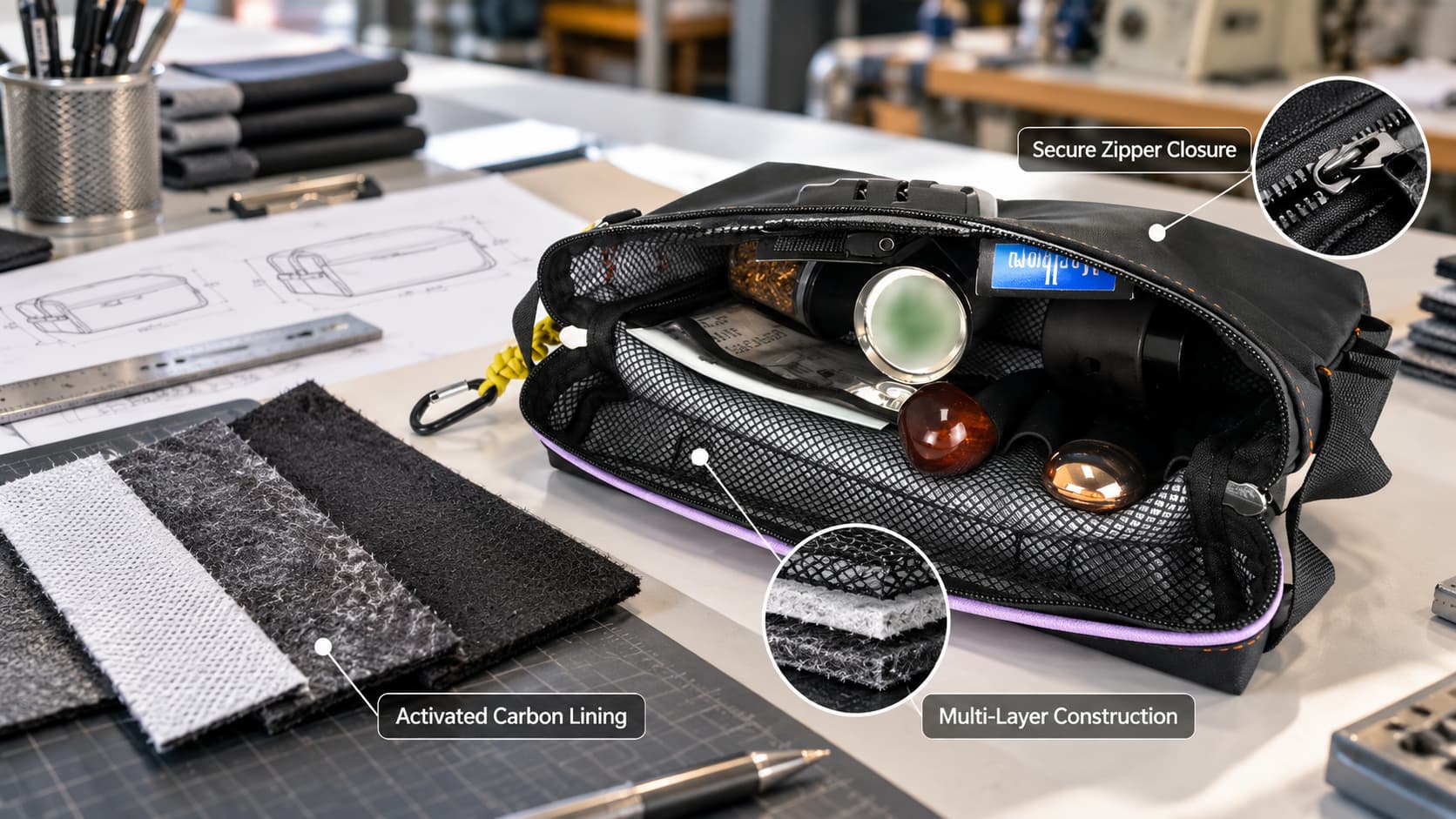
For some TrimLife projects, we use a 2mm activated carbon lining as part of the odor-control construction.
This gives us a practical material option when discussing custom product development with brands.
But thickness alone doesn’t determine performance.
A thicker carbon layer is not automatically better if the carbon itself has unsuitable adsorption characteristics or the finished bag has significant leakage around its closure.
3.2 Why Zipper Construction Matters
The zipper is another area we pay close attention to during development.
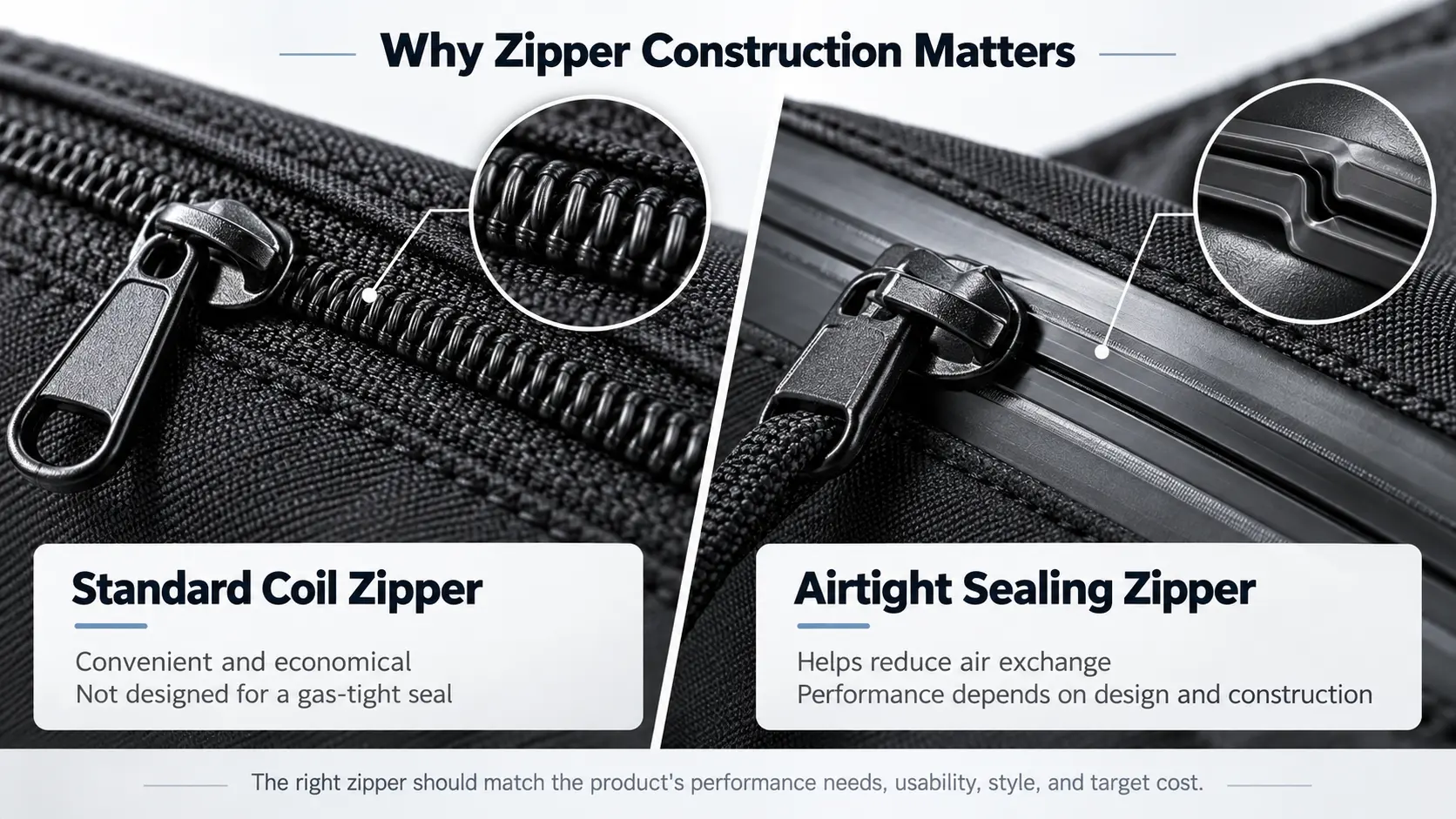
Standard coil zippers are convenient and economical, but their construction is not intended to provide a gas-tight seal.
Specialized airtight sealing zippers can help reduce air exchange, although their effectiveness depends on the zipper design, installation, end construction, and operating conditions.
For a custom project, the best zipper is not necessarily the most expensive one.
It should match the intended performance, product style, usability requirements, and target cost.
4. Why Do Some Smell Proof Bags Lose Their Effectiveness?
A smell proof bag may look well-made on the outside and still disappoint customers after repeated use.
From a manufacturing perspective, the problems aren’t always visible in product photos.
We’ve found that brands benefit from looking more closely at material construction and closure details when comparing samples or factory quotations.
Inconsistent Carbon Materials
Activated carbon can be incorporated into textiles and other materials in different ways.
Some products use carbon-containing coatings, while others use dedicated carbon layers or fabrics.
These approaches may differ in adsorption capacity, durability, and manufacturing cost.
The important point isn’t that one construction is automatically unsuitable. It’s whether the selected material meets the product’s performance requirements.
Brands should ask suppliers for material specifications and relevant test information rather than relying only on descriptions such as “premium carbon.”
Poor Closure Design
Even a capable carbon lining may not deliver the expected result if the opening allows substantial air exchange.
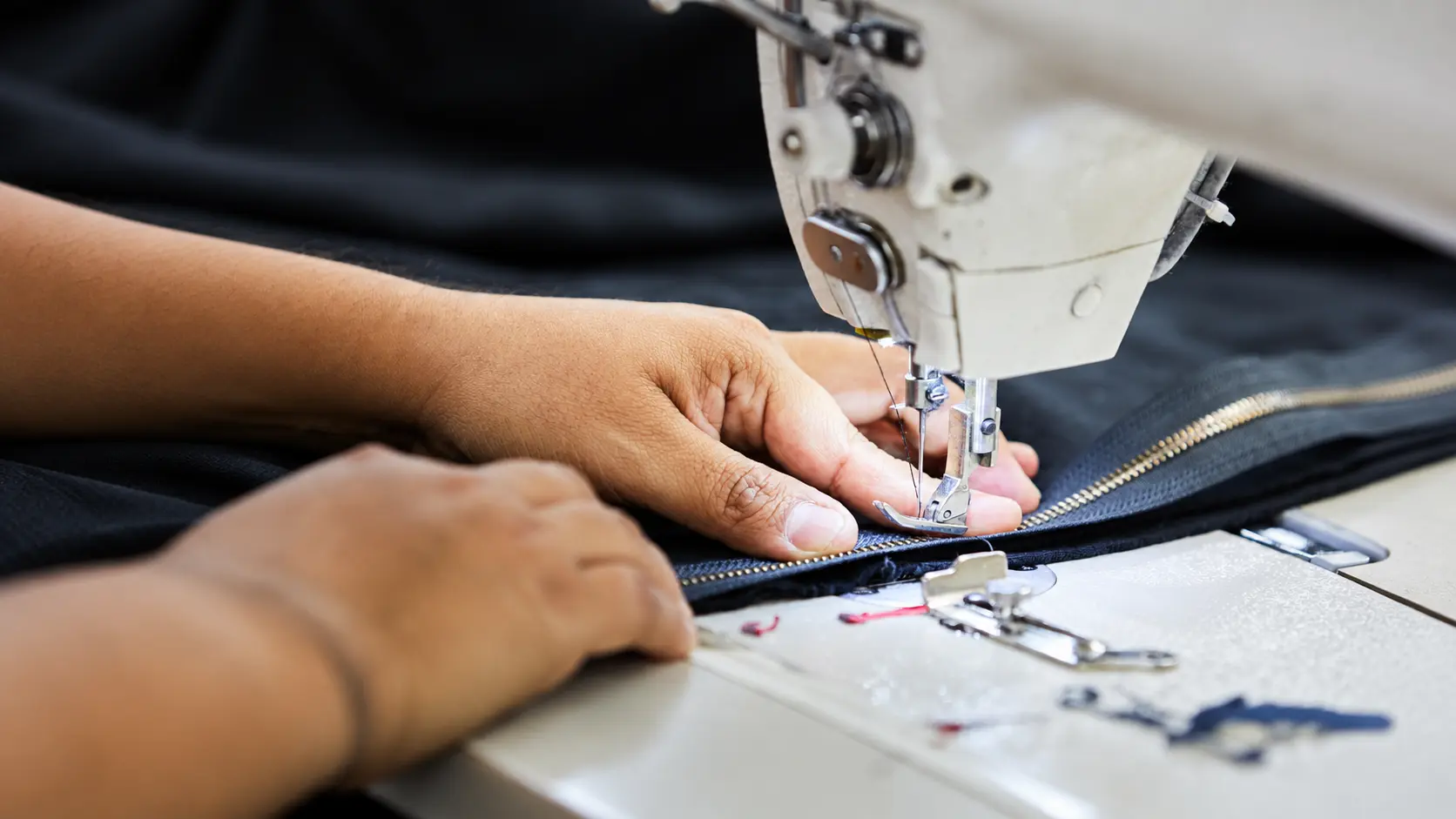
Zipper ends, stitching details, and the connection between the zipper and surrounding material all deserve attention during sampling.
A small construction change can sometimes be more useful than adding another layer of material.
Wear and Repeated Use
Like other functional bags, smell proof products experience bending, compression, abrasion, and repeated opening.
Over time, these conditions may affect the lining, coatings, zipper, or overall construction.
The activated carbon itself also has a finite adsorption capacity.
What sets our smell proof bags apart is the use of a reactivatable activated carbon lining. With appropriate care, gentle warming—such as brief exposure to sunlight or using a hair dryer on a low-heat setting for approximately 10 minutes—may help release some adsorbed moisture and odors, partially restoring the carbon’s adsorption performance. However, the results depend on the substances absorbed and the condition of the carbon lining.
For brands planning long-term retail programs, evaluating a sample’s initial performance is only one part of the process. Durability and consistency matter too.
5. How Does Activated Carbon Compare with Other Odor Control Materials?
Activated carbon plays an important role in many smell proof bags, but it isn’t the only material worth considering.
Different odor-control approaches work in different ways.
| Material or Method | How It Works | Main Consideration |
|---|---|---|
| Activated Carbon | Adsorbs certain odor-causing molecules onto a porous surface | Adsorption capacity, material quality, and exposure conditions |
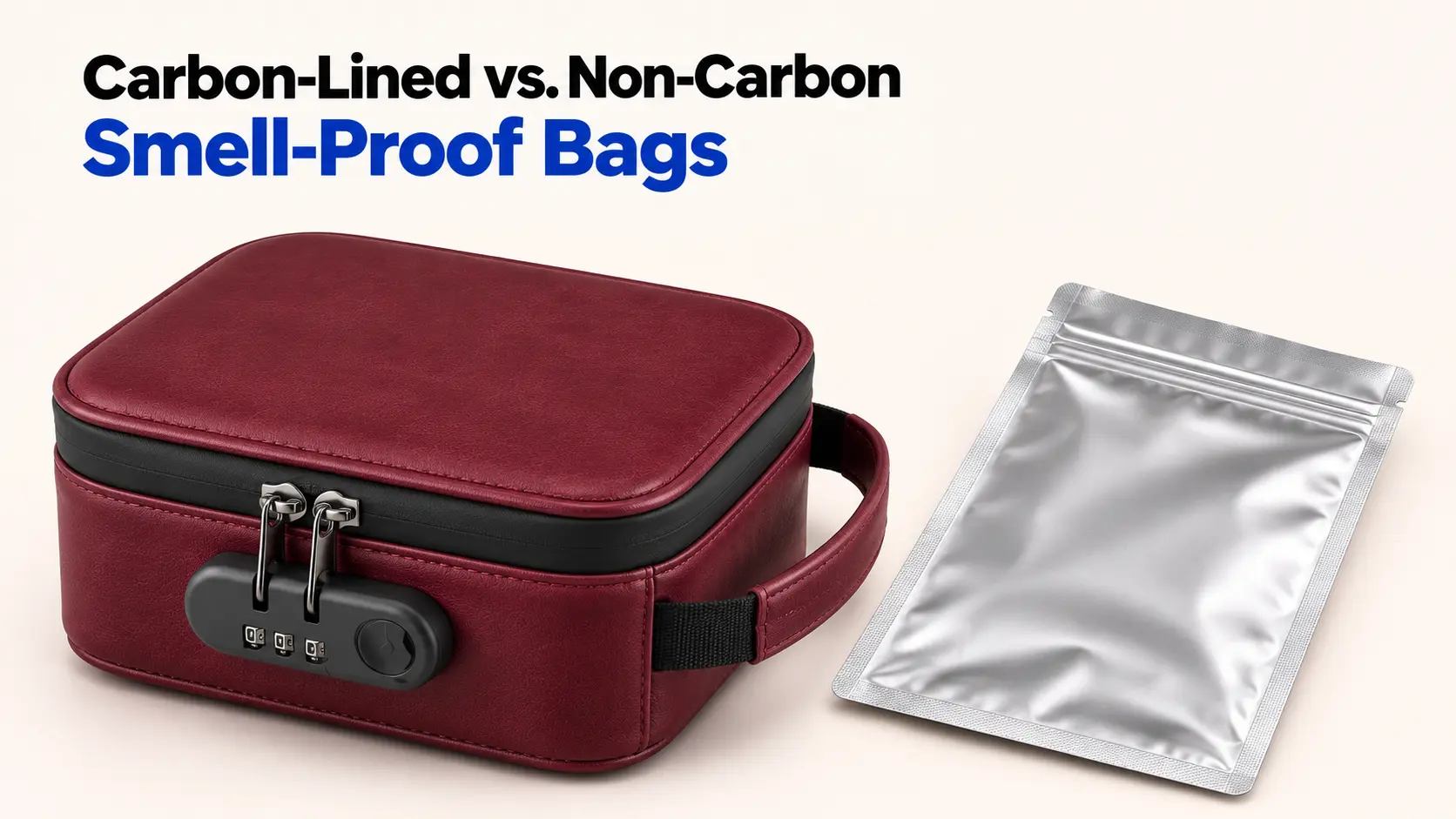
| Barrier Films | Help limit gas transmission through the material | Permeability varies by material type, thickness, and construction |
| Plastic Liners | Provide a physical layer that may reduce air exchange and transmission | Performance depends on the polymer and sealing method |
| Odor-Masking Products | Introduce another scent to make an odor less noticeable | Do not necessarily remove the original odor compounds |
5.1 Why We Often Recommend Activated Carbon
For many custom smell proof bag projects, activated carbon provides a useful way to address odor control without relying on fragrances.
Its porous structure allows certain odor molecules to accumulate on internal surfaces through adsorption.
However, the process has limits.
Activated carbon does not permanently destroy every odor molecule, and not all odor compounds are adsorbed equally well.
Depending on the material and conditions, some adsorbed compounds may also be released.
Certain activated carbon materials can be regenerated under suitable conditions, but that doesn’t mean every finished bag can be fully restored through ordinary household cleaning.
5.2 Combining Adsorption with Barrier Materials
An activated carbon layer and a barrier film can serve complementary purposes.
The carbon captures certain odor molecules, while the barrier material helps limit their movement through the bag’s construction.
For brands developing a custom product, the right combination depends on the intended application.
A small pouch designed for occasional storage may not require the same construction as a larger bag intended for frequent travel.
We recommend discussing these differences during product development rather than treating every smell proof bag as the same product with a different shape.
6. How We Approach Smell Proof Bag Manufacturing at TrimLife
At TrimLife, we see odor control as a product development challenge, not simply a matter of adding activated carbon to a bag.
When discussing a custom project, we look at how the materials, opening, construction, and intended use fit together.
Our goal is to help brands develop a product that balances functional performance, usability, appearance, and manufacturing cost.
Material Selection Comes First
Before deciding on the complete construction, it’s worth understanding what the product needs to achieve.
Does the brand need a compact pouch, a structured case, or a larger backpack? How frequently will customers open it? Is water resistance also important?
These questions influence the material choices.
Our 2mm activated carbon lining is one option we can discuss for suitable projects, but we don’t believe one material specification should be applied to every bag without considering the design.
The Closure Must Match the Product
A small pouch and a large backpack have different opening dimensions and construction challenges.
For this reason, we consider zipper selection and placement during development rather than treating them as finishing details.
A sealing zipper may support better odor containment, but it also needs to work comfortably with the bag’s structure.
A technically capable design is of limited value if customers find it difficult to use.
Sampling Helps Identify Problems Early
For brands developing a new smell proof bag, samples provide an opportunity to review material arrangement, zipper operation, compartment layout, and overall construction.
They also make it easier to identify design changes before the project moves into bulk production.
At TrimLife, our typical sampling lead time is 3–5 days, depending on design complexity and material availability.
Specialized materials or more complicated constructions may require additional development time.
Consistency Matters During Production
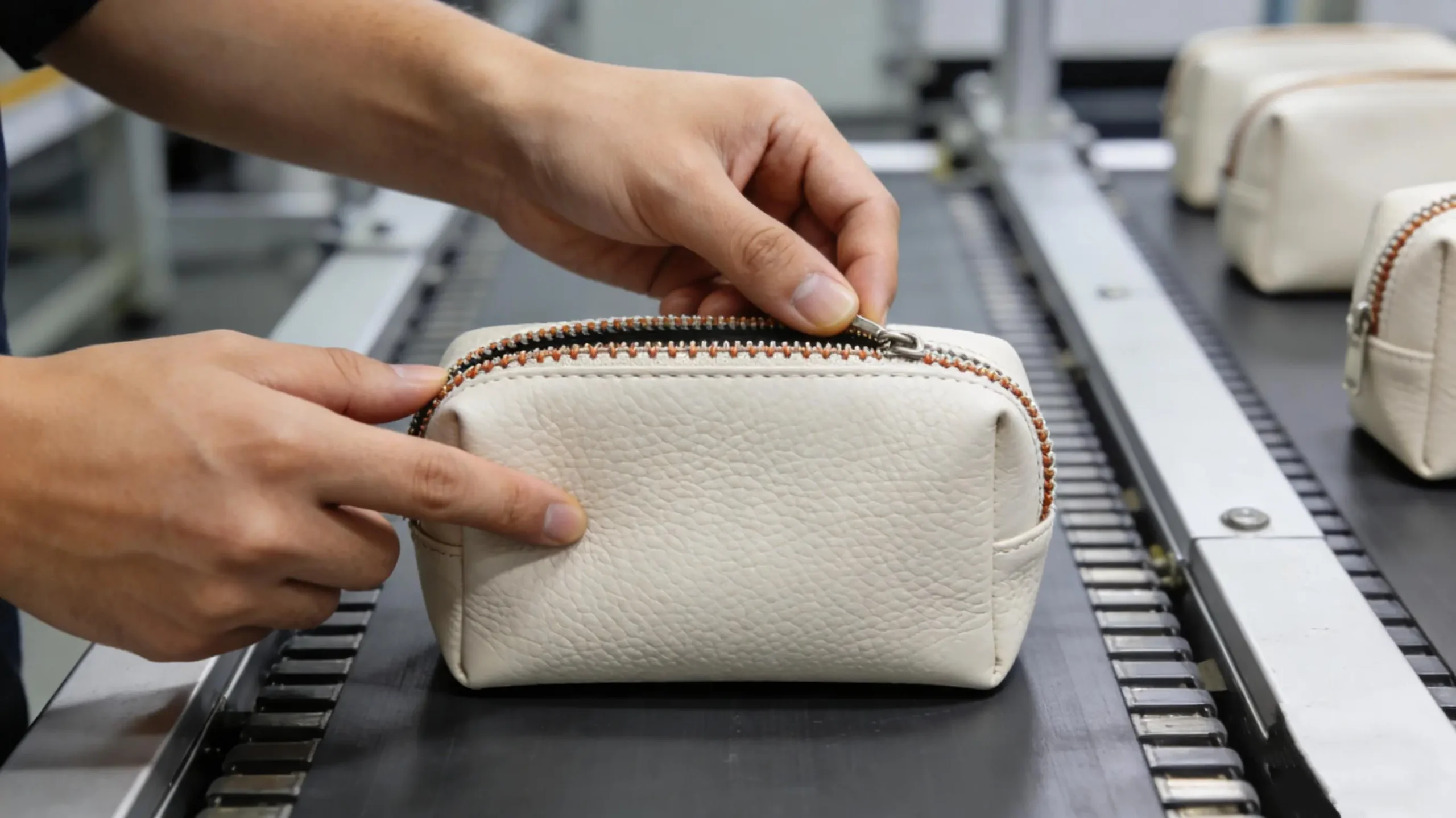
A successful sample is important, but brands also need confidence that the agreed construction can be reproduced.
Material specifications, zipper selection, workmanship, and inspection criteria should be confirmed before production.
For projects requiring a measurable odor-control claim, we recommend agreeing on suitable testing conditions and acceptance criteria.
Visual inspection alone cannot establish an odor-removal percentage or prove complete gas tightness.
This is where an experienced smell proof bag manufacturing partner can add value—not by promising that every design is perfect, but by helping brands identify practical issues before they become production problems.
7. Choosing the Right Smell Proof Bag for Your Product Line
Different product categories create different opportunities and manufacturing considerations.
If you’re planning to introduce an odor blocking bag collection, it’s worth defining the intended customer, usage conditions, and target price before selecting the final construction.
Smell Proof Pouches
Compact pouches are suitable for brands developing portable storage products.
Key considerations include lining coverage, zipper selection, dimensions, internal organization, and available branding methods.
Because the product is relatively small, the opening design can have a significant influence on both usability and construction.
Smell Proof Cases
Structured cases offer opportunities to add protective padding, organizers, and dedicated compartments.
Brands should consider how internal dividers affect carbon lining placement and whether additional access openings are necessary.
Smell Proof Sling Bags
Sling bags combine wearable convenience with functional storage.
Development considerations include strap comfort, access direction, compartment arrangement, and the relationship between the closure and carbon-lined storage area.
Smell Proof Backpacks
Larger backpacks give brands more flexibility for capacity and organization.
However, larger panels, additional compartments, and multiple openings can complicate the odor-control construction.
It’s important to decide whether the entire bag or only specific compartments are intended to provide odor containment.
Smell Proof Duffel Bags
Duffel bags are suited to brands developing larger-capacity storage collections.
For these products, we recommend reviewing the opening dimensions, material assembly, lining coverage, and handling requirements.
A design that works well for a compact pouch shouldn’t simply be enlarged without evaluating these details.
For OEM/ODM projects, TrimLife can support customization of dimensions, materials, colors, logos, compartments, and packaging according to the agreed design and production requirements.
8. What Should Brands Check Before Ordering Smell Proof Bags in Bulk?
Before committing to a bulk order, we’d encourage brands to review more than the finished sample’s appearance.
Here are the questions worth discussing with your manufacturer.
1. What Activated Carbon Material Is Being Used?
Ask about the carbon material, thickness, construction, and available technical information.
Don’t assume that two products advertised as carbon-lined bags use equivalent materials.
2. How Is the Zipper Constructed?
Check the zipper type, operation, end construction, and how it connects to the surrounding bag materials.
For a design with multiple openings, review each relevant closure.
3. Has the Sample Been Evaluated Under Realistic Conditions?
A brief demonstration may be useful, but it doesn’t establish how the product will perform over time.
Where odor-control claims are important, discuss a documented evaluation method that reflects the intended application.
4. Can the Design Be Customized Without Compromising Its Function?
Logo application, pockets, compartments, and structural changes can affect the final construction.
For example, additional stitching or a new access opening may require adjustments to the material arrangement.
It’s better to identify these considerations during sampling than after bulk materials have been prepared.
5. How Will Production Consistency Be Managed?
Agree on the approved sample, material specifications, workmanship requirements, and inspection criteria.
Ask which production details will be checked and how any proposed material substitutions will be handled.
At TrimLife, we support OEM/ODM smell proof bag development with a minimum order quantity starting from 100 pieces, depending on product specifications.
For brands testing a new design or building a product collection, an early discussion about materials, quantities, and target pricing can help make the development process more efficient.
Final Thoughts: Performance Starts with the Right Construction
So, do smell proof bags work?
They certainly can, but effective odor control doesn’t come from a single material or feature.
Activated carbon quality, closure design, fabric construction, and real-world use all influence the final result.
For brands sourcing custom smell proof bags, understanding these factors is more useful than relying on broad claims such as “100% odor proof.”
At TrimLife, we believe good product development begins with practical questions, clear material choices, and careful sampling.
Our role is not only to manufacture bags, but also to help brands work through the details that matter before production.
Develop Your Custom Smell Proof Bags with TrimLife
Planning a new smell proof pouch, case, sling bag, backpack, or duffel collection?
TrimLife supports brands with custom product development, material selection, sampling, and OEM/ODM manufacturing.
Whether you already have a finished design or are still exploring material options, we’d be happy to discuss your project.
Contact TrimLife to explore your custom smell proof bag development options.
Frequently Asked Questions (FAQ)
Are smell proof bags waterproof?
Not necessarily. Smell proof and waterproof describe different functions.
Some smell proof bags use water-resistant fabrics, but that doesn’t automatically mean their seams and zippers can withstand submersion.
If your product needs both odor control and waterproof protection, discuss the construction and appropriate testing requirements with your manufacturer.
Can smell escape from zippers?
Yes. The zipper is one of the areas worth checking when evaluating odor-control performance.
Standard zippers generally allow some air exchange, while suitable sealing zippers may help reduce it.
However, actual performance also depends on zipper installation, end construction, and proper closure.
How long do smell proof bags work?
There is no fixed lifespan that applies to every smell proof bag.
Activated carbon has a limited adsorption capacity, and performance depends on the material, odor exposure, humidity, temperature, and frequency of use.
The durability of the zipper and other components also matters.
Brands should avoid promising a specific odor-control lifespan unless it is supported by relevant testing.
What material blocks smell best?
There isn’t one material that works best for every application.
Activated carbon is useful for adsorbing certain odor compounds, while barrier films help limit gas transmission.
For a custom smell proof bag, the most suitable construction depends on the intended use, performance requirements, and cost targets.
Does activated carbon remove odors?
Activated carbon can capture many odor-causing compounds through a process called adsorption.
Its porous surface provides sites where certain molecules can accumulate.
However, its capacity is limited, and its effectiveness varies depending on the compounds involved and the conditions of use.
Adsorption should not be confused with permanent chemical destruction of odor molecules.
Do smell proof bags work without activated carbon?
They can provide some level of odor containment when suitable barrier materials and well-designed closures are used.
However, a barrier layer and an activated carbon lining perform different functions.
Barrier materials help limit transmission, while activated carbon can adsorb certain odor molecules.
For brands developing custom smell proof bags, using one approach or combining both depends on the product’s intended performance and construction.